

Executive public relations is the strategic management of a leader's reputation, designed to bridge the deep trust gap between UK business leaders and the public. Only around one in five people in Great Britain trusted business leaders to tell the truth, while nearly half actively mistrusted them.
That makes visibility a more complicated asset than many founders assume. A name in the press can support credibility, but it can also give more people a reason to scrutinise weak evidence, evasive answers or contradictions between what leadership says publicly and what employees experience internally.
The popular advice is simple: publish more, appear more often and build a recognisable executive profile. The practical advice is harder. Say fewer things, support them properly and make sure employees hear the same truth before journalists do.
Rethinking Executive Public Relations
A founder who treats press coverage as the end product is measuring the wrong thing. Coverage is an output. Reputation is the business condition that determines whether customers believe the coverage, employees repeat the message, regulators accept the explanation and journalists return for the next story.
The trust problem is already visible in UK evidence. An Ipsos survey of adults in Great Britain.pdf) found that only around one in five people trusted business leaders to tell the truth, while nearly half actively mistrusted them. On environmental matters, trust was even weaker, with just 18% trusting business leaders, although 50% believed business leaders had a responsibility to speak about social and political issues affecting Great Britain.
That combination creates a difficult brief for a chief executive. Audiences expect leadership, but they don't grant credibility automatically. A confident announcement without evidence can sound like promotion. A carefully polished statement that avoids the difficult part of the story can sound like evasion.
Visibility can amplify weakness
Executive public relations should therefore begin with a reputation diagnosis, not a press list. Before seeking interviews, a leadership team needs to understand what stakeholders already believe, which claims can be independently verified and where internal experience might contradict external positioning.
A founder who says the company puts people first will face questions about pay, workload, customer support and decision-making. A technology leader discussing security will need more than technical language. Journalists, customers and employees will want to know who owns the response, what has changed and when they can expect a further update.
Practical rule: Never use executive visibility to outrun operational reality. Public attention increases the cost of an unsupported claim.
A press release can't repair a trust deficit on its own. Nor can a regular stream of LinkedIn posts compensate for delayed internal communication. Executive PR works when the leader's words help stakeholders understand decisions, limitations and consequences.
Treat reputation as risk
The strongest programmes connect communication to business risk. They identify the audiences that matter, the subjects most likely to trigger challenge and the evidence needed before an executive goes on air or speaks to a national newspaper.
That changes the work from publicity generation to disciplined counsel. The adviser isn't merely asking whether a story can gain attention. They're asking whether the organisation can defend the claim, whether employees have been briefed, and whether the proposed exposure will increase confidence or merely increase scrutiny.
For Scottish and UK businesses, this is especially important when a founder is the organisation's most visible representative. The leader may embody the brand, but that doesn't mean every leadership impulse belongs in public. Good counsel creates a boundary between useful authority and unnecessary exposure.
The Strategic Value of Executive Visibility
Executive visibility creates value when it gives important audiences a clearer basis for judgement. Investors may need to understand a strategic decision. Regulators may need evidence of accountability. Employees may need to hear why priorities are changing. Journalists may need a credible human source who can explain an industry issue without hiding behind corporate language.
That is different from securing attention for its own sake. Strategic visibility aligns the executive's public voice with the organisation's evidence, decisions and responsibilities. It also gives stakeholders a consistent reference point when circumstances change.
The current trust environment makes this discipline more important. The 2025 Edelman Trust Barometer reports that trust in the UK government rose from 39% in 2024 to 43% in 2025, but remained within the report's distrust zone. The same UK analysis identified a 12-percentage-point increase in distrust of business leaders since 2021.
Those figures don't mean every executive statement will fail. They do mean authority alone is a weak persuasive device. A leader needs to show the basis for a claim, explain uncertainty and connect a decision to its effect on customers, employees or communities.
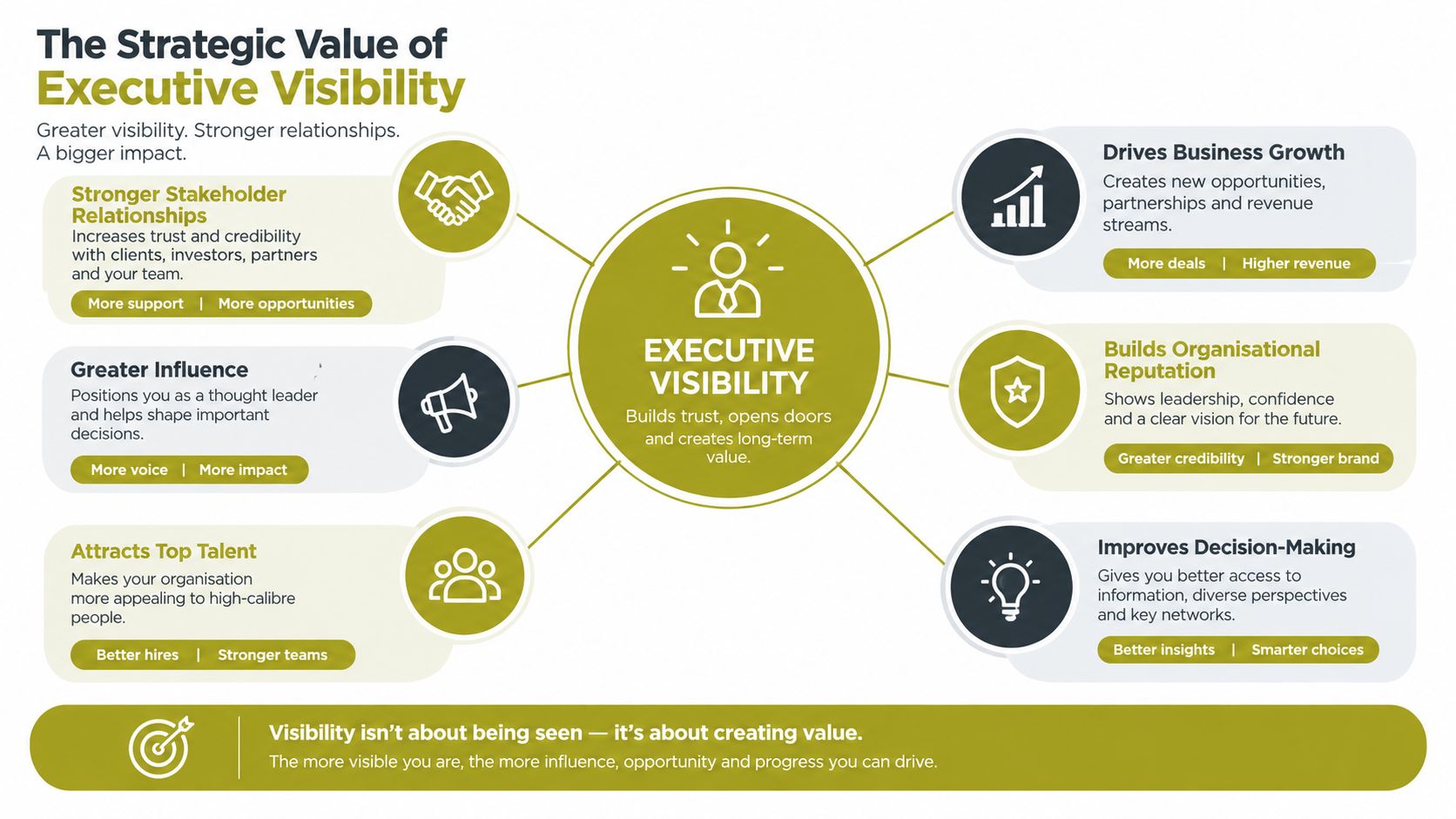
From public profile to stakeholder bridge
A useful executive PR strategy has three connected layers:
- Evidence: The leader can substantiate financial, operational, social or environmental claims.
- Interpretation: The leader can explain why a decision was made in language a non-specialist audience understands.
- Accountability: The leader can name the next action, responsible owner or point at which stakeholders will receive another update.
This structure prevents a common failure. Communications teams often prepare what the executive wants to say, but not what the audience will ask next. A leader may announce growth, innovation or a new partnership, yet fail to explain the practical relevance to staff, customers or local communities.
The same discipline applies to written content. A concise executive briefing should preserve the important context rather than compressing a complex issue into empty certainty. Guidance on summaries that fail is useful for any team turning senior-level material into public-facing content, because missing context can undermine an otherwise accurate message.
For a deeper application of this principle, the thought leadership content strategy approach connects executive expertise to an organised editorial plan rather than treating each post or interview as an isolated opportunity.
The practical trade-off is exposure versus control. A leader who comments on every topic may gain familiarity but dilute authority. A leader who speaks only during launches may appear absent when stakeholders most need clarity. The right cadence depends on the organisation's responsibilities, risk profile and capacity to support the message with action.
Key Services That Drive Measurable Outcomes
Executive public relations is not one service. It is a working system that connects strategy, media handling, content production, crisis preparation and measurement.
The first requirement is message architecture. Advisers need to identify the executive's credible areas of authority, the audiences that matter and the proof points that can withstand challenge. This might lead to a broadcast interview, an opinion article, a briefing for employees, a founder video or a response to a policy development.
Media training then turns that strategy into behaviour. A senior leader needs to answer the question asked, avoid accidental speculation, use plain language and recognise when a short answer is stronger than a long defence. On-camera coaching also covers delivery, body language, listening and the moments when an interviewer presses a weak point.
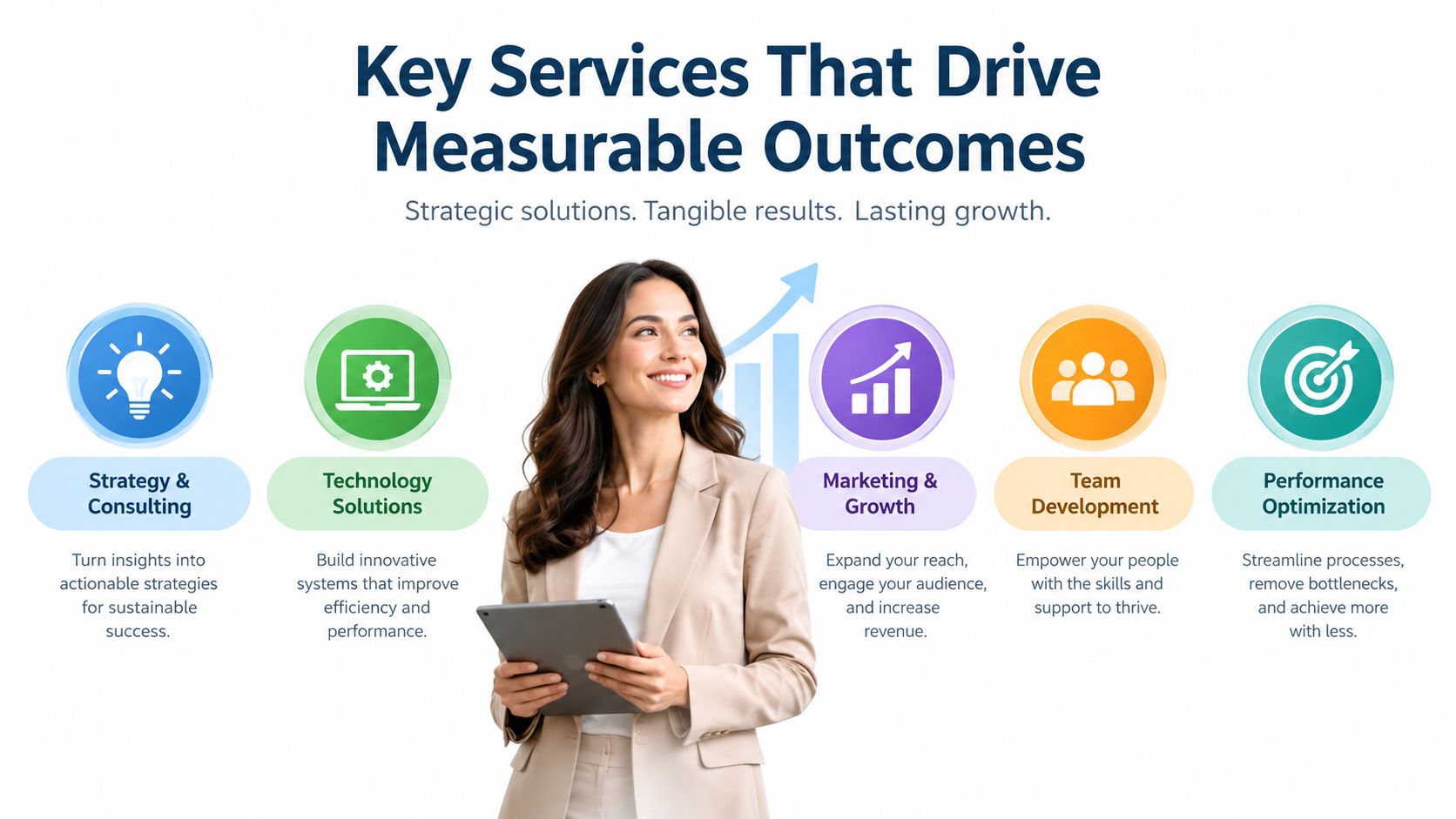
The service mix behind credible leadership
A practical programme can include:
- Media relations: Find a genuine news angle, match it to the right journalist and provide evidence that makes the story usable.
- Interview preparation: Build briefing notes around difficult questions, not just preferred messages. Rehearse concise answers and clear corrections.
- Executive content: Convert expertise into articles, LinkedIn commentary, video and stakeholder updates without making every format sound like a press release.
- Crisis communications: Establish who speaks, who approves, what is known, what remains under investigation and how employees receive updates.
- Digital distribution: Make sure the executive narrative works across search, social platforms, websites and direct stakeholder channels.
- Measurement: Track credibility, accuracy, confidence and consistency rather than relying on coverage volume alone.
The work requires both newsroom judgement and modern digital execution. A compelling broadcast appearance may reach one audience while a well-structured article answers the detailed questions that customers and search users ask later. Social content can extend the life of an interview, but it shouldn't distort the original message for engagement.
Preparedness is more than a document
The preparedness paradox appears most clearly during operational and cyber incidents. UK research reported that 94% of business leaders felt confident in their organisation's ability to detect and respond to a breach, yet only 45% prioritised CEO- or C-suite-led transparency during and after an incident. Only 37% prioritised two-way channels for customer questions, while 68% lacked real-time resilience dashboards for boards and executives. These figures are reported in research on UK business leaders and cyber-response confidence.
A crisis plan that sits in a folder is not preparedness. Leaders need rehearsed decisions about the first acknowledgement, internal sequencing, legal review, customer questions and correction of incomplete information. Confidence becomes dangerous when it encourages a spokesperson to sound certain before the facts are secure.
Carlos Alba Media's specialist nature reflects this need. Everyone who works for Carlos Alba Media is a former national news journalist or has agency experience of working with international brands. Its work spans media exposure, digital content, media skills training and 24/7 media crisis management in partnership with leading UK media lawyers.
Why Journalistic Expertise Matters for Founders
Founders often hire PR support because they want access to journalists. They should also ask whether the adviser understands how those journalists decide what deserves attention.
A former newsroom editor knows that an announcement isn't automatically news. The adviser will test the human consequence, the timing, the evidence, the conflict and the relevance beyond the company itself. They'll also know that a journalist may need a direct answer quickly, may challenge the preferred framing and may ask for corroboration that a marketing team never considered.
The Reuters Institute's 2025 study of UK journalists noted that 39% were aged over 50 and 46% had worked in journalism for more than 20 years. That points to an experienced, specialised profession. Generic marketing knowledge can help with positioning, but it doesn't replicate first-hand newsroom judgement.
Questions to ask before appointing an adviser
Ask prospective partners to explain:
- How they find news value: Can they turn a complex product, policy or technical development into a clear editorial proposition without exaggerating it?
- How they prepare a spokesperson: Do they test hostile questions, unclear statistics, legal sensitivities and the claims the executive would rather avoid?
- How they work with journalists: Can they explain why a particular outlet or reporter fits the story, rather than offering a broad media list?
- How they handle correction: Do they have a process for identifying inaccurate coverage and responding proportionately?
- How they connect external and internal audiences: Will staff receive the relevant information before they encounter it through a public channel?
A newsroom background also improves writing. Journalists learn to remove jargon, locate the important detail and make a complicated subject intelligible under pressure. That skill matters when a founder must explain a regulatory change, a service failure or a strategic decision to people who don't share the company's vocabulary.
Founder voice needs discipline
A founder's personality can make communication more memorable, but personality isn't a substitute for substance. Strong founder content usually has a specific point of view, a real operational example and a clear reason for the audience to care. For ideas about using a founder's presence in paid creative, founder ad examples for marketers offer useful material to assess, particularly when deciding whether the executive should educate, demonstrate or endorse.
The introduction for news perspective is also valuable because the opening of a story must establish relevance quickly. A founder shouldn't lead with a company biography. They should lead with the change, problem or decision that gives the audience a reason to continue.
Practical Applications Across Different Sectors
The same principle, evidence before exposure, looks different in each sector. A Scottish technology SME may need to make a founder visible to prospective customers and investors while protecting scarce management time. A healthcare organisation may need to communicate with precision because patients, professionals and regulators interpret every claim through a safety lens.
| Sector | Primary Pressure | Strategic Focus |
|---|---|---|
| Scottish technology SMEs | Building authority without overstating capability | Founder expertise, customer proof and clear explanations of technical value |
| Healthcare | Protecting confidence around safety, evidence and responsibility | Accurate claims, expert validation and coordinated stakeholder communication |
| Financial services | Managing scrutiny, confidence and regulatory expectations | Defensible data, careful language and disciplined spokesperson approval |
| Tourism and hospitality | Turning public attention into visitor confidence and demand | Human stories, service credibility and fast responses to disruption |
A Scottish technology founder
Consider a founder whose company has developed a specialist software product. A product announcement alone may not interest national media. The stronger route could be an executive perspective on a business problem the product helps solve, supported by customer evidence and a clear explanation of what remains difficult.
The founder's internal briefing matters just as much. Sales staff need to understand the claim they're taking to prospects. Engineers need to know which product statements are public. Customer teams need an answer when a journalist or buyer asks about limitations. The public narrative should make their work easier, not create promises they can't support.
A regulated organisation
In healthcare or finance, the executive should resist the temptation to make a broad claim for reach. The communications process needs a clear evidence pack, named reviewers and a distinction between established facts, current performance and future intention.
That doesn't require dull communication. It requires useful specificity. A leader can explain the problem, the safeguards, the decision process and the effect on stakeholders without turning an interview into an advertisement. In a disruption, the first public message should acknowledge what is known, state what remains under review and explain when the next update will arrive.
For tourism and hospitality, the emotional register may be warmer, but the trust requirement remains. A national destination or visitor brand still needs accurate information, responsive leadership and consistency between promotional content and the experience guests receive.
Measuring Trust and Reputation Success
The easiest executive PR numbers to present are often the least useful. Reach, impressions and share of coverage show distribution. They do not show whether the message was believed, repeated accurately or accepted by the people who have to act on it.
A better scorecard tests whether trust held at every handover point, from leadership team to employees, from spokesperson to reporter, from article to stakeholder response. In practice, that means tracking a mix of communication quality and audience reaction:
- Message credibility: Did stakeholders accept the claim, or did they question the evidence behind it?
- Journalist accuracy: Did coverage carry the right facts and the right caveats?
- Correction rates: How often did the organisation have to amend, clarify or restate a public point?
- Stakeholder confidence: Did customers, partners, investors or regulators respond with more certainty?
- Internal consistency: Did employees receive the same core message through briefings, email and public channels?
- Executive readiness: Could the spokesperson handle difficult questions without guessing, drifting or contradicting earlier statements?
A practical guide to measuring PR effectiveness helps separate activity metrics from outcome metrics. Treat coverage volume as an operational measure only. Trust needs its own indicators, especially credibility, accuracy and internal consistency.
Internal trust is part of external reputation
This is the preparedness paradox. The more energy a leadership team puts into external visibility without preparing its own people, the more likely that visibility is to expose weakness.
Ipsos research, based on approximately 1,080 British adults surveyed in April 2025, found that trust in CEOs fell sharply when internal communications were judged poor (Ipsos). The same research suggested trust weakened further higher up the leadership hierarchy. That matters because executive PR is not only a media exercise. It is a test of whether the organisation can support, explain and deliver what its leader has said in public.
So the reporting has to compare internal and external performance side by side. Log when employees were briefed, when the public message appeared, which questions surfaced first and where misunderstandings had to be corrected. If staff learn the headline from LinkedIn or the press before they hear the reasoning from leadership, the reputational cost is real, even if the coverage looks strong on paper.
Carlos Alba Media provides senior-level executive PR, media training, thought leadership, digital content and crisis communications for founders, SMEs and established organisations across Scotland, the wider UK and internationally. To build a leadership communications programme grounded in newsroom judgement and internal trust, visit Carlos Alba Media.