
The most popular advice about social media marketing is also the least useful: post more, follow every trend and chase the biggest audience. That approach treats social as a publishing channel. In practice, it now functions as a newsroom, shop, service desk, search layer and public reputation forum, often at the same time.
UK audiences spend substantial time online, but attention and participation aren't the same thing. Ofcom found that the average UK adult spent four hours and 30 minutes online each day in 2025, while the share of respondents who actively posted on platforms including Instagram, Facebook and X fell from 61% to 49%. The BBC reported that the survey questioned 7,533 UK adults aged 16 or over. The BBC's coverage of Ofcom's online-habits research shows why brands need content that works for viewers who watch, share, save or message without publishing anything themselves.
The 10 social media marketing trends for 2026 below are assessed through four practical questions: does the tactic build credibility, does the audience use it, can the team deliver it consistently, and can the business measure a useful outcome? Carlos Alba Media brings a specialist perspective to that assessment. Everyone who works for Carlos Alba Media is a former national news journalist or has agency experience of working with international brands. That combination matters for SMEs, tourism and hospitality brands, and visible spokespeople whose social content must earn attention without compromising accuracy or trust.
1. Authentic creator partnerships and micro-influencer collaboration
A creator partnership works best when the creator already understands the audience, subject and setting. Follower volume alone can't establish that. A Scottish travel creator who knows how to explain a coastal route, a food producer or a small hotel may offer more useful context than a celebrity with a much larger but less relevant audience.
For a tourism board, the strongest collaboration might involve a creator documenting an actual experience, including practical details that make a destination feel tangible. A hospitality brand could work with a food or travel creator whose audience is concentrated in the region it serves. Hamilton & Inches could explore luxury lifestyle creators whose existing work already reflects the expectations of an affluent audience. A technology SME may gain more from an industry specialist who can test and explain a product than from a general entertainment influencer.
Credibility needs evidence
Brands should review a potential partner's previous content, comment quality, audience fit and willingness to disclose commercial relationships. A polished media kit isn't proof of influence. Look for whether people ask meaningful questions, whether the creator responds, and whether the proposed collaboration sounds natural in the context of their normal output.
Long-term relationships usually provide more editorial consistency than isolated sponsored posts. Give creators clear boundaries around accuracy, claims, confidentiality and brand safety, then leave room for their own voice. Over-control produces advertising that looks like advertising.
Practical rule: agree the business question and measurement method before agreeing the creative treatment.
Possible measures include qualified website visits, enquiries, bookings, assisted conversions and the quality of audience responses. A newsroom approach also helps. Keep records of what was briefed, what was published, how audiences reacted and what the business learned. That evidence is more valuable than a vague claim that a partnership “performed well”.
2. Short-form video dominance across TikTok, Reels and Shorts
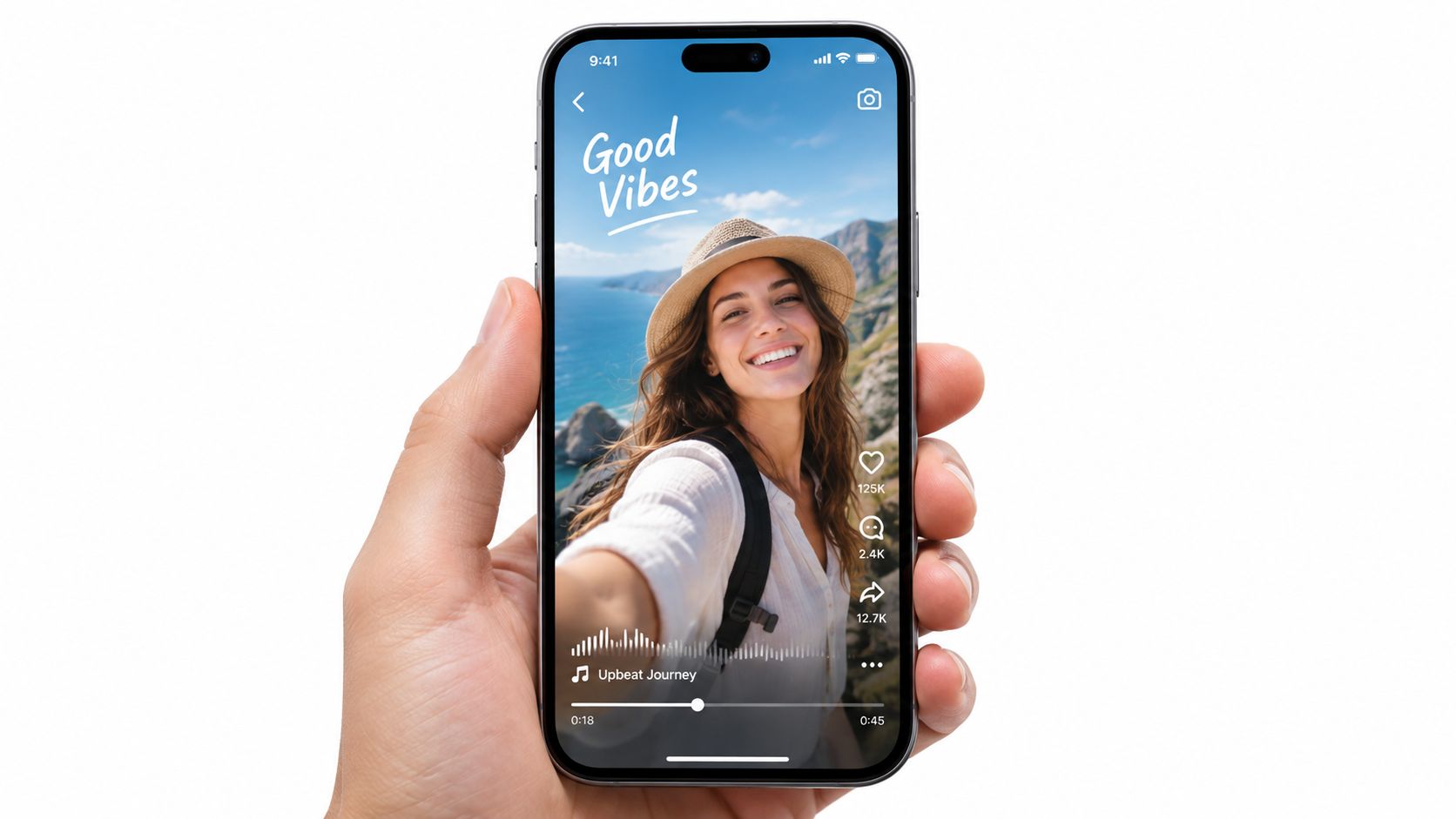
“Make more video” is advice, but it is not a plan. The useful question is what each platform can help an audience understand, feel or do. YouTube reached 94% of UK online adults in Ofcom's 2025 audience data and recorded an average of 51 minutes of daily use. Instagram reached 78%, while Facebook and Messenger reached 93% and accounted for about 43 minutes of daily use. The UK platform data summarised by ProfileTree supports a channel choice based on audience behaviour, editorial purpose and measurable business outcomes, rather than an automatic TikTok-first decision.
A Scottish hotel might use Reels to convey atmosphere, TikTok to support informal discovery and YouTube for a detailed guide to the surrounding area. A technology company could turn a complex feature into a concise explanation before directing interested viewers to a longer demonstration. A financial services firm needs careful scripting, clear context and approval for every substantive claim.
Native production beats automatic duplication
On-screen text, captions and platform-native editing can improve comprehension. Repurposing saves production time, yet identical cuts, captions and calls to action may overlook how people use each network. Test different openings, explanations and endings, then assess watch time alongside qualified traffic, enquiries and bookings. Editorial review should also check accuracy, tone and whether the format earns audience trust.
Carlos Alba Media's social media how-to videos support teams seeking practical guidance rather than a generic content calendar. Automated production can assist with routine adaptation, including automated reel generation with ClipNova, provided a person reviews the result before publication.
A clear answer, credible voice and useful next step may serve a tourism or hospitality brand better than a borrowed trend that attracts views without visitors.
3. Community-first social strategy and user-generated content amplification
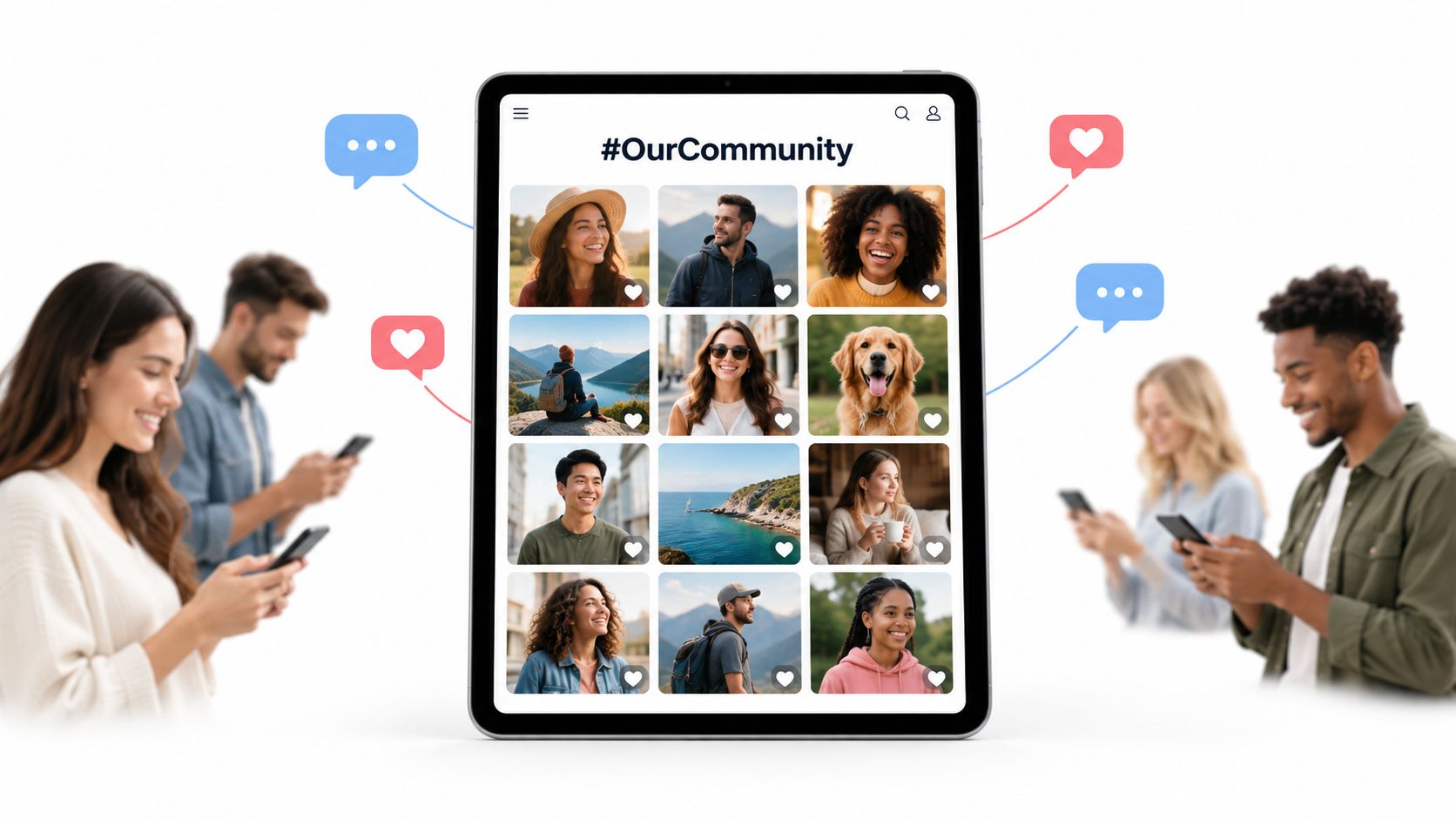
A follower is a distribution possibility. A community member is a participant, critic, recommender and potential source of insight. Those roles create greater value, but they also require work that a scheduling tool can't perform.
The distinction matters because UK social adoption is broad. A 2025 SME survey reported that 97% of UK SMEs use social media, with Facebook used by 69%, Instagram by 67%, WhatsApp by 58%, YouTube by 63% and TikTok by 49%. The iwoca survey and channel breakdown show that being present is common. Presence alone doesn't demonstrate useful customer relationships, enquiries or sales.
A Scottish craft brewery could build conversation around tasting events, new releases and customer reviews. A hotel might invite guests to share photographs and practical recommendations, then ask permission to feature the strongest material. A tourism brand can use traveller photography to show a place through different eyes, while a technology SME can use LinkedIn conversations to develop a sharper understanding of recurring customer questions.
Participation needs structure
Community management should have an owner, escalation route and clear standards. Publish guidance on respectful behaviour, privacy and the use of customer content. Train customer-facing staff so that a reply from a front-desk employee, founder or social manager reflects the same basic judgement.
Measure the quality of participation, not only its quantity:
- Conversation quality: Are people asking questions that reveal intent or only reacting to a post?
- User-generated content: Are customers voluntarily sharing experiences that the business can use with permission?
- Response and sentiment: Does the organisation resolve concerns visibly and respectfully?
- Learning: Can recurring comments change a service, product or piece of content?
Patagonia's community-led environmental positioning, Lululemon's ambassador model and guest-led hospitality content all point to the same principle. People contribute when they feel recognised, not when a brand treats them as unpaid media inventory. Carlos Alba Media's user-generated content campaigns can help turn that participation into a planned editorial asset.
4. Social commerce and shopping directly within platforms
Social commerce can shorten the path from discovery to purchase, but it also removes some of the distance that gives customers time to assess a product. That makes presentation, stock accuracy, product information and customer support more important, not less.
An artisan Scottish brand may use Facebook Shops or Instagram Shopping to present products in the same environment where customers discover its story. A furniture retailer can use visual content to connect a product with a room or design idea. A hospitality business may use social channels to promote gift cards, experiences or bookable packages. A technology SME can demonstrate a product in a Reel and direct a relevant viewer towards further information.
Luxury brands such as Gucci and Burberry illustrate the appeal of linking visual storytelling with product discovery. Smaller businesses don't need to imitate their scale. They can use the same logic at a more manageable level, with consistent photography, clear descriptions and an honest explanation of availability.
Convenience shouldn't replace confidence
Use collections to organise related products, and make sure images show the item from useful angles. A livestream can create immediacy, but a limited-time offer shouldn't conceal terms, delivery conditions or stock uncertainty. Platform analytics may show which products attract attention, while website and CRM data can help determine whether that attention becomes a profitable order.
Social checkout also creates operational questions. Who answers a product query? Who updates an unavailable item? Who handles a refund or a complaint that begins in a comment thread? A small team may be better served by a carefully maintained catalogue than by opening every commerce feature at once.
Influencer and affiliate partnerships can add distribution without requiring the brand to hold additional stock, while product video specialists such as product video production companies can help businesses explain an item more effectively. The commercial test remains simple: does the channel produce appropriate orders and useful customer relationships, or only attractive product views?
5. Authenticity and transparency through behind-the-scenes content
Audiences don't need every post to look unfinished. They do need to understand who stands behind the organisation, how decisions are made and whether the brand can acknowledge uncertainty. Behind-the-scenes content is valuable when it reveals something real, rather than using informality as a visual style.
A Scottish founder might explain a difficult product decision on LinkedIn. A technology SME could share what it learned from a failed approach without exposing confidential customer information. A hospitality business might introduce the people preparing food, maintaining rooms or managing guest experiences. Glossier's product-development storytelling, Slack's “Made by Slack” content and Patagonia's transparent environmental communication offer different examples of brands making the work visible.
Transparency needs boundaries
Founders and executives can build trust by speaking in their own voice, but personal visibility needs preparation. A spokesperson should know which information is confidential, which claims require evidence and which issues need formal approval. An honest account of a challenge is useful when it includes context and learning. A careless disclosure can create a privacy, legal or reputational problem.
Audiences can forgive a limitation more easily than they can forgive a misleading impression.
A practical programme might include employee introductions, process explanations, work-in-progress material and personal commentary from senior leaders. The visual treatment can be simple. A phone recording from a real workplace may be more credible than a polished scene that suggests a culture the audience never sees elsewhere.
Review comments for questions and concerns, not just positive reactions. If people challenge an assertion, respond with evidence or acknowledge what remains uncertain. For regulated sectors and high-risk organisations, transparency must work alongside documented approval, claims substantiation and crisis procedures. Carlos Alba Media's former national news journalists understand the difference between a compelling human detail and an unsupported assertion, while its international-brand agency experience helps translate that judgement into a consistent brand system.
6. Niche social platforms and platform diversification
Opening an account everywhere is a poor definition of diversification. The stronger approach is to reduce dependence on a single distribution system and choose channels for a defined audience or task. LinkedIn may matter most for an investor-facing technology company, while Discord or Telegram can suit a specialist community that expects ongoing participation. For tourism brands, YouTube may offer better evergreen discovery than a fast-moving feed.
UK audience behaviour supports regular review. WhatsApp's daily use among UK online adults increased from 64% in May 2024 to 74% in May 2025, while X declined from 45% to 39% over the same period. The UK platform trend data from ProfileTree is a reminder that channel plans should be tested against current behaviour, not old habits.
A food and drink brand might use LinkedIn for supplier and trade relationships, while Instagram handles visual discovery. A B2B technology company could test a developer community on Discord, provided it has the time and moderation skills to support it. An independent creator may use a newsletter to build a more direct relationship than a feed can provide. Bluesky, Mastodon, Pixelfed and Telegram may be worth testing for specific audiences, but no emerging platform deserves investment only because it is new.
Build resilience without multiplying workload
Start with how customers already behave. Prioritise a small number of core channels, then adapt content to each platform instead of copying the same post. Maintain an email list, newsletter or other permission-based audience where appropriate. Private communities can support retention, feedback and early access, but they need active moderation.
Measure each platform against its purpose. A LinkedIn programme might be judged by qualified conversations and lead quality. A YouTube channel might support destination research or product education. A private community might be assessed through useful feedback and repeat engagement. Reach figures from different platforms should not be added together as if they represented separate people. DataReportal recorded 55.5 million active social-media user identities in the UK in October 2025, equivalent to 79.7% of the population, but explicitly warns that identities are not deduplicated individuals. Its UK digital report supports careful planning around overlap and potential reach.
7. AI-powered personalisation and predictive content strategy
AI is most useful when it improves decisions without pretending to be a journalist, subject expert or accountable spokesperson. Teams can use it to identify recurring audience questions, group themes in comments, suggest content variations, flag potential risks and support routine customer-service triage. They shouldn't outsource judgement about accuracy, tone, fairness or public interest.
A fashion retailer might use customer behaviour to improve product recommendations. A technology company could analyse support conversations to find topics for an explainer series. A communications team might use sentiment analysis to identify a developing issue, then ask a human reviewer to examine the original posts and context. Spotify's Discover Weekly and Netflix's recommendations demonstrate the broader consumer familiarity with personalised content, but a brand needs to explain how its own use of data remains appropriate.
Start with one accountable workflow
Choose an application with a clear owner and a measurable purpose. Test the system against actual outcomes rather than accepting a confident prediction. Review outputs for bias, privacy risks, factual mistakes and inappropriate targeting. Human review is especially important for health, finance, employment, tourism safety and any campaign involving vulnerable audiences.
A sensible sequence could be:
- Identify a repetitive task: Choose reporting, comment classification or content-brief development before attempting full automation.
- Set review points: Define who checks the output and what evidence they require.
- Compare prediction with reality: Record what the tool suggested and what audiences did.
- Protect personal data: Use only information the organisation is entitled to process, with appropriate safeguards.
- Keep the human story: Use AI to find patterns, then let people develop the explanation and creative treatment.
Carlos Alba Media's predictive analytics marketing guidance reflects the practical value of connecting data with strategy. The strongest workflow is usually hybrid. Machines can process signals quickly. Former national news journalists can ask whether a claim is supported, whether context is missing and whether publishing it would damage trust.
8. LinkedIn strategy and the evolution of B2B social commerce
LinkedIn has become an important public environment for professional judgement, not just a digital CV. For a Scottish technology SME, the founder's perspective can make complex work understandable to buyers, partners, regulators and investors. For a professional services firm, partner commentary can demonstrate how the team thinks before a prospect books a conversation.
That doesn't mean every executive should publish personal anecdotes without a purpose. A useful profile combines expertise, observation and evidence. A technology founder might explain a market problem through a customer question. A consultancy partner could analyse a change affecting clients. A training company might use an event or newsletter to develop a relationship beyond a single post.
Personal authority needs operational support
Create a manageable publishing rhythm rather than promising a volume the executive can't sustain. Native posts can invite discussion, while a newsletter or event can capture permission for continued contact. Employee advocacy can extend the range of a strong insight, but employees need guidance and the freedom to communicate naturally.
LinkedIn can also support early-stage commercial conversations. Sales teams may use Sales Navigator to identify relevant accounts, but targeting isn't a substitute for relevance. A message that begins with the recipient's situation will usually be more useful than a generic pitch. Track website sessions, qualified leads, meeting quality and progression through the sales process, not merely reactions.
The platform should reflect the organisation's actual expertise. If a founder posts about innovation but never answers technical questions, the gap becomes visible. If a senior leader comments thoughtfully on industry issues, that activity can build a more credible public record over time. For regulated organisations, every market insight needs the same care as a press statement, particularly when it could influence decisions.
9. Conversational marketing and real-time social engagement
A direct message can carry more commercial intent than a public reaction. The sender may want to buy, book, complain, check availability or decide whether the organisation deserves trust. Treating social messaging as part of the customer journey therefore changes how teams plan content, staffing and escalation.
WhatsApp has broad reach among UK online adults, and its role in customer communication is examined in this UK social media audience statistics roundup. Reach alone does not show which channel or response style will suit every audience. A hotel might handle booking enquiries through Messenger or Instagram, while a retailer could offer click-to-message support and a B2B team might qualify an early enquiry through LinkedIn.
Speed must be matched by judgement
Set a response standard the team can meet during trading hours. Automation can acknowledge a message, route it and provide basic information, but the handover to a person should be clear. A bot that makes someone with a serious complaint repeat the same account damages trust and wastes staff time.
Connect conversations to the CRM where appropriate, with clear consent and careful data handling. Saved replies can reduce repetitive work, provided staff adapt them to the individual. An accessibility question from a guest, a report of a damaged product and an implementation enquiry from a prospect require different information, tone and follow-up.
One short sentence can matter: “A reply is part of the brand.”
Monitor tone as well as volume. A sudden rise in negative messages may signal a service problem, misleading content or a wider public story. Escalate promptly when a conversation involves safety, discrimination, legal exposure or a named spokesperson. Social teams need approved facts, clear authority and a crisis contact, rather than a vague instruction to “keep an eye on it”.
For hospitality brands, useful outcomes include completed bookings and enquiries that become bookings. For a technology SME, they may include qualified conversations and progress towards an opportunity. Carlos Alba Media's newsroom perspective places credibility beside speed: teams should respond quickly, but avoid speculation, scripted defensiveness and promises operations cannot fulfil. The channel earns its place when dialogue improves the customer experience and produces an outcome the organisation can verify.
10. Social listening, measurement and attribution
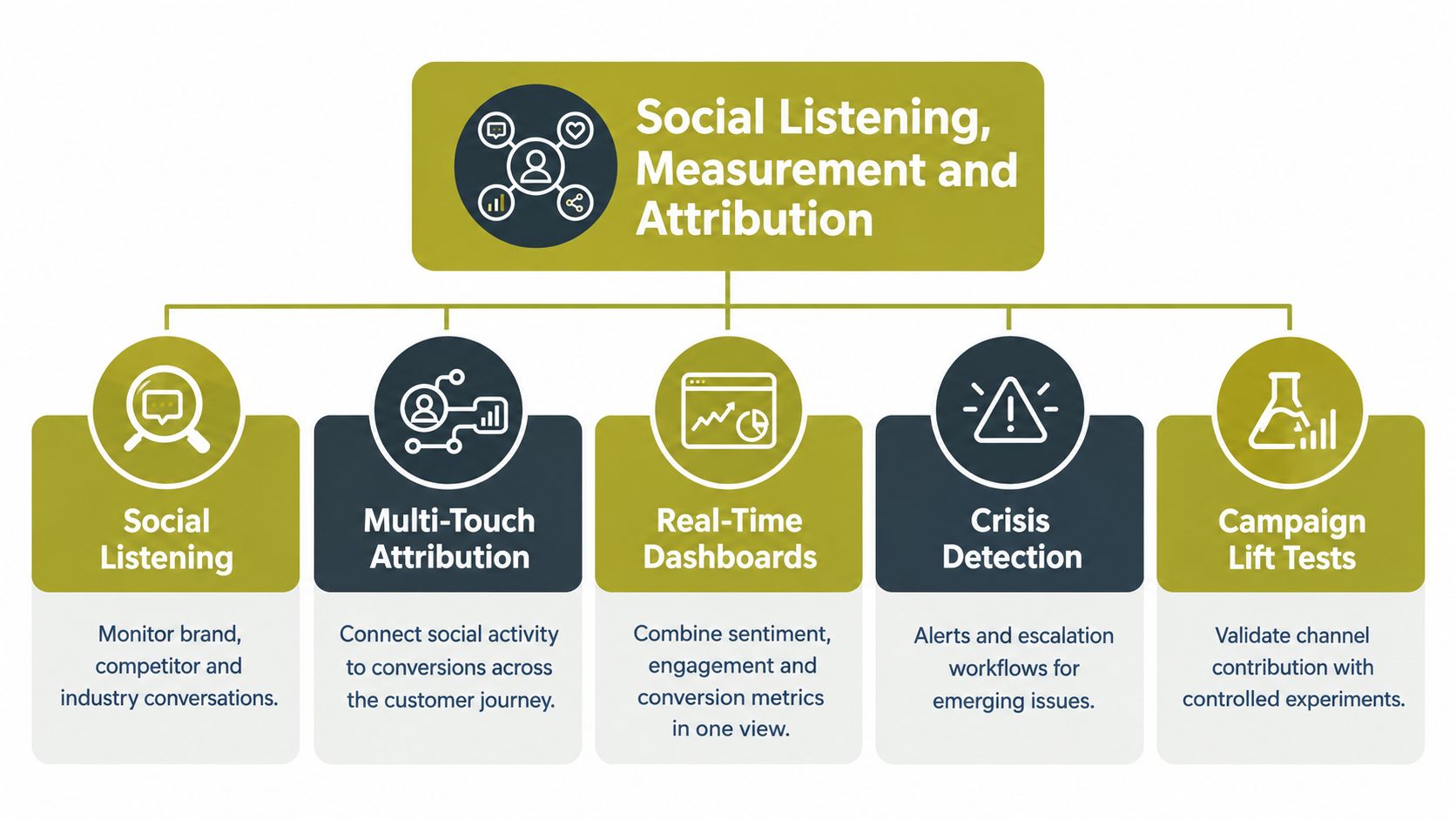
Social measurement should answer business questions, not reward activity for its own sake. A campaign can attract comments without generating qualified demand. A crisis response can receive little visible engagement while preventing further confusion. A destination video can influence a later booking that the final click report fails to credit.
The UK social advertising market reached £11.5 billion in 2025, increasing 21% year over year and representing 28% of total UK digital advertising expenditure, according to IAB UK's digital ad market findings. Video accounted for 59% of UK social-platform investment in that reporting. Those figures make disciplined creative testing and reporting more important for SMEs, not less. Paid distribution is a measurable media activity, and it needs approval workflows, audience exclusions, claims substantiation and a crisis pause process.
Combine signals instead of worshipping one dashboard
Begin with a small set of questions:
- Awareness: Did the campaign reach the intended audience at an appropriate frequency?
- Consideration: Did it generate qualified website sessions, searches, messages or content engagement?
- Commercial impact: Did it contribute to leads, bookings, sales or booked consultations?
- Reputation: Did it improve understanding, sentiment or share of voice around a defined issue?
- Operations: Did the team respond accurately and within the agreed service standard?
Use UTMs, assisted-conversion reporting and CRM notes before attempting a complex attribution model. Combine platform data with human review, especially where automated sentiment misreads sarcasm, regional language or a developing crisis. Ofcom found that six in ten UK adults use an online intermediary, such as a search engine or social platform, to access news, while Facebook reached 30% of all UK adults as a news source. Ofcom's 2025 News Consumption in the UK findings underline the need to measure social as part of the wider public information environment.
Social Media Marketing Trends, 10-Point Comparison
| Strategy | 🔄 Implementation complexity | ⚡ Resource requirements & speed | 📊 Expected outcomes | 💡 Ideal use cases | ⭐ Key advantages |
|---|---|---|---|---|---|
| Authentic Creator Partnerships (Micro/Nano influencers) | 🔄🔄🔄, Moderate: vetting & relationship management | ⚡⚡, Low–moderate budget; slower to scale | High engagement & conversions; niche trust 📊 ⭐⭐⭐⭐ | SMEs, niche products, long-term advocacy | Authenticity, cost-effective, high engagement |
| Short-Form Video (TikTok, Reels, Shorts) | 🔄🔄🔄🔄, High cadence & trend responsiveness | ⚡⚡⚡⚡, Low per-video cost; rapid production cycles | Rapid reach, viral potential, strong discovery 📊 ⭐⭐⭐⭐ | D2C, consumer brands, awareness & youth audiences | High engagement, fast testing, strong reach |
| Community-First & UGC Amplification | 🔄🔄🔄🔄, Ongoing human management, moderation | ⚡⚡, High time investment; slower growth but durable | Increased LTV, organic advocacy, UGC at scale 📊 ⭐⭐⭐⭐ | Membership brands, service businesses, retention focus | Defensible loyalty, scalable authentic content, feedback loop |
| Social Commerce Integration | 🔄🔄🔄, Platform setup, inventory & checkout sync | ⚡⚡⚡, Moderate resources; fast checkout → higher conversion | Higher conversion and direct attribution; platform-dependent 📊 ⭐⭐⭐ | Retail, beauty, impulse products, SMEs selling direct | Frictionless purchase, direct revenue attribution |
| Authenticity & Transparency (BTS, vulnerable leadership) | 🔄🔄, Cultural change + leadership participation | ⚡⚡, Low production cost; time to build trust | Stronger trust, emotional engagement, talent attraction 📊 ⭐⭐⭐ | Startups, founder-led brands, recruitment & differentiation | Trust-building, humanised brand, lower production needs |
| Niche Platforms & Platform Diversification | 🔄🔄🔄🔄, Multiple tailored strategies per platform | ⚡⚡, More management overhead; slower per-platform reach | Resilience, targeted engagement, owned audience growth 📊 ⭐⭐⭐ | B2B, niche communities, risk-hedging strategies | Reduced platform risk, better segmentation, loyal niches |
| AI-Powered Personalisation & Predictive Content | 🔄🔄🔄🔄🔄, Technical integration, data governance | ⚡⚡⚡, High initial investment; fast optimisation later | Scalable personalization, efficiency gains, better targeting 📊 ⭐⭐⭐⭐ | Data-rich enterprises, high-volume content/commerce | Scale personalization, automated insights, faster testing |
| LinkedIn Strategy & B2B Social Commerce | 🔄🔄🔄, Consistent personal participation required | ⚡⚡, Moderate effort; longer content-to-lead cycles | Higher-quality leads, thought leadership, recruitment 📊 ⭐⭐⭐⭐ | B2B services, professional firms, sales & hiring | Access to decision-makers, professional context, trust |
| Conversational Marketing & Real-Time Engagement | 🔄🔄🔄🔄, Tooling, staffing, SLA and routing setup | ⚡⚡⚡, Staff/automation required; delivers immediate responses | Improved CSAT, higher conversion via conversational commerce 📊 ⭐⭐⭐ | Retail, hospitality, high-touch services, sales teams | Faster resolution, personalised sales touch, conversion lift |
| Social Listening, Measurement & Attribution | 🔄🔄🔄🔄, Data integration; methodological complexity | ⚡⚡, Tooling costs; insight cadence depends on setup | Clearer ROI, early issue detection, data-driven optimisation 📊 ⭐⭐⭐⭐ | Mid-large brands, PR-sensitive industries, performance teams | Data-driven decisions, crisis detection, cross-team alignment |
Turn trend watching into a working editorial system
The safest response to changing social media marketing trends isn't to chase every update. It's to build a system that can absorb change without losing its standards. Choose the platforms where your audiences can be reached, the formats your team can produce properly and the conversations your organisation is equipped to handle.
Start with a 90-day test plan. Select one or two priorities, such as creator partnerships for a regional tourism offer, short-form video for a hospitality experience, founder-led LinkedIn content for a technology SME or social messaging for customer enquiries. Define the audience, business objective, creative premise, approval route and success measures before publication. A test should produce a decision, not just a report filled with activity metrics.
Assign ownership clearly. Someone needs responsibility for the editorial calendar, someone needs authority to approve claims, and someone needs to respond when a post creates a service or reputational issue. If a founder is the public voice, that person needs preparation and access to accurate information. If an agency manages the channel, the client still needs a named internal decision-maker who can approve or escalate quickly.
A useful operating model separates four types of work:
- Editorial planning: Turn customer questions, business priorities and public developments into useful content.
- Production: Create platform-specific video, written posts, creator briefs and visual assets.
- Community and service: Monitor comments and messages, respond appropriately and record recurring issues.
- Measurement and learning: Connect reach, attention, traffic, conversations and commercial outcomes.
Trust should sit inside every stage. Reuters Institute's 2026 UK findings reported that 73% of Britons distrusted news on social media, while 77% were concerned about fake news and misinformation. Its United Kingdom findings create a clear standard for brand communication: cite evidence where it matters, distinguish fact from opinion, provide context and correct errors visibly. The presence of trusted public broadcasters and news brands in that research doesn't make every brand a newsroom, but it shows the credibility environment in which brand posts compete.
Carlos Alba Media is relevant to this model because its people combine former national news journalism with agency experience of working with international brands. That means a social programme can connect editorial judgement with practical delivery. The agency supports social media marketing, content, SEO, UX, brand strategy, media exposure, web development, spokesperson training and crisis communications. For a founder, that can mean a stronger LinkedIn voice and better interview preparation. For a tourism or hospitality brand, it can mean content that links destination attention to enquiries and bookings. For an organisation in a regulated or high-risk sector, it can mean a clearer approval process and a more disciplined response when the conversation changes.
Don't measure success by how many trends the business has touched. Measure whether the right people understand the offer, trust the organisation, take a useful next step and receive a consistent response. Then keep, revise or stop each activity based on evidence. That is how trend watching becomes an editorial system rather than another source of pressure for an already stretched team.
Carlos Alba Media develops platform-specific social strategies, creator and community programmes, short-form content, founder-led communications and measurement systems for SMEs, tourism, hospitality brands and established organisations. Visit Carlos Alba Media to discuss a social programme built around credible content, measurable outcomes and crisis-aware execution.
[…] a broader view of how audience behaviour is changing, review these social media marketing trends, then reduce the findings to a decision your team can execute. Choose one primary platform, one […]