
You’re probably doing what most aspiring entrants do at this stage. You’ve opened a dozen tabs, skimmed internship listings, found half of them are vague, and started wondering whether “internships in media” actually means meaningful work or just making tea near someone important.
That confusion is rational. A lot of the advice online is broad, recycled, and written for a market that isn’t yours. UK entrants face a different set of pressures. The media economy is tighter, hiring is often informal, and the skills employers want now sit across journalism, PR, digital marketing, social content, search, and analytics.
At firms like Carlos Alba Media, that reality is understood from the inside. The agency’s specialist model matters here. Everyone working there is either a former national news journalist or brings agency experience with international brands. That combination gives a very clear view of what helps newcomers get noticed, and what gets ignored in seconds.
Breaking Into the UK Media Landscape
The hardest part of entering media in the UK isn’t usually enthusiasm. There’s plenty of that. The problem is translation. Good students often struggle to translate academic effort into signals that an editor, producer, PR lead, or agency director will recognise immediately.
That’s why generic advice often falls flat. “Be passionate” isn’t useful. “Network more” isn’t enough. Hiring managers don’t recruit on vague potential alone. They look for evidence that you can contribute in a live environment where deadlines move, briefs change, and somebody needs a usable draft before lunch.
Why UK candidates need UK-specific advice
A major gap in the market is that most online guidance focuses on US-based internships, which leaves UK applicants short on practical help around regional access, paid versus unpaid placements, and routes outside the London-centric system. That gap matters for anyone trying to build a career in Scotland, Wales, Northern Ireland, or the North of England, not just central London.
Practical rule: If a piece of advice doesn’t reflect the UK hiring market, treat it as incomplete, not universal.
There’s also a second mismatch. Many university courses still train students in silos. Journalism students learn reporting. Marketing students learn campaigns. PR students learn messaging. Real employers increasingly need all three instincts working together.
A strong media intern now needs to understand how a story angle lands with journalists, how content performs online, and how audience behaviour shapes what gets published or shared.
What actually helps at the start
Start by thinking less like a student applying for approval and more like a junior professional building proof. That means:
- Targeting better opportunities: Focus on placements with named responsibilities, clear supervision, and exposure to publishable work.
- Building visible output: A live portfolio beats a private folder of coursework.
- Reading the market properly: If you need a practical framework to find internships with Eztrackr's help, use it to tighten your search process rather than firing off generic applications.
- Dropping the fantasy version of media: The industry values reliability, accuracy, speed, judgement, and commercial awareness.
People do still break in. They just rarely do it by waiting for the perfect listing to appear. They do it by understanding what employers need and showing they can already operate at the edge of that standard.
Where to Find Genuine Media Internships
Finding worthwhile internships in media takes reporting discipline. You don’t search once. You build a lead list, check it regularly, and verify what’s real.

The first thing to accept is that the internet can mislead you. Analysis shows most online resources focus on US-based media internships, creating a significant knowledge gap for UK job seekers. This is especially true regarding discussions on regional opportunities outside the 'London bubble', paid vs unpaid equity, and programmes targeting underrepresented groups, all of which are critical issues within the UK media industry's talent pipeline. That matters because if your search habits are shaped by US content, you can miss how the UK market works.
Start with organisations, not just job boards
LinkedIn has its place, but it’s noisy. The stronger approach is to start with bodies and institutions that sit closer to the profession.
A practical shortlist:
| Where to look | Why it matters | What to check |
|---|---|---|
| CIPR channels | Useful for PR and communications pathways | Internship wording, mentor access, paid status |
| NCTJ networks | Relevant for journalism training and employer links | Editorial responsibilities and newsroom exposure |
| Direct company career pages | Better for catching roles before aggregators surface them | Application window, named team, office location |
| University media and careers bulletins | Often overlooked, sometimes carry regional placements | Whether the role is exclusive or open externally |
| Industry newsletters | Good for short-notice opportunities and smaller employers | Whether there’s a clear brief attached |
The strongest listings usually tell you what you’ll do. If a role says you’ll assist with research, drafting, content scheduling, media monitoring, social production, or reporting, that’s a promising sign. If it says you’ll “support the team with various tasks” and nothing else, proceed carefully.
Get outside the London bubble
Too many applicants search as if meaningful work only exists inside Zone 1. That’s bad strategy. Regional agencies, production companies, publishers, radio teams, local newsrooms, and in-house communications departments often offer broader hands-on experience because smaller teams can’t afford passengers.
Look in:
- Scotland: Glasgow, Edinburgh, Dundee, Aberdeen, Inverness
- North of England: Manchester, Leeds, Sheffield, Newcastle, Liverpool
- Wales and Northern Ireland: Cardiff, Swansea, Belfast, Derry
- Remote-first SMEs: Especially in PR, digital content, and social media support
A smaller regional team can give you more real responsibility than a famous brand that treats interns as spare hands.
If you want a media career with range, regional experience can be an asset. You often learn faster when you’re closer to decision-makers and not buried under hierarchy.
How to vet a listing before you apply
Don’t assume every internship is worth your time. Test it.
Ask yourself:
- Is it paid? Aim for paid internships as the baseline standard where possible.
- Is there a named supervisor or team? Accountability usually means structure.
- Are the tasks specific? “Shadowing” alone isn’t enough.
- Will you leave with work you can show? If not, the value drops.
- Does the employer describe training or feedback? Good placements do.
A poor placement often has three clues. Vague duties. Glorified admin. No mention of development.
A good one usually offers a line of sight between your work and the organisation’s output.
Crafting an Application That Demands Attention
A hiring manager doesn’t read your CV like a tutor marking coursework. They scan for risk first. Can this person write cleanly, understand instructions, and contribute without needing constant rescue?
That’s the bar your application has to clear.
There’s also a wider issue shaping this. There is a growing skills-to-employment gap in UK media, where internships often don't teach the skills modern employers need. While US programs increasingly focus on SEO, data visualization, and audience engagement, many UK internships lag, failing to prepare interns for the integrated PR and digital marketing skills required by today's agencies. If your application only reflects classroom habits, you’ll look underprepared.
Build a CV that reads like a working document
A media CV shouldn’t feel decorative. It should feel edited.
Use a simple structure. Contact details, short profile, relevant experience, selected skills, education, links. No large personal statement. No padded adjectives. No graphics that confuse applicant tracking systems.
If you want a solid baseline for structure and phrasing, StoryCV's internship resume guide is a useful reference point.
What hiring teams notice quickly:
- Relevant verbs: Wrote, edited, researched, pitched, produced, scheduled, analysed
- Applied tools: WordPress, Canva, Adobe Express, Google Analytics, Excel, Meta Business Suite
- Signs of judgement: Managed deadlines, checked facts, adapted copy for audience, handled feedback
- Live links: Portfolio, LinkedIn, published pieces, student media work
Your cover letter needs one argument
Most cover letters fail because they try to sound keen instead of sounding useful.
Make one argument: why this organisation, for this role, and why you can contribute now.
A stronger opening usually includes three things in quick succession. What role you’re applying for. What makes the organisation relevant to your goals. What experience or instinct you already have that fits the brief.
Then prove it with specifics. If the company works across earned media and digital content, don’t talk only about your dissertation. Mention that you’ve written audience-facing copy, adapted tone across platforms, or tracked how headlines affect clicks and engagement.
Portfolios that work in modern media
Forget the idea that a portfolio is just essays in PDF form. A usable portfolio shows range and application.
Include a mix of formats such as:
- A reported article or blog post with a sharp headline and clean structure
- A press release or media pitch suited for a realistic audience
- Social content examples for Instagram, LinkedIn, or TikTok with rationale
- Basic data-led work such as a chart, simple visual, or audience summary
- SEO-aware writing that shows you understand search intent and metadata
If you’re still building experience, create speculative work. Rewrite a brand’s press release. Build a mini campaign around a local event. Produce a short content plan. Employers care that you can think and execute.
Good portfolios don’t say “I’m interested in media”. They show how you solve communication problems.
A simple application checklist
Before you hit send, check these points:
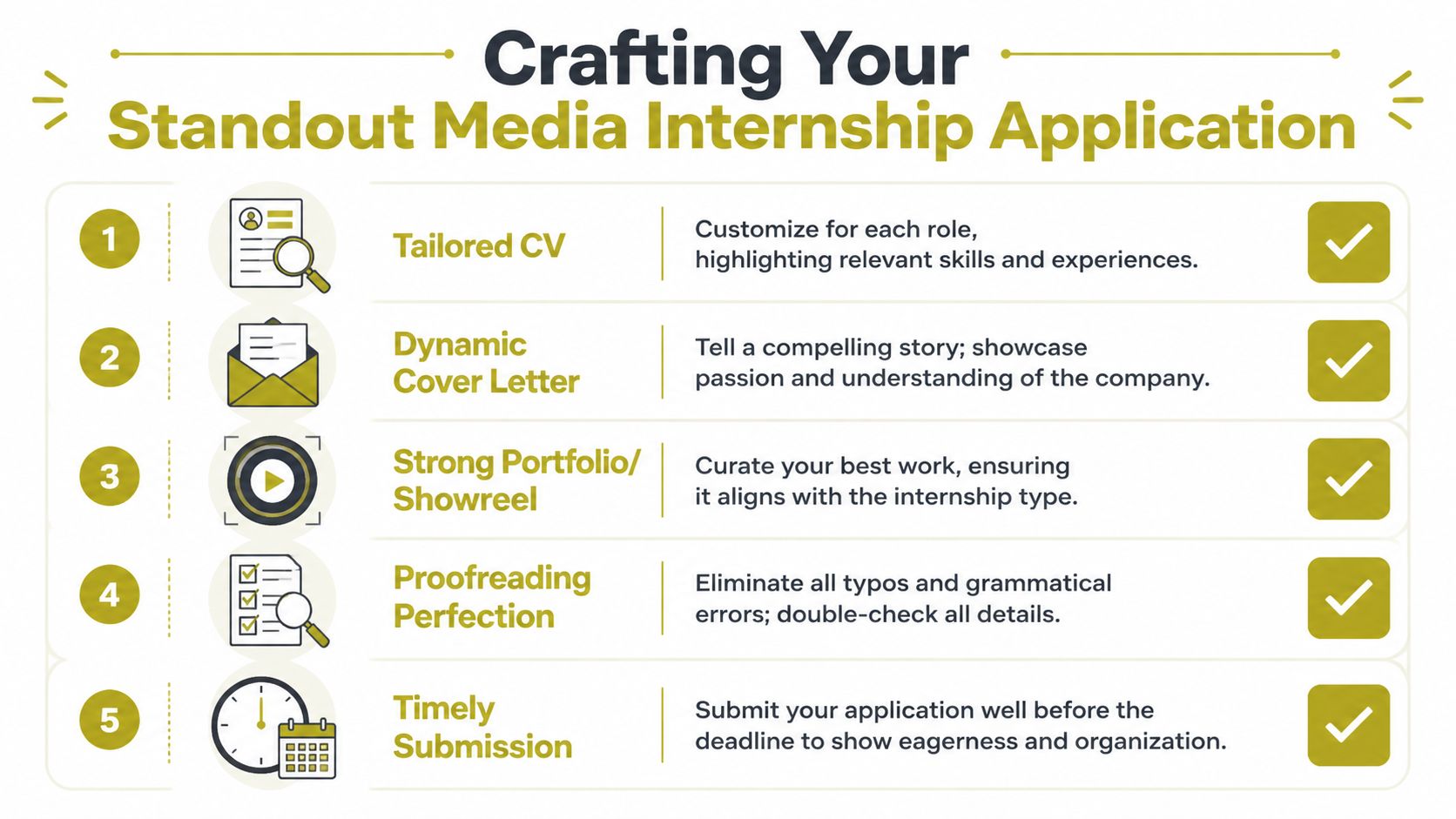
- Match the language of the role. If the advert says media relations, use that language where it’s true.
- Cut generic claims. “Hard-working team player” tells nobody anything.
- Show integrated thinking. Editorial judgement plus digital awareness is stronger than either alone.
- Proofread names and links. Sloppy details kill trust quickly.
- Include one useful external sign of effort. A published piece, student project, newsletter contribution, or campaign mock-up.
A good way to sharpen your writing and audience awareness is to study how professional organisations package information for younger readers. The way a specialist team frames guidance in a newsletter for school audiences is a useful reminder that clarity, tone, and structure always matter.
Networking Like a Journalist Not a Salesperson
Most bad networking feels bad because it’s built on extraction. The message arrives cold, asks for too much, and gives the other person no reason to say yes.
Journalists learn a better habit early. You build sources by being prepared, respectful, and worth replying to.

The outreach that gets answered
One of the more effective messages I’ve seen from a newcomer was also one of the shortest. They’d read recent work, noticed a shift in how an agency was handling thought leadership, and asked for fifteen minutes to understand how junior staff supported that process. No flattery. No life story. Just a precise question and evidence they’d done the reading.
That’s why it worked.
Try a structure like this:
Hello [Name], I’m an aspiring entrant into media and have been following your work on [specific campaign, publication, or topic]. I’m particularly interested in how your team handles [specific area]. If you had fifteen minutes for a virtual coffee in the next couple of weeks, I’d love to ask a few focused questions. I’m happy to work around your schedule.
That message respects time. It also signals maturity.
Ask source-style questions
When the conversation happens, don’t waste it asking things you could have found on the website.
Ask questions such as:
- What separates strong interns from forgettable ones in your team?
- Which skills are hardest to teach once someone joins?
- How much of the role is editorial judgment versus execution?
- What mistakes do applicants make in their first contact?
These questions do two jobs. They help you learn. They also show how you think.
For anyone who wants to sharpen that side of professional conversation, a good primer on how to transform how you listen is worth reading. Listening well is a career advantage in interviews, meetings, and client work.
Follow-up without becoming a nuisance
A proper follow-up is brief and useful. Thank them. Mention one idea you took away. If relevant, act on it and report back later.
For example: “You mentioned building a portfolio with more media-facing examples. I’ve since rewritten two press releases and added them to my site. Thanks again for the steer.”
That’s strong because it shows movement.
People remember thoughtful follow-up because so few candidates do it well.
If you want to understand how professionals think about press engagement, reading a straightforward guide to media relations in practice can help you ask smarter questions and avoid vague industry language.
Ace the Interview and Excel on Placement
By the time you get the interview, nobody needs more proof that you want the role. They need proof that you can do it.

The best preparation is closer to newsroom prep than exam prep. Don’t memorise glossy answers. Know the outlet, agency, or brand. Read what they publish. Understand the tone. Notice what stories, campaigns, or clients they push hard and what they ignore.
In the interview
You should be ready for direct questions about your judgement, not just your enthusiasm.
Expect areas like these:
| What they may ask | What they’re really testing |
|---|---|
| Tell us about yourself | Can you summarise clearly and relevantly |
| Why this internship | Have you researched us properly |
| What work are you proud of | Do you know what good looks like |
| How do you handle feedback | Can you work in a live team without ego |
| What’s happening in media right now | Are you commercially and editorially awake |
Strong answers usually follow a simple pattern. Context. Action. Outcome or learning. Keep them tight.
If you’re asked about weaknesses, don’t perform self-criticism. Talk about a real development area and the system you use to manage it. For example, if you used to overwrite, explain how you now edit for structure, cut repetition, and read copy aloud before sending.
A useful interview habit is bringing your own observations. Mention a recent story, campaign, newsletter, or social post from the organisation and say what you noticed about the angle, tone, or execution. That instantly lifts the conversation above generic applicant chatter.
Questions you should ask them
Ask questions that reveal the shape of the placement:
- What would a strong first two weeks look like?
- Which tasks are interns trusted with fastest?
- How does feedback usually happen here?
- What skills do previous interns tend to lack on day one?
Those questions tell you whether the placement is serious. They also make you sound like someone who expects to contribute.
After the formal prep, it helps to hear practical advice in a different format. This short video is a useful companion before interview week.
Once you’re on placement
Good interns don’t wait to be managed minute by minute. They make life easier for the team.
That doesn’t mean showing off. It means being dependable in ways that matter:
- Reply promptly: If someone asks for a draft by three, don’t vanish until half past.
- Clarify early: Ask smart questions before you start, not after you’ve gone in the wrong direction.
- Track your tasks: Use Notes, Trello, Notion, or a plain document. Don’t trust memory.
- Take feedback cleanly: No defensiveness, no long explanations.
- Notice patterns: Which headlines get chosen, which email subject lines work, which stories are dropped
One of the unwritten rules in media is simple. The people who progress are the people others trust under pressure.
Turn up prepared, file clean copy, hit the deadline, and make your manager’s day easier. That’s still the formula.
At the end of the placement, ask for two things. Specific feedback and permission to stay in touch. If you’ve done the work well, that relationship can matter long after the internship ends.
A Note for Employers Designing Internship Programmes
Many employers still treat internships as informal extra help. That’s short-sighted. A well-run internship programme is part recruitment pipeline, part brand signal, and part training ground for future hires.
The current conversation around UK media talent makes that especially important. There’s an obvious need for better routes into the industry, stronger regional access, and opportunities that aren’t reserved for people who can afford to work for little or nothing. Employers who ignore that reality narrow their own talent pool.
What a serious internship programme includes
A useful programme has structure from day one.
At minimum, that means:
- Clear objectives: The intern should know what they’re there to learn and deliver.
- Meaningful work: Real drafting, research, content, outreach, monitoring, or production support.
- A named mentor: Someone responsible for direction and feedback.
- Regular check-ins: Short, consistent conversations beat one rushed debrief at the end.
- A finish point with value: Feedback, references, portfolio material, and where possible a path to further work
Paid placements should be the standard employers aim for. That isn’t charity. It’s basic seriousness. If you want applicants who are capable, organised, and diverse in background, the opportunity has to be accessible.
Why businesses benefit
Interns often notice inefficiencies that established teams stop seeing. They can bring fresh instincts around social formats, platform behaviour, and audience expectations. But that only happens if the business gives them enough context and responsibility to contribute properly.
There’s also a reputation issue. Early-career candidates talk. If your internship is disorganised, extractive, or opaque, word travels. If it’s structured and developmental, your employer brand strengthens with exactly the people you may want to hire later.
A lot of businesses need support before they can supervise junior talent well. That’s especially true when teams are small and everyone is already stretched. Practical training for PR teams and spokespeople can help managers build the communication habits that make internships more valuable on both sides.
The best internship programmes don’t just fill short-term gaps. They create future colleagues.
If you’re an employer, design the placement you’d be proud to defend publicly. If you’re an applicant, seek out organisations that have done exactly that.
If you want senior, practical advice on media, PR, digital strategy, or training from a team built from former national news journalists and experienced agency professionals, explore Carlos Alba Media.