
It usually starts at the worst possible moment. A customer leaves a damaging review late on Friday. A complaint picks up pace on social over the weekend. By Monday morning, prospects have seen the criticism before your team has. For founders and SMEs, reputation risk rarely arrives as a formal warning. It shows up in search results, comment threads, review platforms and journalist inboxes.
In the UK, online reviews shape buying decisions long before a sales conversation happens. BrightLocal's Local Consumer Review Survey shows how closely consumers use reviews to judge local businesses. That is why monitoring matters. If no one is watching, response time slows, weak signals get missed, and a small issue can harden into a trust problem.
At Carlos Alba Media, we apply newsroom judgement to this work. Our team includes former national news journalists and PR specialists who know how stories spread, how sentiment shifts, and which signals matter enough to escalate. We do not treat reputation monitoring tools as a feature checklist. We use them as part of a live PR workflow: spot the issue early, verify what is happening, brief the right people fast, and respond in a way that protects the brand. If you need the wider strategic context, our guide to what reputation management involves in practice sets that out clearly.
The tools in this guide were selected with that standard in mind. The point is not just to monitor mentions. It is to build a system that helps you protect revenue, handle press scrutiny, and make better decisions before a reputational issue becomes a visible commercial one.
If you're also reviewing how automation is changing this space, this guide on AI brand monitoring is a useful companion read.
1. Brandwatch (Consumer Research)
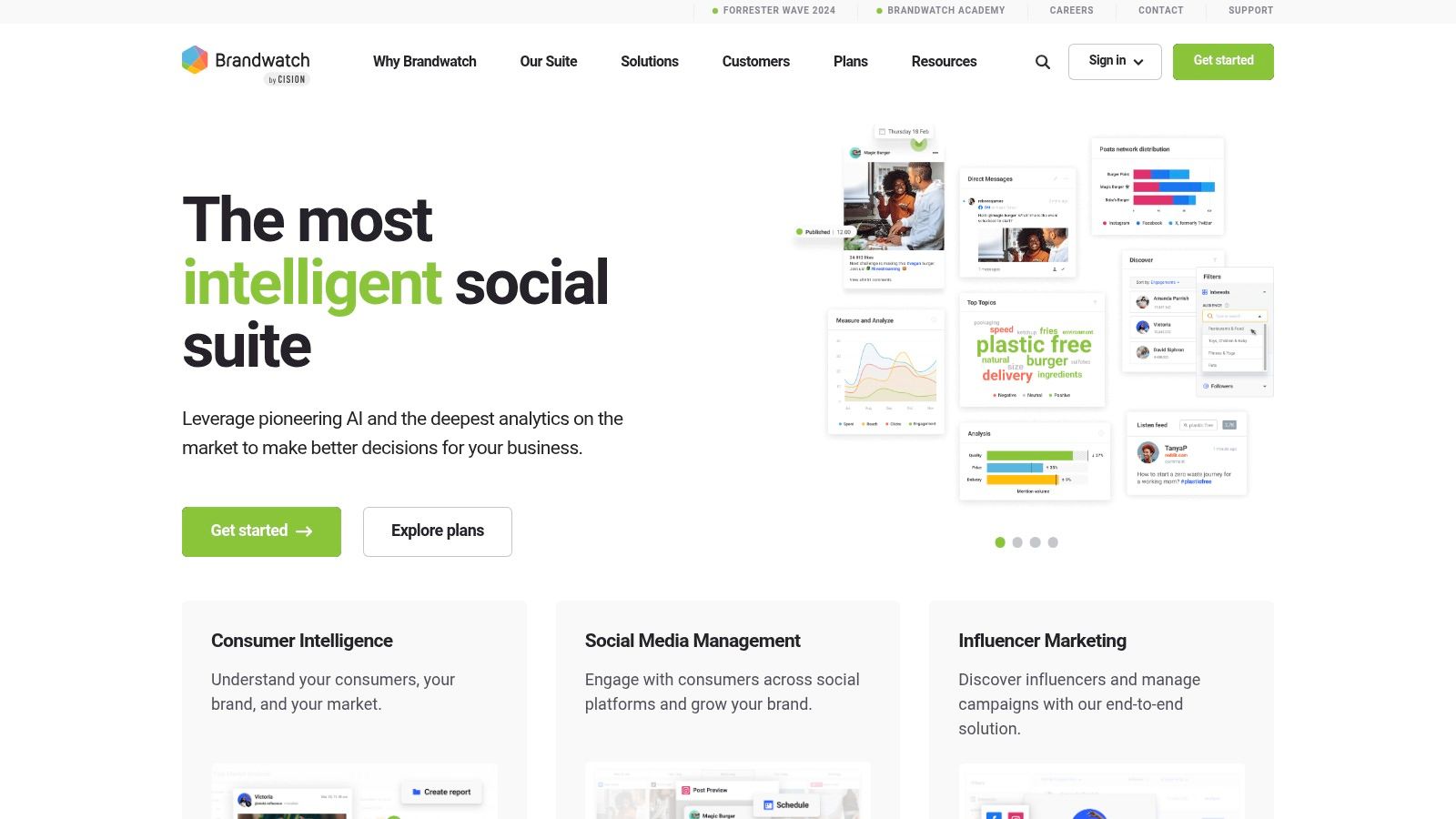
A founder gets a spike in mentions on Monday morning. Some are customer complaints, some are recycled commentary, and a few are the first signs of a story that could reach trade press by the afternoon. Brandwatch is built for that kind of pressure. It gives teams a way to monitor social, news, blogs, forums and review sources in one place, then sort signal from noise fast enough to act on it.
I recommend Brandwatch when the cost of missing context is high. That usually means regulated sectors, investor-facing businesses, brands with a visible leadership team, or companies entering a contentious market. The platform is strong on depth. You can track narratives over time, compare audience groups, examine sentiment shifts, and see whether a complaint is isolated or becoming a wider reputational pattern.
That power comes with a clear trade-off. Brandwatch needs structure. If nobody on your team can write precise Boolean queries, maintain keyword lists and keep irrelevant chatter out of the dashboard, the volume becomes a distraction rather than an asset.
Where Brandwatch is strongest
Brandwatch is at its best when reputation monitoring sits inside a real PR process, not as a passive reporting tool. That is the standard we use at Carlos Alba Media. We want a platform that helps a team detect an issue early, test whether it has media potential, brief decision-makers quickly, and choose a response that fits the actual risk. If you are still shaping that process, start with a clearer view of what reputation management means in practice before committing budget.
A few use cases stand out:
- Best fit: Mid-sized to large organisations, agencies, public bodies, and SMEs with high reputational exposure.
- What it does well: Broad source coverage, historical data, audience segmentation, sentiment analysis, topic tracking and governance features for larger teams.
- What slows teams down: Setup takes discipline. Weak search logic produces messy dashboards and false alarms.
One practical point matters for smaller businesses. Brandwatch is rarely the first tool I would suggest for a local firm with light mention volume and limited press risk. It makes more sense when one issue could affect funding, partnerships, recruitment, regulatory attention or a major growth plan.
Practical rule: Buy Brandwatch if your team will use the insight to make faster PR decisions. Do not buy it just to collect more mentions.
Use the platform at Brandwatch.
2. Talkwalker
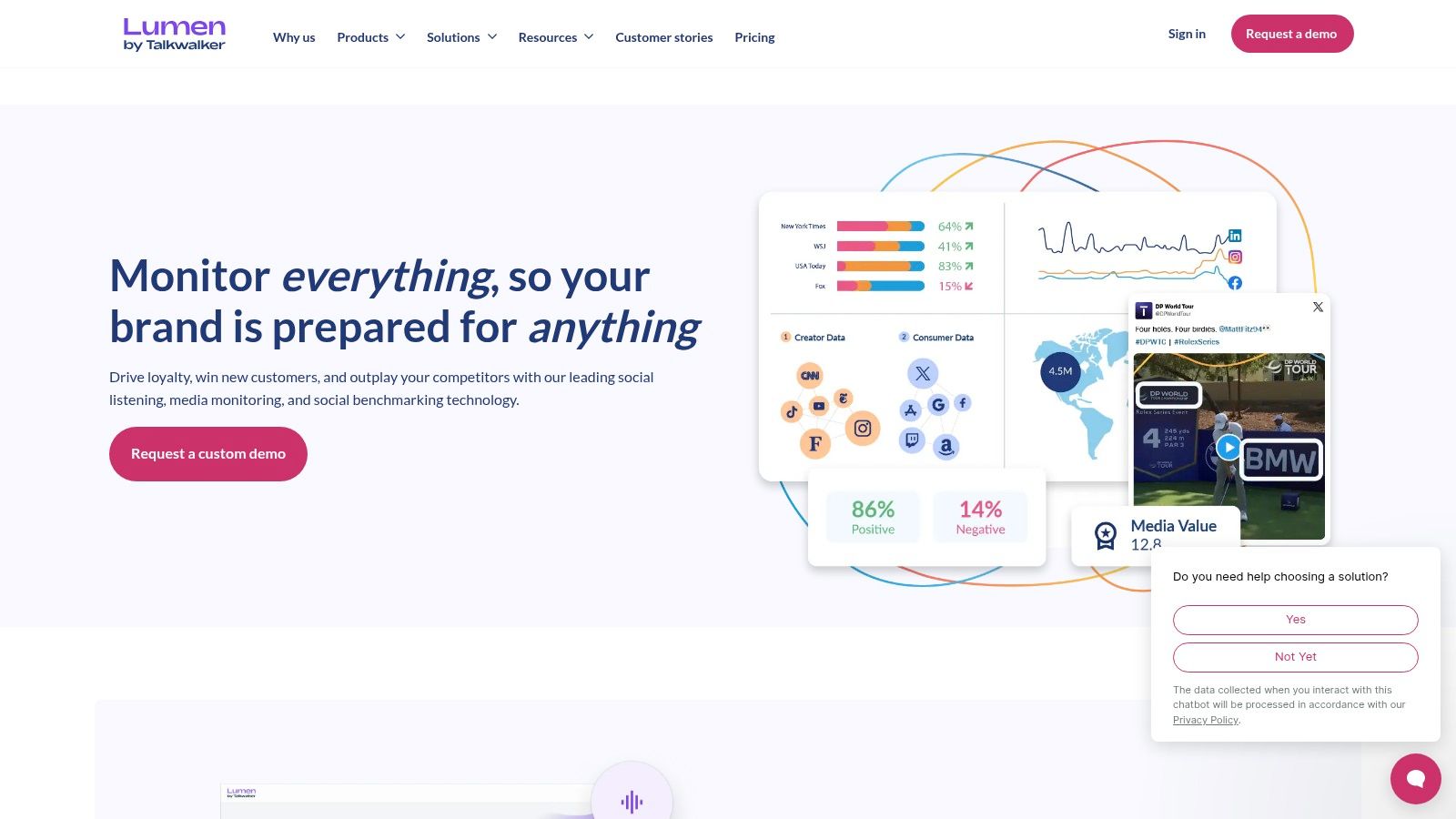
A founder launches a product on Monday, sees strong engagement by lunchtime, and by Tuesday morning a complaint thread has spread across LinkedIn, review sites and trade press comments. That is the kind of situation Talkwalker handles well. It gives PR teams a fast read on how a story is spreading across channels, before leadership starts making decisions on partial information.
Talkwalker suits businesses that need wide visibility without building a heavily customised research operation from day one. You can monitor social conversation, online news, reviews and emerging topics in one system, then turn that into alerts and dashboards that a founder, marketer and PR lead can all understand.
Its AI features, including Lumen, are useful for one reason. They help teams spot unusual spikes, recurring themes and likely pressure points quickly. In practice, that matters less for reporting and more for triage. If your team is handling a launch, a reactive media cycle or a brewing complaint, speed beats perfect categorisation.
Where Talkwalker earns its budget
I rate Talkwalker for SMEs and growing brands that need to connect monitoring to action. It is particularly useful when the reputational risk sits between channels rather than inside one of them. A negative customer video, a journalist request and a jump in branded search interest often belong to the same story, but teams miss that if they are checking tools in isolation.
That makes it a good fit for campaign monitoring, competitor tracking and early warning work. It also works well inside a crisis communications plan for growing businesses, where alert thresholds, ownership and response times need to be agreed before a problem starts moving.
A practical UK point matters here. Brands here rarely face reputational issues in neat silos. A story can begin on social, pick up in niche online coverage, then reach broadcast producers or local press if nobody gets ahead of it. Talkwalker is useful because it helps comms teams follow that chain early enough to respond with context, not guesswork.
- Best fit: SMEs, in-house comms teams and agencies covering fast-moving brands, launches or public-facing issues.
- What it does well: Cross-channel monitoring, visual dashboards, anomaly detection and alerts that make sense to non-specialists.
- What to watch: Pricing usually requires a sales process, and good results depend on careful query setup, exclusions and escalation rules.
Broad coverage helps. Clean searches and a clear response process are what make the tool valuable.
Visit Talkwalker.
3. Meltwater
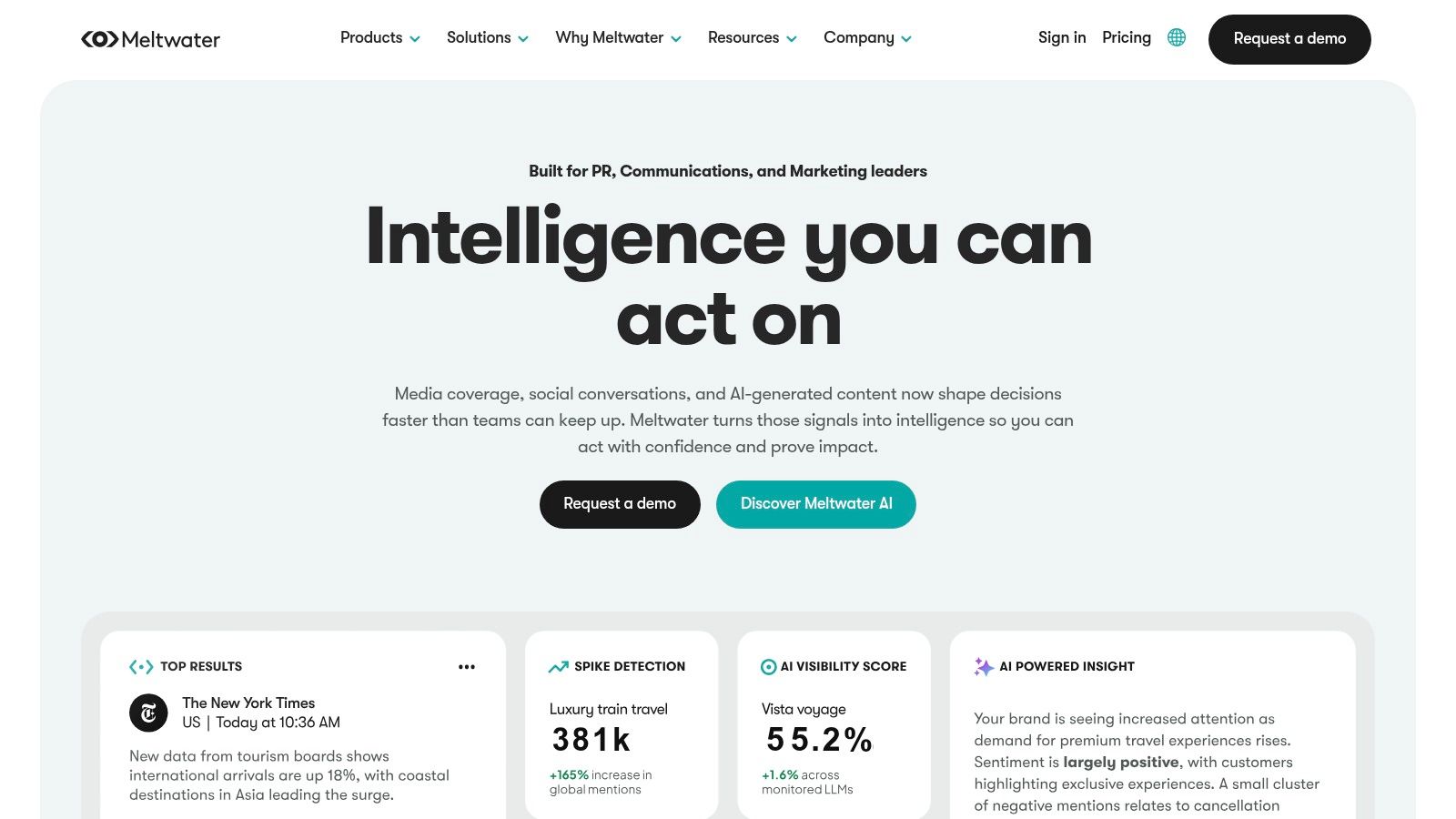
A founder gets a difficult call from a journalist at 8:15am. By 9:00, the story is on industry sites. By lunch, customers are discussing it on LinkedIn and your sales team is forwarding screenshots into Slack with no context. Meltwater is useful in that situation because it puts media monitoring and social listening in one place, so comms, leadership and marketing can work from the same picture instead of arguing over fragments.
That matters more than feature lists suggest. In practice, reputational pressure rarely sits inside a single channel. What starts as a news mention often turns into a search spike, social commentary, inbound investor questions or customer churn risk. Meltwater is built for teams that still care about earned media, but need to track what happens after the headline lands.
From a PR workflow point of view, its value is operational. Journalists and former newsroom people tend to think in terms of story development, not isolated mentions. Meltwater supports that way of working well. You can monitor coverage, watch how reaction builds, report to stakeholders and feed alerts into a response process without stitching together three different subscriptions.
There is a trade-off. Meltwater makes the most sense when media relations is already a meaningful part of your reputation risk or growth strategy. If your brand issues live almost entirely inside owned social channels, you may pay for breadth you will not use. If press coverage, executive visibility, product launches or investor perception matter, the platform earns its place faster.
Meltwater also fits agencies and in-house teams that need client-ready reporting without a lot of manual work. Muck Rack's 2024 State of Journalism report shows why media intelligence still matters. Journalists remain active across digital channels and PR teams still need reliable ways to track coverage and monitor response around stories they place or issues they handle. Read the report at Muck Rack.
- Best fit: PR-led SMEs, in-house comms teams and agencies where earned media still shapes commercial outcomes.
- What it does well: Combines news, broadcast and social monitoring with reporting and alerts that suit day-to-day communications work.
- What to watch: Pricing usually sits behind a sales conversation, and smaller firms can end up with more platform than they need.
Software helps, but process decides the outcome. Teams get better results when Meltwater sits inside a clear crisis communications plan for growing businesses, with alert thresholds, ownership and response times agreed before the pressure starts.
Explore Meltwater.
4. Sprout Social Listening Add-on
Sprout Social's Listening add-on is sensible if you already live inside Sprout for publishing, scheduling and engagement. In that context, adding listening keeps your team in one workflow instead of forcing them into a second platform just to monitor sentiment and trends. That's often the right move for lean teams.
I wouldn't choose it first for deep, cross-web reputation intelligence. I would choose it when the operational need is clear. Your social team already manages response, scheduling and reporting in Sprout, and now you want listening tied directly to that day-to-day execution.
The practical trade-off
Sprout's strength is workflow efficiency. You can publish, reply, monitor and report from the same ecosystem. For a busy SME, that reduces friction and usually increases adoption. Tools only help if people use them every day.
Its limitation is depth beyond social-centred monitoring. Dedicated enterprise listening platforms still go further on web coverage, query complexity and broad stakeholder intelligence.
- Best for: Teams already committed to Sprout Social.
- Useful features: Listening topics, trend discovery, historical retrieval, integrated workflow with publishing and engagement.
- Main drawback: Listening is a paid add-on, so total cost rises quickly once you add seats and modules.
This is one of those reputation monitoring tools that succeeds because it fits the team, not because it wins a feature war. That distinction matters. A simpler tool used properly beats a more powerful one nobody trusts.
See Sprout Social.
5. Hootsuite Consumer Insights
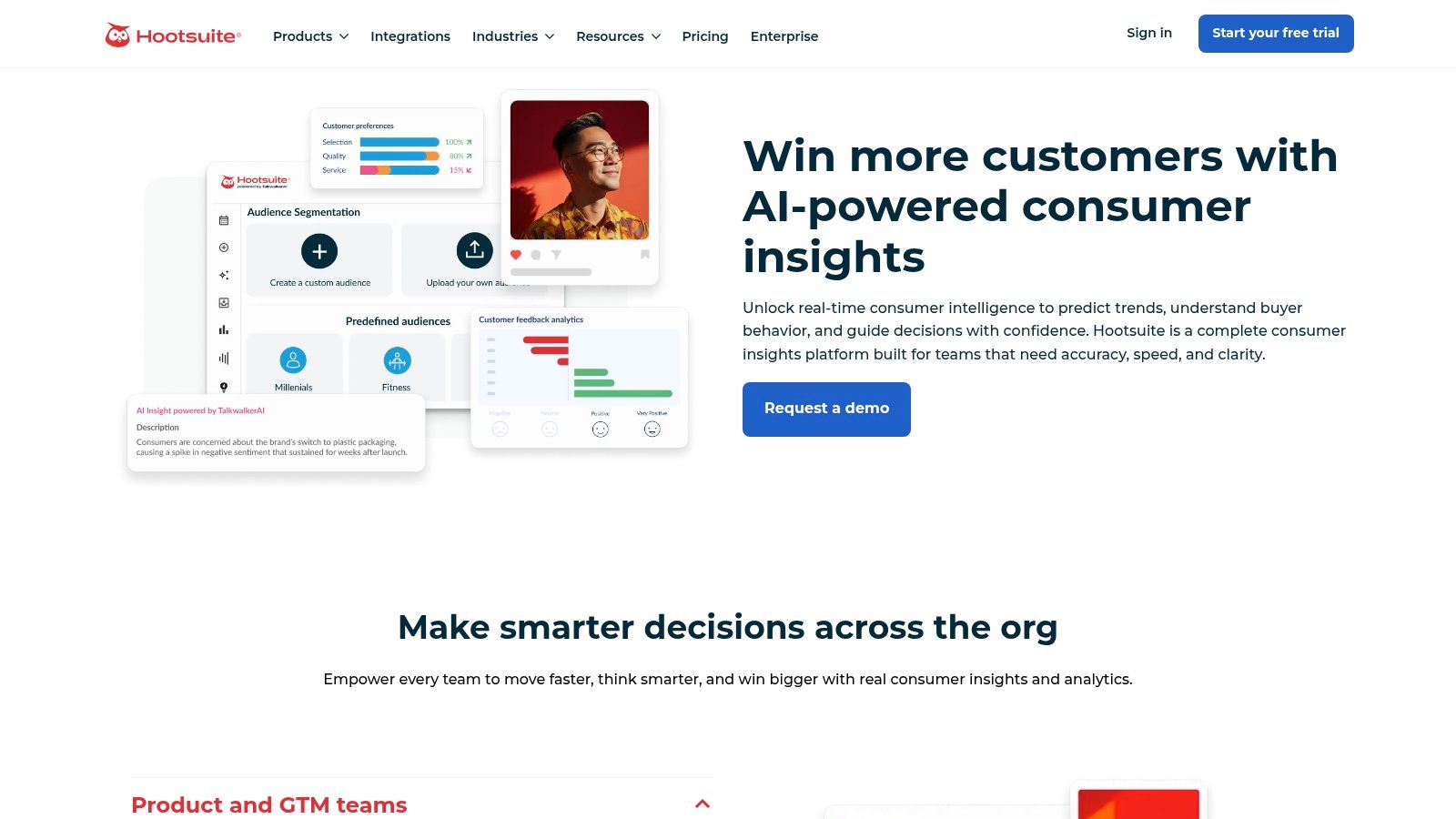
A founder sees a spike in negative Instagram posts on Friday afternoon, but half of them do not tag the brand. By Monday, customer support is dealing with the fallout and the social team is still pulling screenshots from separate tools. Hootsuite Consumer Insights is built for that kind of operational gap.
It suits teams that already run publishing, engagement and reporting in Hootsuite and want monitoring tied to the same daily workflow. That matters in practice. A listening platform only helps if the team checks it, trusts it and can act on what it finds without exporting everything into another system.
Its strongest use case is straightforward. Keep social management and social listening in one place, especially if your team is small and speed matters more than building a large research function.
Image and logo recognition are a real advantage here. Brands in retail, hospitality, food, beauty and events often get discussed through photos rather than tagged text mentions. If customers post your product, venue or packaging without naming you, text-only monitoring misses part of the story. Hootsuite gives you a better chance of catching that early. Hootsuite outlines those capabilities on its Consumer Insights product page.
Best used as an execution tool, not a full intelligence stack
I would not buy this platform for heavyweight stakeholder mapping or broad media intelligence. I would buy it if the main problem is response speed, visibility across social conversations and fewer handoffs between the people monitoring risk and the people answering it.
That distinction matters for SMEs. The team often does not need a large analysis environment. It needs clear signals, faster triage and a system staff will routinely use every day.
- Why choose it: It keeps monitoring close to publishing and community management.
- Standout capability: Image and logo recognition help surface untagged social mentions.
- Main drawback: It is less suited to deeper cross-channel research or complex stakeholder analysis than specialist intelligence platforms.
For brands trying to tighten PR workflow, that is a sensible trade-off. Former journalists and PR consultants tend to value tools that help teams spot a problem early, confirm whether it is isolated or spreading, and brief a response fast. Hootsuite Consumer Insights can do that well, provided you are choosing it for execution discipline rather than maximum analytical depth.
6. Pulsar Platform

A founder sees criticism building online, checks the mention count, and still misses the underlying risk. The problem is not volume. It is which communities are picking up the story, how they are framing it, and whether the narrative is spilling from customers into journalists, campaigners or policy audiences. That is the kind of job Pulsar handles well.
Pulsar stands out because it focuses on audience intelligence as much as monitoring. For PR teams, that changes the workflow. Instead of stopping at alerting and sentiment, you can trace which groups are shaping the conversation, what language they are repeating, and where a reputational issue may spread next. That is more useful than a raw dashboard if your brand has several stakeholder groups with different priorities.
This matters in practice. A consumer complaint and an activist-led narrative require different responses, even if both start with negative posts. Pulsar helps separate those threads early, which makes briefing sharper and response planning faster.
Built for narrative mapping and stakeholder analysis
Pulsar is at its best when the brief is to map communities, narratives and emotional tone across markets. Teams in regulated sectors, public affairs-heavy categories, or international brands often need that wider view. As noted earlier in the article, the market has shifted beyond simple brand tracking. Buyers increasingly want tools that show who is influencing perception, not just how often a name appears.
From a Carlos Alba Media perspective, that is the true value. Former journalists and PR consultants do not just need more data. They need a platform that helps turn noisy public conversation into a usable line of action for press handling, executive advice and campaign planning.
- Best fit: Brands with layered audiences, public affairs exposure or cross-market reputation risk.
- Strong points: Audience segmentation, community analysis, multilingual sentiment and wide conversation tracking.
- Watch-out: Smaller teams with a simple alerting need may pay for more analysis than they will use.
The trade-off is straightforward. Pulsar gives stronger strategic context than many lighter monitoring tools, but it asks more of the team using it. If nobody has time to interpret communities and narrative shifts, the extra depth will sit idle. If your PR workflow includes stakeholder mapping, issue framing and regular counsel to leadership, Pulsar earns its place.
Explore Pulsar Platform.
7. Signal AI
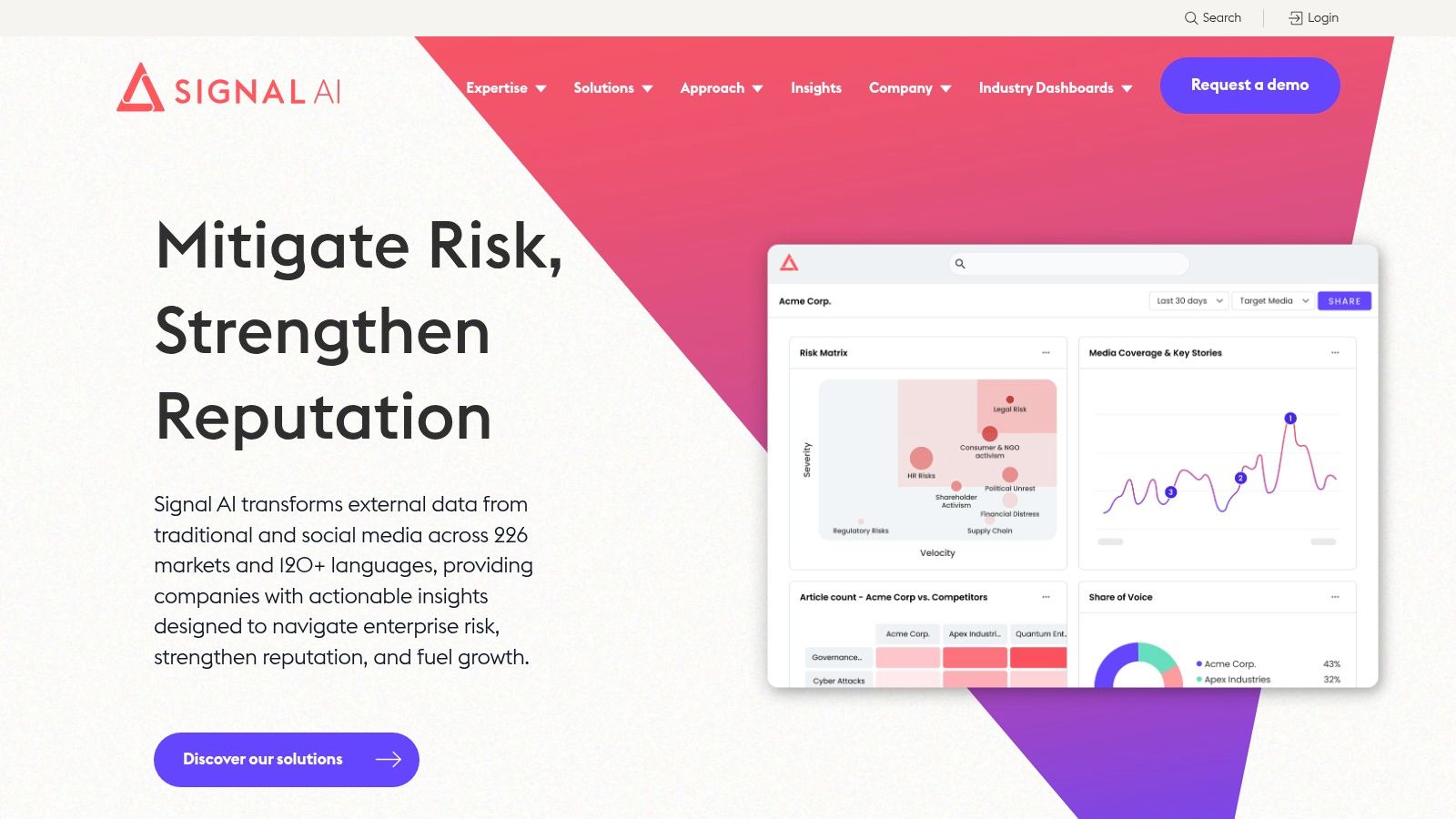
At 7:30am, a founder can be dealing with three separate threats at once. A trade title has picked up a critical story, a regulator has issued a comment that changes the tone around the sector, and investors are starting to ask questions before customers have said a word. That is the kind of brief Signal AI is built for.
Signal AI pulls together media, policy, regulatory and market signals that shape reputation before the issue shows up in reviews or social mentions. For teams in health, finance, infrastructure, energy, higher education, or any business heading into investment or public scrutiny, that wider field matters.
From a Carlos Alba Media perspective, the strength here is not volume of data. It is relevance. Former journalists and PR advisers need to spot what could become tomorrow's headline, then turn it into a clear counsel line for leadership today. Signal AI supports that workflow well because it helps communications teams monitor external pressure from several directions in one place.
This is a platform for risk monitoring and strategic scanning.
That also means there is a trade-off. If your reputation work is mainly customer reviews, community management and social response, Signal AI may be more platform than you need. Smaller SMEs with a simple alerting brief will usually get better value elsewhere. But if board reporting, policy exposure, executive visibility or sector scrutiny sit inside your PR remit, the extra context earns its keep.
As noted earlier in the article, reputation measurement has shifted toward continuous monitoring. Signal AI fits that reality. It is useful for communications teams that need early warning across news, regulation and stakeholder pressure, then need to brief fast with evidence rather than instinct.
If a policy update or trade press story can affect confidence before the public conversation catches up, you need monitoring that starts upstream.
Use Signal AI if your reputation risk begins well before the comment section.
8. Onclusive (including Critical Mention)
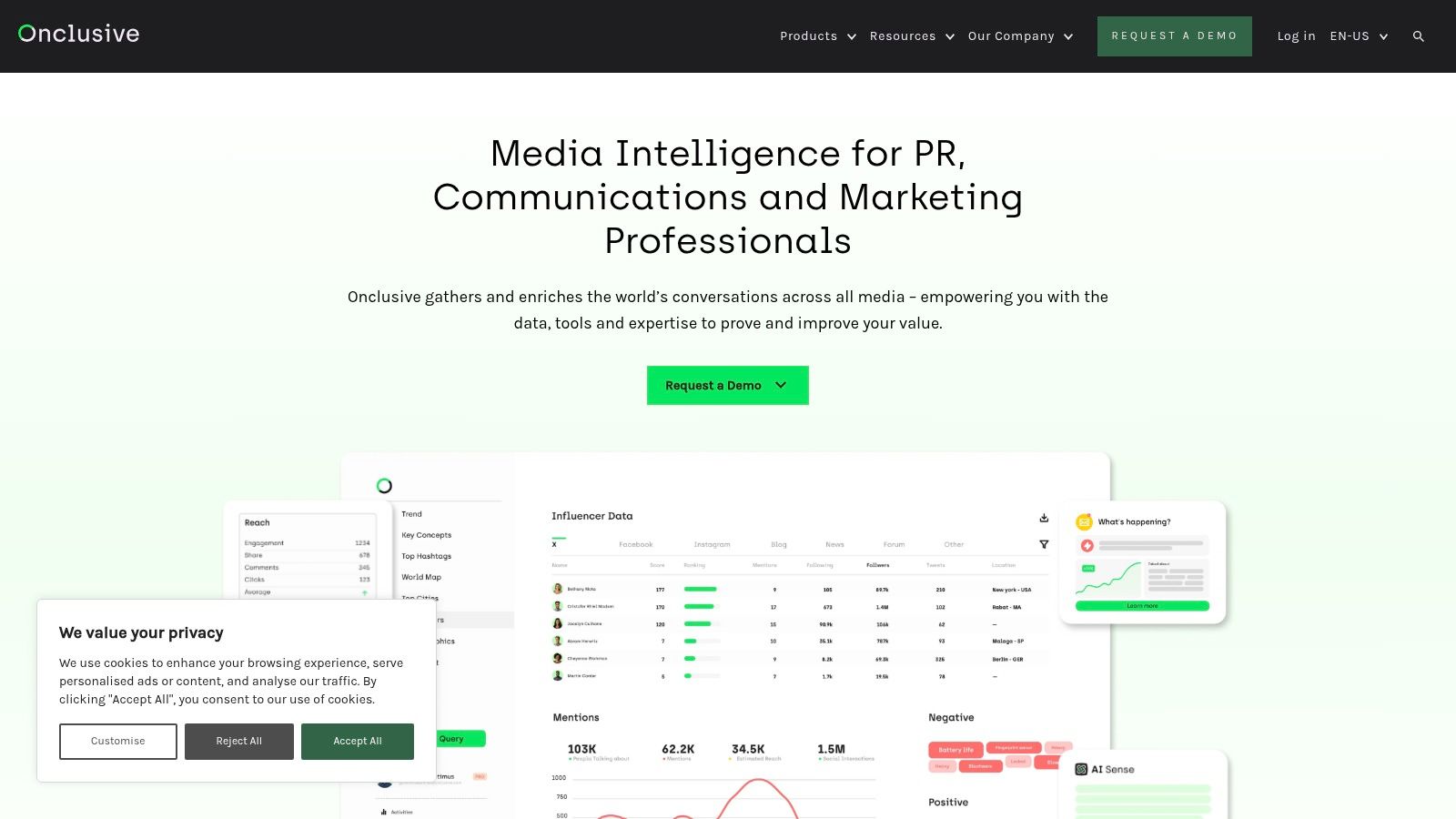
Onclusive is a strong choice for PR teams that still care a great deal about earned media, broadcast visibility and formal reporting. That makes it especially relevant for public sector work, larger organisations and brands whose reputation still moves through traditional news as much as digital conversation. The inclusion of Critical Mention strengthens its broadcast and video monitoring capability.
Some reputation threats don't begin on social at all. Instead, they begin in a live interview clip, a regional TV package, a trade press story, or an online publisher with authority in your market.
Built for communications reporting
Onclusive's value is less about trendy dashboards and more about disciplined communications monitoring. It gives teams a single environment for tracking coverage, keywords, online news, social mentions and reporting workflows. If your directors still want a clean morning brief and a measurable picture of coverage, that's useful.
The shift toward always-on monitoring supports this approach. UK organisations show a strong preference for continuous reputation data rather than static reports, with real-time tracking and sentiment analysis now integrated into many monitoring stacks. Onclusive fits teams that need live awareness but still report in a structured PR format.
- Works well for: Communications departments, public bodies, press offices and agencies managing formal reporting.
- Less ideal for: Small teams that mainly need social listening with simple alerts.
Visit Onclusive.
9. Birdeye (UK)
A customer leaves a one-star Google review for your Manchester branch at 8:10am. By 9:00am, the sales team is asking questions, the branch manager is defensive, and nobody knows whether this is a one-off complaint or the fifth version of the same problem this month. That is the operating context Birdeye suits best.
Birdeye is not trying to compete with the broader media intelligence platforms in this list. Its strength sits closer to the point of sale. Reviews, listings, customer messages and surveys are often the channels that shape revenue first for clinics, restaurants, estate agents, dealerships, practices and franchise groups. If reputation risk shows up branch by branch, Birdeye is built for that job.
What I like from a PR workflow perspective is the discipline it can impose. Head office gets oversight. Local teams can still respond quickly. Patterns become visible before they turn into a wider brand issue. That matters because review management is usually where operational failure and public perception meet.
Strong for local reputation control
Birdeye makes most sense when trust is won or lost at location level. Can each site respond on time, keep listings accurate, flag recurring complaints, and route serious issues to the right person? Those are practical questions, not vanity metrics.
For UK SMEs, that makes Birdeye more than a monitoring tool. It is part of the response system. Used properly, it helps teams standardise replies, fix weak review handling, and connect customer feedback to service improvement. That is why we often treat online review management for local service businesses as a PR and operations issue, not just a marketing task.
The trade-off is clear. Birdeye is less suited to deep press monitoring, narrative analysis across news and social, or complex stakeholder tracking. If your risk profile depends on journalists, investors, campaign groups or policy debate, you will need another tool alongside it.
- Best fit: Multi-location firms and service-led businesses where reviews directly affect enquiries, bookings and footfall.
- Useful beyond monitoring: Messaging, surveys and listings management support follow-up as well as visibility.
- Less suited to: Cross-web research, social discourse analysis and public affairs work.
See Birdeye UK.
10. Brand24
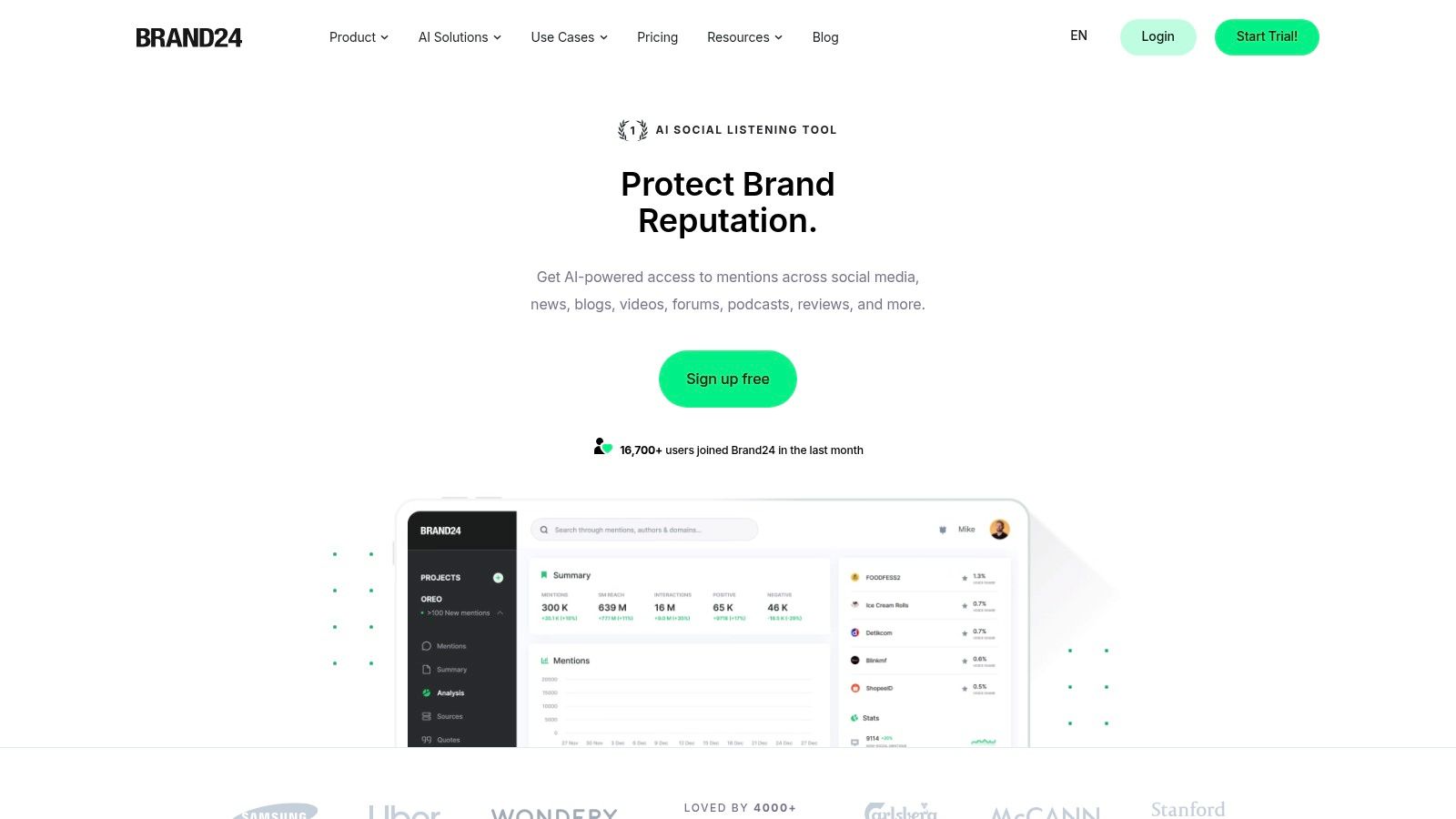
Brand24 is the most obvious SME-friendly option on this list. It's simpler, more accessible and generally easier to adopt than the heavyweight platforms. That doesn't make it weak. It makes it practical for founder-led businesses that need visibility without a major onboarding project.
You get mention tracking across social, news, blogs, forums and podcasts, plus sentiment indicators, alerts and reporting. For many start-ups and small firms, that's enough to move from blind spots to usable awareness.
The affordable middle ground
A lot of UK advice on reputation monitoring tools jumps from free basics straight to enterprise suites. That misses the actual operating reality for many SMEs. A 2025 UK SME survey found 72% of Scottish SMEs can't justify subscriptions above £500 per month, while 61% say they need round-the-clock crisis visibility. That's why a layered, affordable stack often makes more sense than one expensive platform.
Brand24 works well as part of that stacked approach. It gives you broad mention monitoring without enterprise overhead. Then, if your risk profile demands it, you can add specialist tools around it rather than overbuying from day one.
- Why SMEs like it: Transparent usage limits, straightforward onboarding and useful alerts.
- Where it's weaker: Audience segmentation, governance and advanced historical analysis aren't as deep as top-tier suites.
- Practical use: Good first paid tool for founders who've outgrown Google Alerts and need proper monitoring discipline.
Start with the tool your team will open every morning. Upgrade when your reputation risk becomes more complex, not because a sales deck says you should.
Visit Brand24.
Top 10 Reputation Monitoring Tools, Core Feature Comparison
A founder gets a difficult journalist enquiry at 8:12am, customer complaints are building on social by 8:30, and by 9 the leadership team wants to know whether this is a passing flare-up or the start of a reputational problem. That is the real test of a monitoring platform. The best tools do more than collect mentions. They help a PR team triage risk, assign response priority and brief decision-makers without wasting half the morning exporting screenshots.
That is how we assess these platforms at Carlos Alba Media. We are not looking at feature lists in isolation. We are looking at how each tool fits into an actual PR workflow, from early warning and media monitoring to reporting, stakeholder insight and crisis handling.
| Tool | Core features ✨ | Quality ★ | Best for 👥 | Price 💰 | Notable USP 🏆 |
|---|---|---|---|---|---|
| Brandwatch (Consumer Research) | AI sentiment, historical queries, enterprise governance, wide web coverage | ★★★★☆ | Agencies, public sector, enterprises | 💰 Enterprise (sales-led) | 🏆 Deepest data coverage + UK G‑Cloud options |
| Talkwalker | Real-time Lumen AI, visual analytics, broad connectors (incl. video) | ★★★★☆ | SMB → Enterprise PR & comms teams | 💰 Tiered (packaged → enterprise) | 🏆 Strong visual & crisis monitoring |
| Meltwater | Combined news, broadcast & social; API & PR reporting | ★★★★ | PR/communications teams wanting earned + social | 💰 Custom contracts | 🏆 Unified earned-media + social platform |
| Sprout Social (Listening add‑on) | AI topics, historical retrieval, integrated with scheduling/engagement | ★★★☆☆ | Social teams already on Sprout | 💰 Add‑on / per‑seat | 🏆 Unified publish→engage→listen workflow |
| Hootsuite Consumer Insights | AI sentiment, image/logo recognition, enterprise workflows | ★★★★ | Hootsuite users and social teams | 💰 Add‑on (sales-assisted) | 🏆 Image recognition for UGC discovery |
| Pulsar Platform | Audience segmentation, multi‑lang sentiment, TRAC workflow | ★★★★☆ | Insights/strategy teams, UK/EU public sector | 💰 Bespoke / onboarding required | 🏆 Excellent audience mapping & UK support |
| Signal AI | Reputation & risk signals, regulatory monitoring, KPI focus | ★★★★ | Execs, CCOs, regulated sectors | 💰 Enterprise (sales-led) | 🏆 Focus on regulatory & reputational risk intelligence |
| Onclusive (inc. Critical Mention) | Integrated monitoring + broadcast/video tracking, PR measurement | ★★★★ | PR teams tracking broadcast & earned media | 💰 Consultative enterprise pricing | 🏆 Broadcast + PR measurement in one pane |
| Birdeye (UK) | Review aggregation, messaging, surveys, listings for multi‑sites | ★★★★ | Multi‑location/local businesses in the UK | 💰 Sales-assisted (local packages) | 🏆 Purpose-built local reputation & response tools |
| Brand24 | Mentions feed, sentiment, influencer scoring, clear usage limits | ★★★★ | SMEs & startups | 💰 SMB‑friendly, transparent plans | 🏆 Affordable, fast setup with clear limits |
A few buying points matter more than the star ratings.
Brandwatch, Talkwalker and Pulsar are stronger choices when the brief includes segmentation, historical analysis and board-level reporting. Meltwater and Onclusive make more sense for teams that still work heavily around press coverage, journalist activity and earned media reporting. Birdeye solves a different problem altogether. It is built for review management and local reputation across multiple locations, not broad strategic listening.
For SMEs, the trade-off is usually between depth and daily usability. Enterprise suites give better filtering, governance and data structure, but they also need setup time, budget approval and someone in-house who will run them properly. Lighter tools get teams operational faster. That often matters more than having every possible dashboard.
If the tool cannot support your response process, it is the wrong tool, even if the demo looked impressive.
Take Control of Your Brand Narrative
A founder gets a hostile review at 7:15am, a journalist emails at 8:02am, and by 9:30am the issue is already being discussed in places the business never checks. That is how brand narrative gets away from a company. Usually, the problem is not the first mention. It is the gap between the signal and the response.
Reputation monitoring tools close that gap. Used properly, they give founders and SMEs earlier visibility on reviews, press coverage, social chatter and stakeholder concerns, so PR can work from evidence instead of guesswork. That is the practical shift that matters. Monitoring is not a vanity layer for marketing. It is part of operating discipline.
For UK businesses, the pressure is obvious. Reviews shape buying decisions, and customers now expect brands to notice and respond quickly. The wider monitoring market is also growing, as noted earlier, which reflects a simple reality: always-on visibility is becoming standard business infrastructure, not a specialist extra.
The right setup starts with exposure, not software envy. A restaurant group with ten locations has a different risk profile from a fintech founder speaking regularly to the press. One may need tighter review response and listing control. The other may need journalist alerts, sentiment shifts and issue tracking across broadcast, online news and social channels. Sensitive sectors often need both, plus a clear escalation path for legal, compliance or investor questions.
This is the part software vendors rarely explain well. A tool only earns its keep if it fits a real workflow.
At Carlos Alba Media, we build monitoring around decision-making. Former journalists and PR operators do not look at alerts the same way a generic dashboard does. We ask different questions. Is this complaint contained or spreading? Is the source credible? Does the wording suggest a customer service problem, a newsroom angle, or the start of a reputational attack? Those distinctions decide whether the right response is a refund, a statement, a call to a reporter, or a decision to hold position and monitor.
That judgement matters under pressure. A platform can flag volume spikes, sentiment changes and unusual mention patterns. It cannot tell a founder how a headline is likely to be written, whether a delay will read as evasive, or which line in a statement will create a second-day story. Experienced counsel fills that gap.
Start with a system your team will use every day. Assign ownership. Set alert thresholds. Define what gets answered publicly, what moves to private resolution, and what gets escalated within the hour. If broader search visibility is part of the brief as well, a good guest posting service can support discoverability alongside monitoring.
Good tools help you see faster. Good PR judgement helps you act correctly.
Carlos Alba Media brings together former national news journalists and experienced agency professionals to help founders, SMEs and established brands protect reputation, win coverage and respond decisively when scrutiny hits. If you want senior-level PR advice without big-agency drag, contact Carlos Alba Media.