
Earned media is positive brand exposure you haven't paid for or created yourself, such as news coverage, customer reviews, or word-of-mouth recommendations. In the UK, 92% of consumers trust word-of-mouth recommendations and third-party reviews more than paid advertising from a brand, which is why earned media carries more weight than most marketing teams first assume.
That definition sounds simple. It isn't that simple. Businesses often hear “earned media” and think “free publicity”, then wonder why results are patchy, slow, or non-existent. The placement itself may be unpaid, but the work behind it rarely is. Strong earned media takes newsroom judgement, sharp positioning, useful content, disciplined outreach, and a clear idea of what a journalist, reviewer, customer, or podcast host would care about.
That gap between theory and practice matters. A glowing review on Trustpilot, a founder quote in a trade title, a BBC radio interview, a LinkedIn post from a genuine customer, or a product mention in a national paper all sit under the same umbrella. They're all third-party validation. They all influence trust. They also all have different mechanics, risks, and levels of commercial value.
What Is Earned Media and Why Trust Matters Most
Earned media is any unpaid publicity or endorsement your business receives from a third party. You didn't buy the placement, and you didn't publish it yourself. Someone else decided your business, product, opinion, or story was worth sharing.
In practice, that includes:
- News coverage in outlets such as the BBC or The Guardian
- Customer reviews on platforms such as Trustpilot
- Organic social mentions on LinkedIn or X
- Word of mouth between customers, peers, and industry contacts
- Expert quotes where a journalist includes your comment in a wider story
The reason businesses care about it is trust. According to a 2023 report by the UK's Center for Media Measurement and the CIPR, 92% of UK consumers trust word-of-mouth recommendations and third-party reviews more than any form of paid advertising from a brand. That's the commercial core of earned media. People believe other people, independent reviewers, and journalists more readily than they believe an ad.
Why earned beats controlled messaging
Paid media has a role. Owned media has a role too. But both come with an obvious qualifier: the audience knows the brand controls them. Earned media works differently because it arrives through an independent voice.
Practical rule: If your message only exists on channels you control, many buyers will treat it as a claim. When it appears through a third party, they're more likely to treat it as proof.
This is also why earned media matters beyond old-school PR. It shapes search visibility, brand reputation, and how your company is understood by people who don't know you yet. If you're looking at how third-party mentions affect discovery, this piece on Boost brand presence in AI search is useful because it connects media credibility with modern search behaviour.
For businesses trying to understand the discipline behind coverage, media relations is the working engine. This overview of media relations gives the operational side of how those third-party placements are earned.
Placing Earned Media in the PESO Model
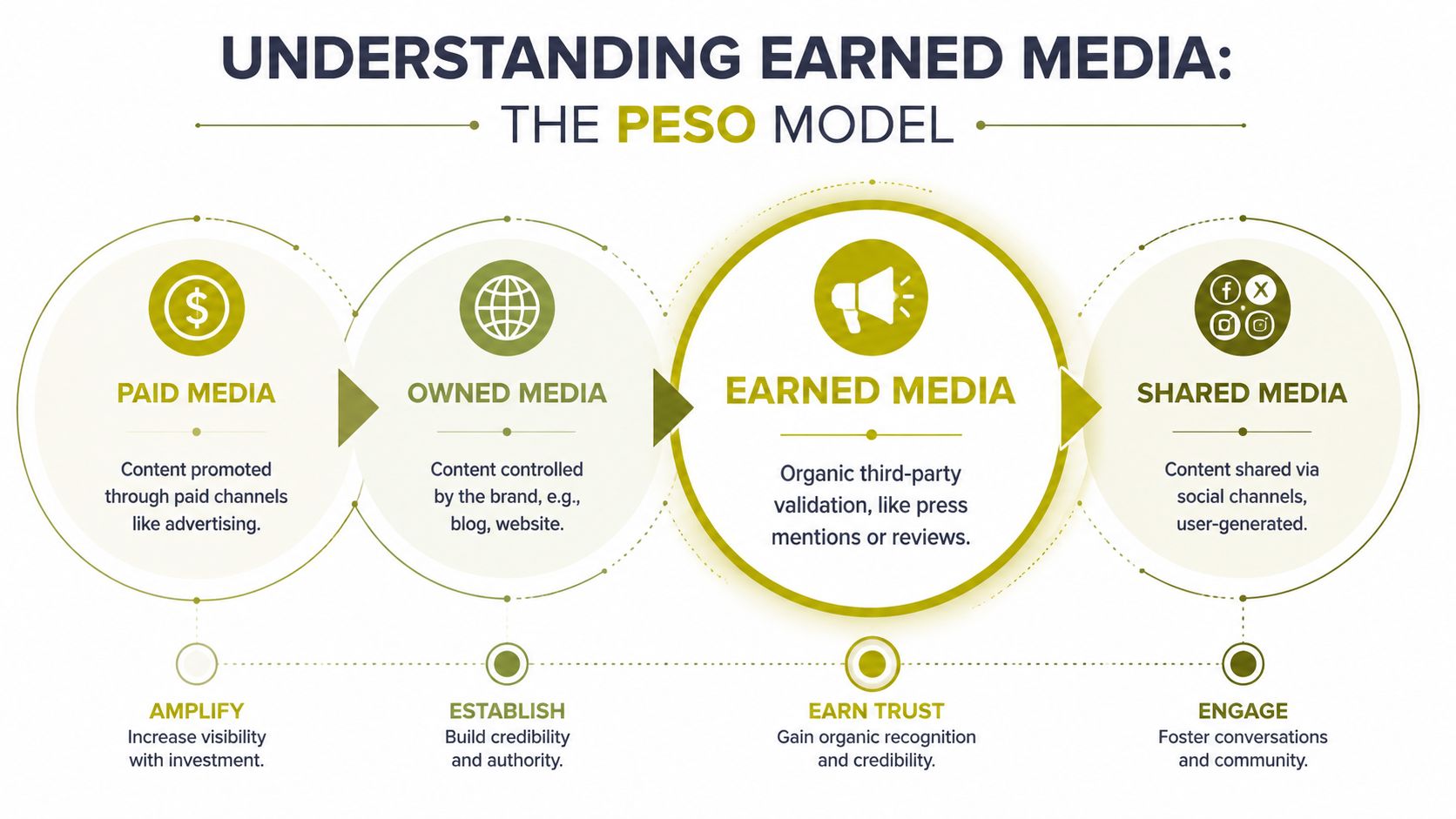
Most confusion around earned media disappears when you place it inside the PESO model: Paid, Earned, Shared, Owned. Think of it as a marketing portfolio. Each asset behaves differently. Some buy reach quickly. Some build a foundation you control. Earned media is the holding that often takes longer to build but carries outsized credibility when it lands.
What each channel actually does
Paid media is straightforward. You pay for placement. That could be Google Ads, sponsored LinkedIn posts, paid influencer work, or display campaigns. It's useful when you need speed, targeting, and predictable distribution.
Owned media is what sits under your control. Your website, blog, email newsletter, case study library, founder page, and brand social accounts all live here. You decide the message, the timing, and the format.
Shared media is what happens through social distribution and community interaction. A customer reposting your announcement, an industry contact discussing your product on LinkedIn, or a conversation around your campaign can sit here. Shared and earned often overlap, but shared media is more about circulation and participation than editorial validation.
Earned media is what others say about you without you paying for the placement. It's the review, feature, quote, mention, or recommendation that carries independence.
The PESO model at a glance
| Media Type | Definition | Example | Key Characteristic |
|---|---|---|---|
| Paid Media | Promotion you buy | LinkedIn sponsored post | Fast reach, high control |
| Owned Media | Content you control | Company website article | Full control, long-term asset |
| Shared Media | Content distributed socially | Customer repost on X or LinkedIn | Community spread and interaction |
| Earned Media | Unpaid third-party validation | News article or review | Trust and credibility |
Paid media buys attention. Owned media holds attention. Earned media validates attention.
The strongest programmes don't isolate these channels. They connect them. A press mention can send people to an owned landing page. A strong blog post can give a journalist useful background. A social clip from a broadcast interview can become shared media. That joined-up approach is where smaller firms often outperform larger ones because they move faster and waste less effort.
If you want a practical view of how social and PR reinforce each other rather than compete, this guide to PR and social media is worth reading.
The Measurable Business Benefits of Earned Media
The easiest mistake is treating earned media as a vanity play. It isn't just “nice coverage”. When it's done properly, it changes commercial outcomes.
A 2024 CIPR study of UK SMEs found that campaigns integrating earned media saw a 28% increase in conversion rates within 90 days, and that earned media reduces customer acquisition costs by an average of £14.50 per lead compared to paid channels, as cited in this earned vs paid media analysis.
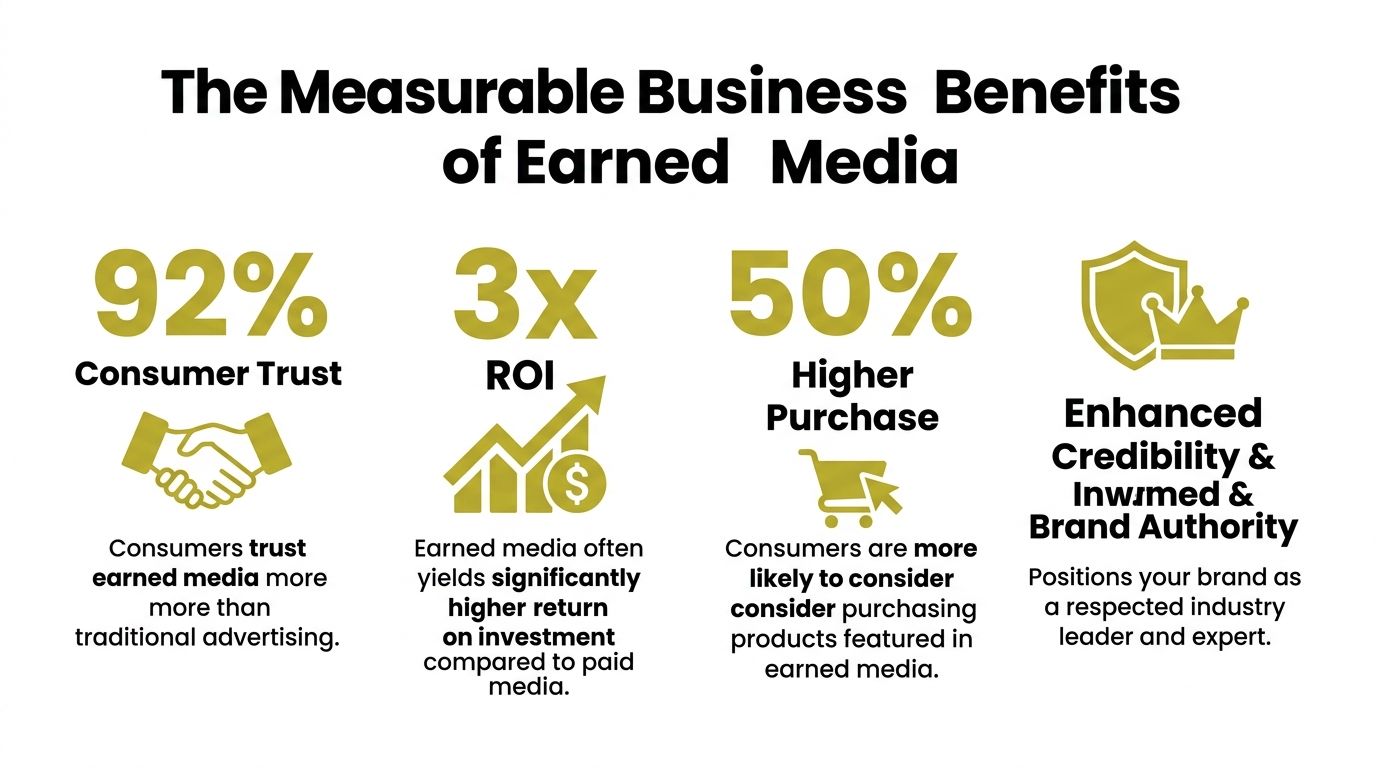
Those are the kinds of numbers that move earned media out of the “brand awareness” bucket and into commercial planning.
Conversion and cost efficiency
When a prospect sees your business recommended by a journalist, reviewer, industry voice, or genuine customer, they arrive warmer. The sale doesn't close because a headline exists. It closes because credibility friction drops.
That matters especially for SMEs. Smaller firms don't always have the budget to outspend larger competitors in paid media auctions. They can still compete if they earn trust faster.
A useful way to think about it is this:
- Paid media can put you in front of people quickly
- Earned media can make those same people less sceptical
- Owned media can convert that attention once it arrives
Search and authority benefits
Earned media also pulls weight in search. Earned media mentions containing backlinks to a company's website can increase organic search traffic by an average of 35% over six months, according to this earned media discussion from Cision.
That happens because coverage on reputable third-party sites can strengthen trust signals around your brand. Not every mention includes a link, and not every link carries equal value. A relevant article on a respected publication is usually more useful than a low-quality mention that exists only to tick a reporting box.
Coverage has two jobs. It should influence people directly, and it should strengthen the digital trail people find when they search for you later.
What businesses should measure
Don't stop at clip counts. Measure outcomes. The most useful indicators usually include:
- Lead quality from referral traffic after coverage
- Branded search behaviour after a notable mention
- Sales conversations where prospects reference an article, review, or interview
- Conversion performance on landing pages connected to campaign activity
If a business wants support building a campaign around these outcomes rather than collecting random mentions, a public relations campaign should be planned around story quality, channel fit, and commercial follow-through.
Real-World Examples of Earned Media in Action
Earned media doesn't arrive in one standard format. It shows up differently depending on the market, the story, and the audience you need to influence.
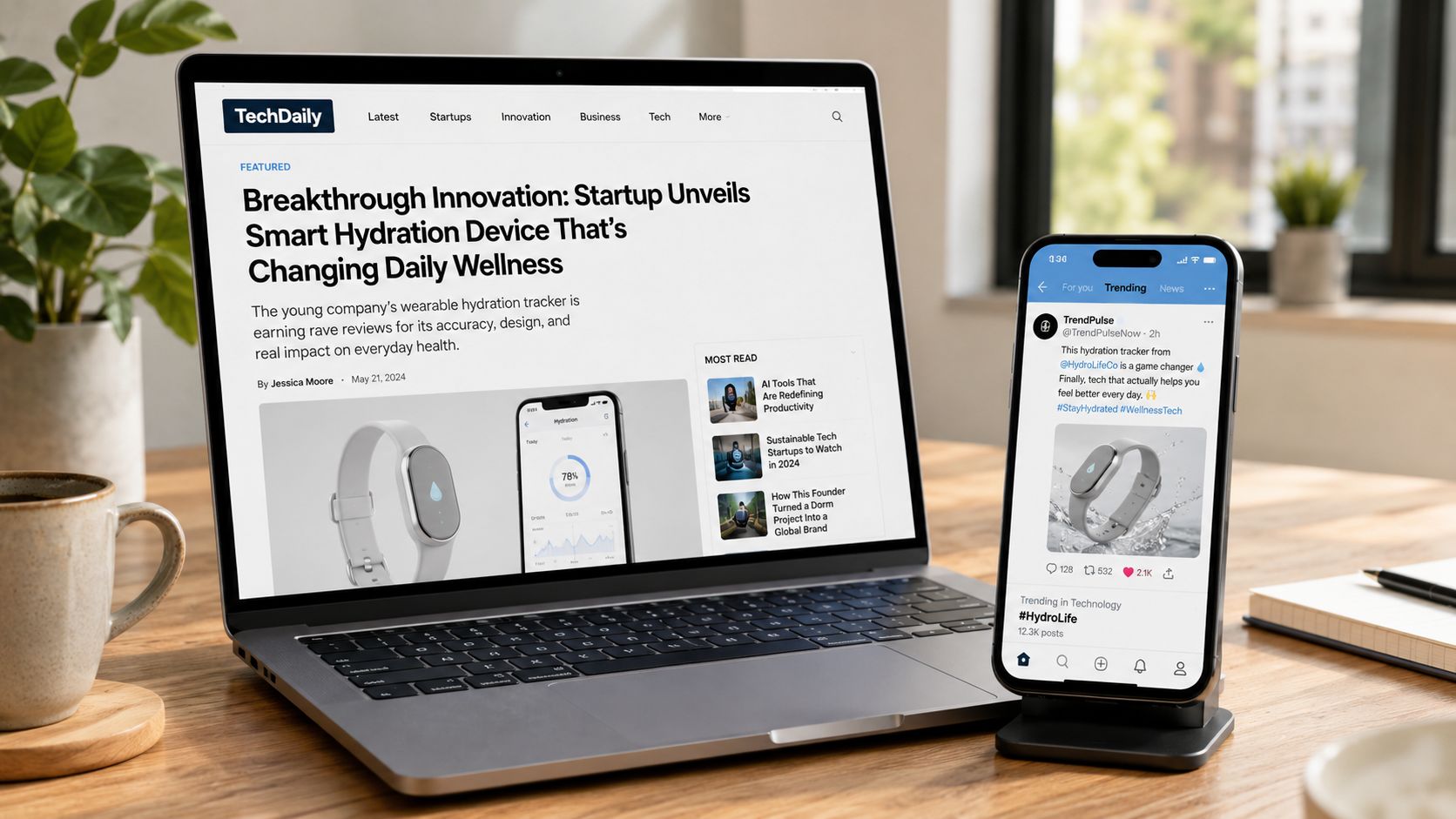
A Scottish tech founder quoted in a national business story is earned media. So is a restaurant receiving a run of detailed customer reviews that push it into local conversation. So is an architect being invited onto local radio after commenting on housing trends. Different format, same principle: independent visibility.
Four common forms that matter
Press coverage often carries the highest authority. A founder interview, product feature, or expert comment in a respected outlet can influence buyers, investors, partners, and future journalists all at once.
Reviews are often underestimated. For many SMEs, a strong review profile does more day-to-day commercial work than a one-off feature because buyers check it close to the moment of decision.
Organic social mentions can be powerful when they come from genuine users, credible operators, or niche communities. A customer showing your product in use on LinkedIn or Instagram is still earned media if you didn't pay for it.
Podcast appearances and expert commentary can be especially effective for service firms. They let people hear how a founder thinks, not just what the company sells.
This video gives a useful broad overview of how the concept works in practice:
What strong examples have in common
The best earned media examples usually share three traits:
- They're specific. Journalists and audiences respond to real detail, not vague claims.
- They help someone else. A good story informs, warns, explains, or entertains.
- They travel. One mention often prompts another when the angle is sharp enough.
A practical example. A hospitality business doesn't need to shout that it offers “excellent service”. That's marketing language. It needs a story a publication can use, a customer experience worth reviewing, or a founder viewpoint tied to a live issue in tourism. That's what gets discussed.
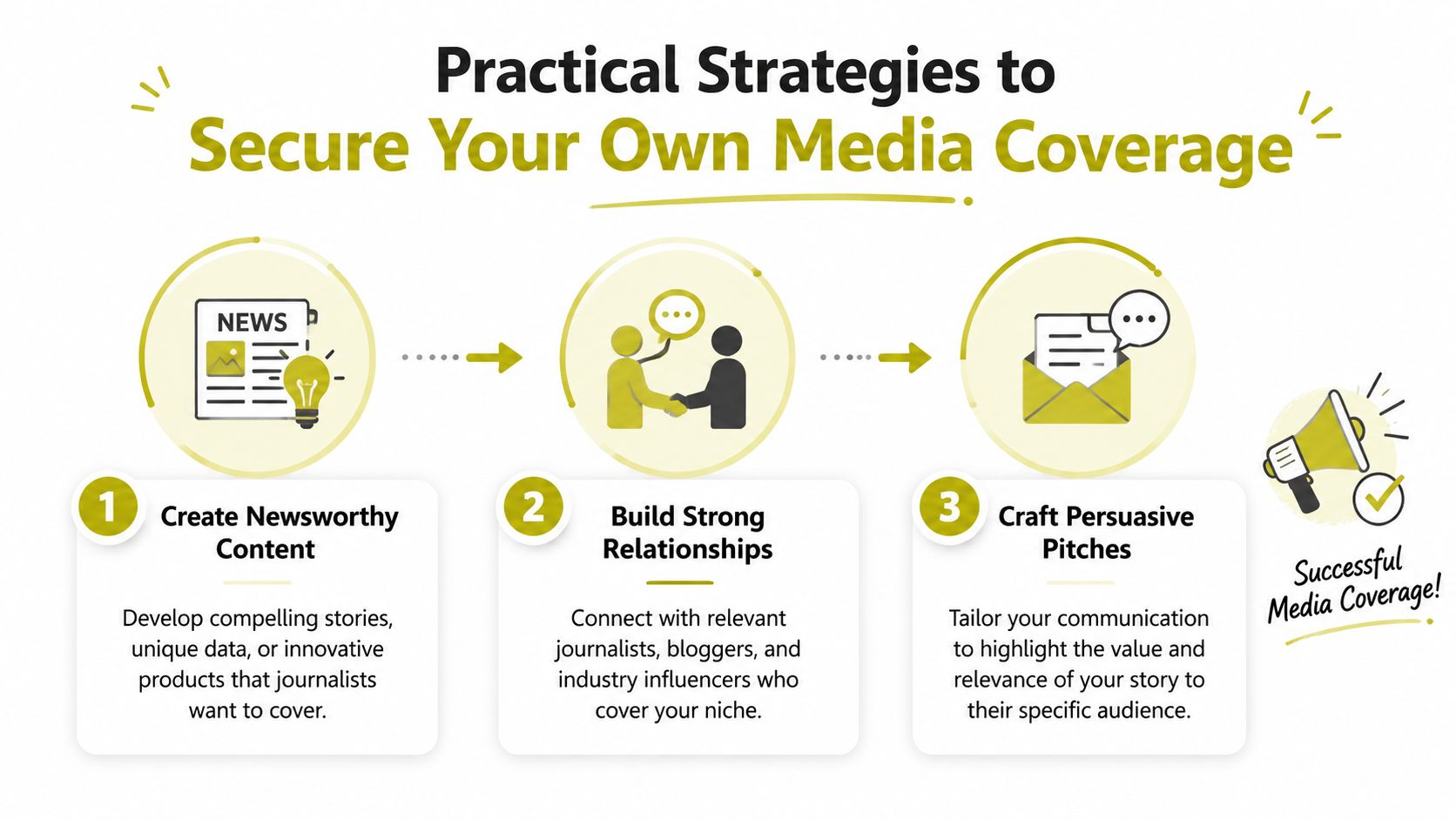
Practical Strategies to Secure Your Own Media Coverage
The blunt truth is that earned media isn't free in any meaningful business sense. The article placement may be unpaid, but the preparation almost never is. A 2025 CIPR report found that 68% of UK SMEs underestimate the resources required to generate earned media, treating it as a free alternative instead of a strategy that benefits from professional expertise.
That's the paid PR versus free media paradox. You're not paying the journalist for coverage. You are paying, in time or fees, for the capacity to deserve attention and present the story properly.
Start with something genuinely newsworthy
Most failed outreach dies before the pitch is even written because the underlying story isn't strong enough.
Newsworthy material usually falls into a few practical categories:
- Original insight such as internal trend data, market observations, or customer behaviour patterns
- A clear milestone such as a launch, funding event, expansion, major hire, or partnership
- A useful expert view on an issue journalists are already covering
- A human angle that makes an abstract topic concrete
A press release that says “we're delighted to announce” isn't a story. A release that explains what changed, why it matters, who it affects, and why now is worth attention has a chance.
Build relationships before you need them
Journalists don't need more generic pitches. They need relevant, accurate, timely help. That means reading what they cover, noticing recurring themes, and contacting the right person rather than blasting a database.
Being useful beats being loud. A precise comment returned quickly will often do more for your reputation with a newsroom than ten overproduced press releases.
Former journalists know this instinctively because they've worked to deadlines and filtered hundreds of weak approaches. That's one reason specialist firms can be more efficient. Carlos Alba Media, for example, works with teams where everyone is a former national news journalist or has agency experience working with international brands, which suits organisations that need both newsroom understanding and commercial discipline.
Write pitches like a reporter would read them
A strong pitch is short, relevant, and framed around the audience of the publication, not your internal priorities.
A useful working structure is:
- Lead with the story angle, not your company biography.
- Show relevance fast by tying the pitch to a current issue, trend, or audience need.
- Offer substance through a comment, data point, example, or interview access.
- Make response easy with availability, assets, and a direct contact.
Podcast outreach follows the same logic. If that's part of your plan, this guide to becoming a podcast guest is a practical resource because it focuses on positioning and outreach rather than generic visibility advice.
When to Hire a Specialist Earned Media Agency
DIY earned media can work when the ask is narrow, the story is obvious, and someone in-house has the time to handle it properly. It usually breaks down when a business needs consistent coverage, stronger national results, crisis sensitivity, or outreach that won't damage relationships through poor pitching.
The biggest gap is rarely effort. It's judgement. Teams often don't know whether their story is publishable, which editor cares, how to tighten an angle, or when to hold back because a pitch will waste goodwill.
That's where specialist support earns its keep. According to a 2024 CIPR survey, agencies where 100% of the team holds prior national news journalist credentials secure 45% more national broadcast coverage for SME clients than generalist agencies, cited in this summary reference on earned media. Newsroom experience changes the quality of story selection, timing, and pitch writing.
For businesses that need senior-level help, that background matters. Carlos Alba Media's specialist nature is straightforward. Everyone who works for Carlos Alba Media is a former national news journalist or has agency experience of working with international brands. That kind of team is useful when the brief isn't just “get coverage”, but “get the right coverage, with the right message, without wasting time”.
If your business wants earned media that supports reputation, search visibility, and commercial growth, Carlos Alba Media can help you shape the story, target the right outlets, and handle outreach with newsroom-level judgement.