
Let's be clear: media training isn't about learning to parrot a few stale, corporate lines. It's the strategic rehearsal that empowers leaders to communicate with confidence and authenticity. It’s about mastering your message so thoroughly that you can steer any interview—no matter how challenging—back to the points that matter for your business.
What Is Media Training and Why It Matters Now
Think of it as a flight simulator, but for interviews. A pilot doesn't just read the manual; they spend hours in a simulator, practising how to handle turbulence, engine failures, and all sorts of unexpected problems in a completely safe environment. That's exactly what media training does for you. It prepares you for the tough questions, the technical glitches, and the sheer pressure of a high-stakes interview before you're live on air.
And in the UK today, this isn't a luxury; it’s a necessity. With 82% of UK adults now getting their news online and 71% still tuning into TV news, a modern spokesperson has to be just as compelling on a podcast as they are on camera or in a short clip destined for social media. Your performance is no longer just for the journalist—it’s for your customers, your investors, and the public at large.
The most effective training comes from those who have been on the other side of the microphone. At Carlos Alba Media, our specialist nature means everyone who works for us is a former national news journalist or has agency experience of working with international brands. We bring real-world newsroom insight to every session.
In a world where a single soundbite can be clipped, shared, and scrutinised across countless platforms in minutes, this preparation is your best defence. It’s about protecting your brand's reputation and ensuring you are the one driving the narrative, not just reacting to it.
This is especially true for senior leaders, where every detail of delivery counts. Understanding the finer points, such as executive accent coaching for media interviews, can make a significant difference. Ultimately, mastering your delivery ensures every word has an impact, regardless of the channel. For a full breakdown of how we get you there, take a look at our comprehensive guide to media training in the UK.
Why Top Executives Often Have a Media Skills Gap
It’s a strange irony we see all the time. The very person who knows the most about a company – the brilliant founder, the visionary CEO – is often the last person you’d want in a live TV interview. Why? Because the qualities that make you a phenomenal leader can completely backfire when a camera is rolling.
Deep expertise is a double-edged sword. Your instinct is to be precise, thorough, and technically correct. But to a journalist or a general audience, this often translates into dense jargon, rambling answers, and buried headlines. This creates a critical media skills gap, where your message gets lost and a golden opportunity turns into a confusing mess.
The Missing Piece in Leadership Development
The problem isn't a lack of intelligence or confidence; it’s a lack of specific training. Most leaders have spent years honing their craft but have never been taught the distinct rules of engaging with the press. It’s like being a world-class musician asked to play a completely new instrument, live on stage. It can be painfully obvious when an otherwise commanding executive suddenly looks flustered and defensive.
This gap often starts in our education system. A 2026 national survey found that only 38% of people were given any real opportunity to learn about and analyse media messages at school. As the research highlights, this deficit shows up later in life when experts struggle to make their knowledge accessible. You can read the full findings on the state of media literacy education to see the scale of the issue.
This is exactly where media training comes in. It’s not about changing your personality. It's about adding a vital new communication tool to your leadership kit.
The goal is to translate complex industry knowledge into clear, compelling messages that resonate with any audience. It’s a bridge between your expertise and the public’s understanding.
Turning Expertise into a Superpower
Our approach at Carlos Alba Media works because our team is built differently. Every single person who delivers our training is a former national news journalist or has agency experience of working with international brands. We’ve sat on the other side of the desk for thousands of interviews. We know the shortcuts, the tricks of the trade, and exactly what a reporter is looking for.
This insider perspective is our secret sauce. We don't just share a few presentation tips. We give leaders a proven framework to:
- Anticipate a journalist's angle and prepare for the questions they really want to ask.
- Structure answers to be concise, memorable, and impossible to misinterpret.
- Handle difficult or hostile questions with complete composure.
- Confidently guide the conversation back to the key messages you need to land.
Our specialist background means we can take an executive's deep expertise and turn it from a potential weakness into their greatest communication asset. We give you the tools to make sure your brilliance shines through, clearly and powerfully, every single time.
Inside a Modern Media Training Session
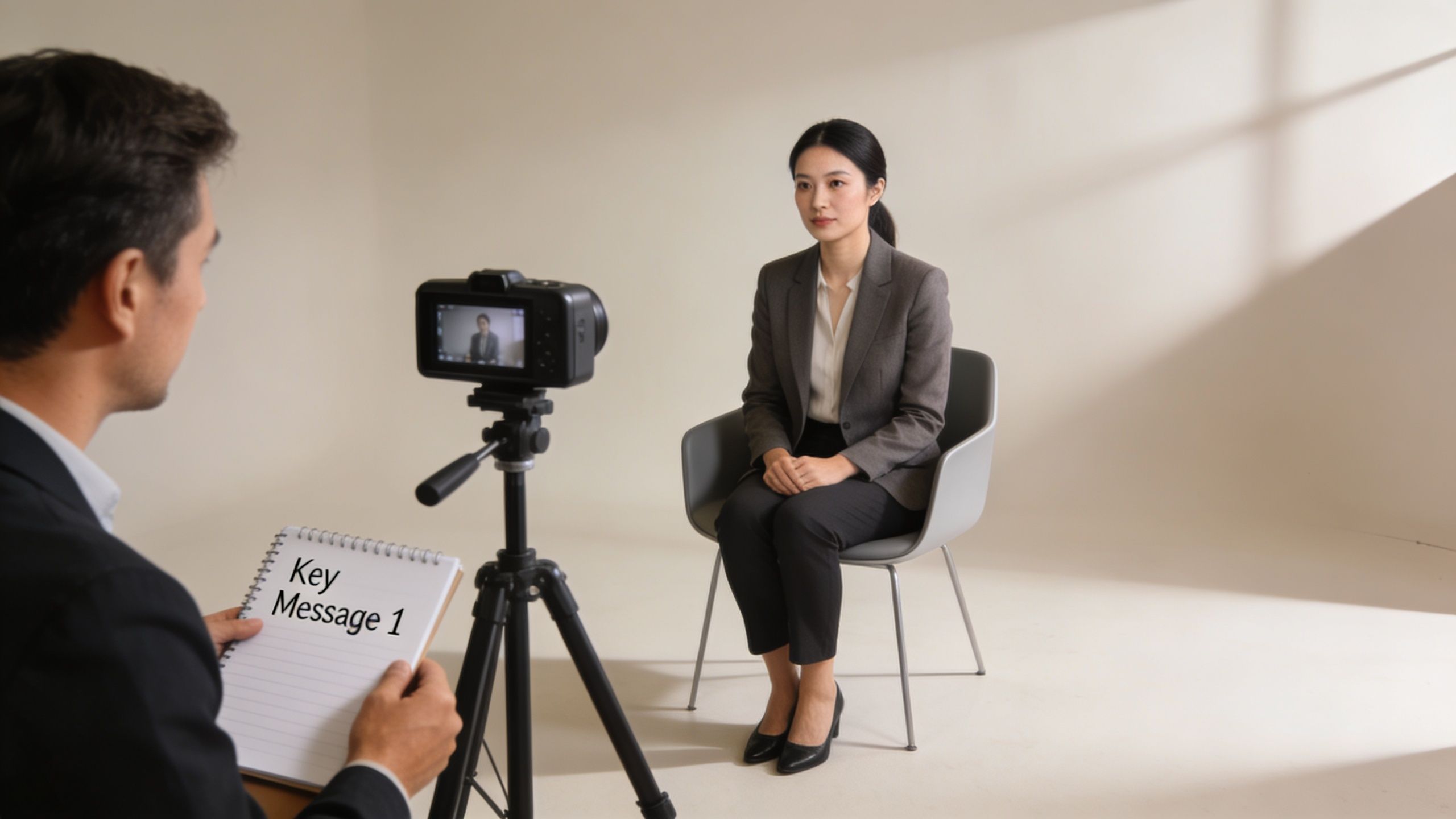
So, what actually happens when you walk through our doors for media training? If you’re picturing a stuffy lecture room and endless PowerPoint slides, think again. A proper session is an immersive, hands-on workshop that throws you right into the pressures of a real media interview.
It all starts with your message. We work with you to cut through the jargon and complexity of your business, boiling it all down to three clear, memorable key messages. These become your anchor points—the core ideas you want any audience, whether it’s a journalist or a potential customer, to remember long after the conversation is over.
With your messages nailed down, we move on to the practical techniques. One of the most powerful tools in your arsenal is ‘bridging’. It’s a simple but incredibly effective way to build a verbal bridge from a tricky or off-topic question straight back to one of your key messages. This is the skill that allows you to guide the conversation, not just be a passenger in it.
The Power of Realistic Practice
The heart of any good media training session is realistic, on-camera practice. This is where the theory gets put to the test. The entire Carlos Alba Media team is made up of former national news journalists or professionals with agency experience of working with international brands, so our interview simulations feel unnervingly real.
We ask the tough, awkward, and unexpected questions because, frankly, we used to do it for a living in national newsrooms. This insider knowledge lets us create a safe space for you to be challenged, build genuine confidence, and sharpen your skills under pressure.
This process is about transforming expertise into clear, confident communication.
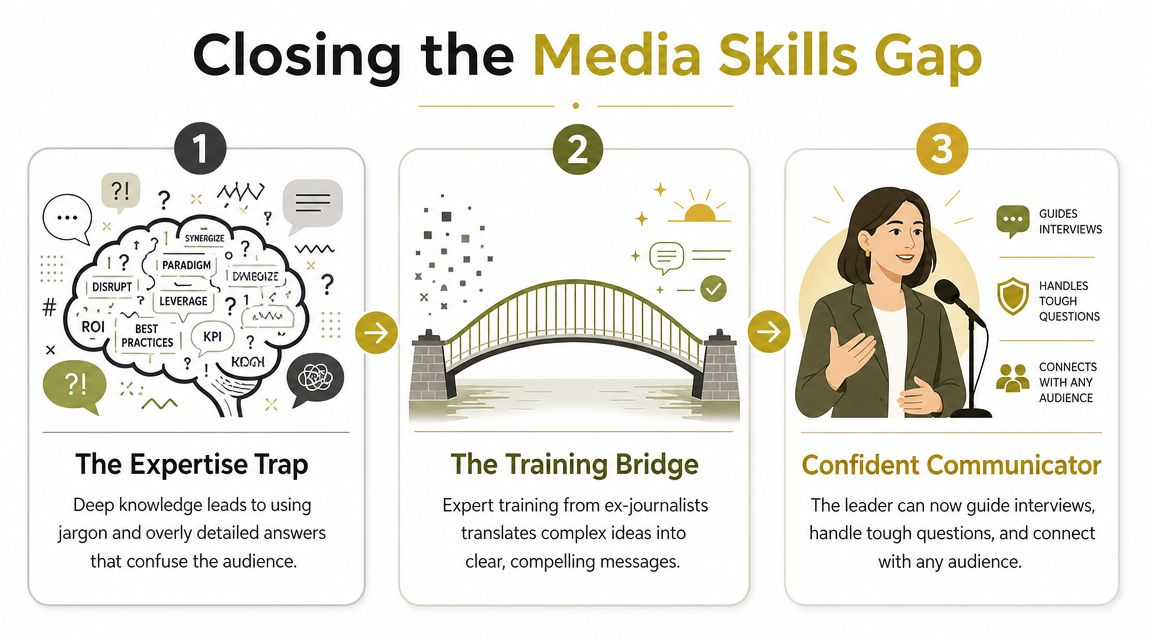
Expert-led training closes that gap, turning deep subject knowledge into something anyone can understand and connect with.
Review, Refine, Repeat
Practice is only useful if it comes with feedback. After every simulated interview, we sit down and review the recording together. Seeing yourself on screen is a powerful learning tool; studies on reinforcing corporate knowledge with video replay confirm just how effective it is for making new skills stick. We’ll analyse everything together:
- Message Delivery: Did your key messages land clearly and persuasively?
- Body Language: What were your posture, eye contact, and gestures saying?
- Tone of Voice: Did you sound as confident and authoritative as you felt?
- Handling Pressure: How did you react when interrupted or put on the spot?
This cycle of practice and detailed feedback allows for real-time improvement. We find what works, identify what needs a bit of polish, and then we go again. Each round builds muscle memory, making the techniques feel natural instead of rehearsed.
By the end of the day, you won’t just know the theory—you’ll have lived it. For a deeper look at what goes into getting ready, take a look at our guide on how to prepare for a media interview.
How Media Training Protects Your Brand Reputation
In today's 24/7 news cycle, a single fumbled interview can do serious damage. It can spook investors, alienate customers, and undo years of hard work building your brand. The best way to think about media training isn't as a "nice-to-have" but as your company’s reputational insurance policy.
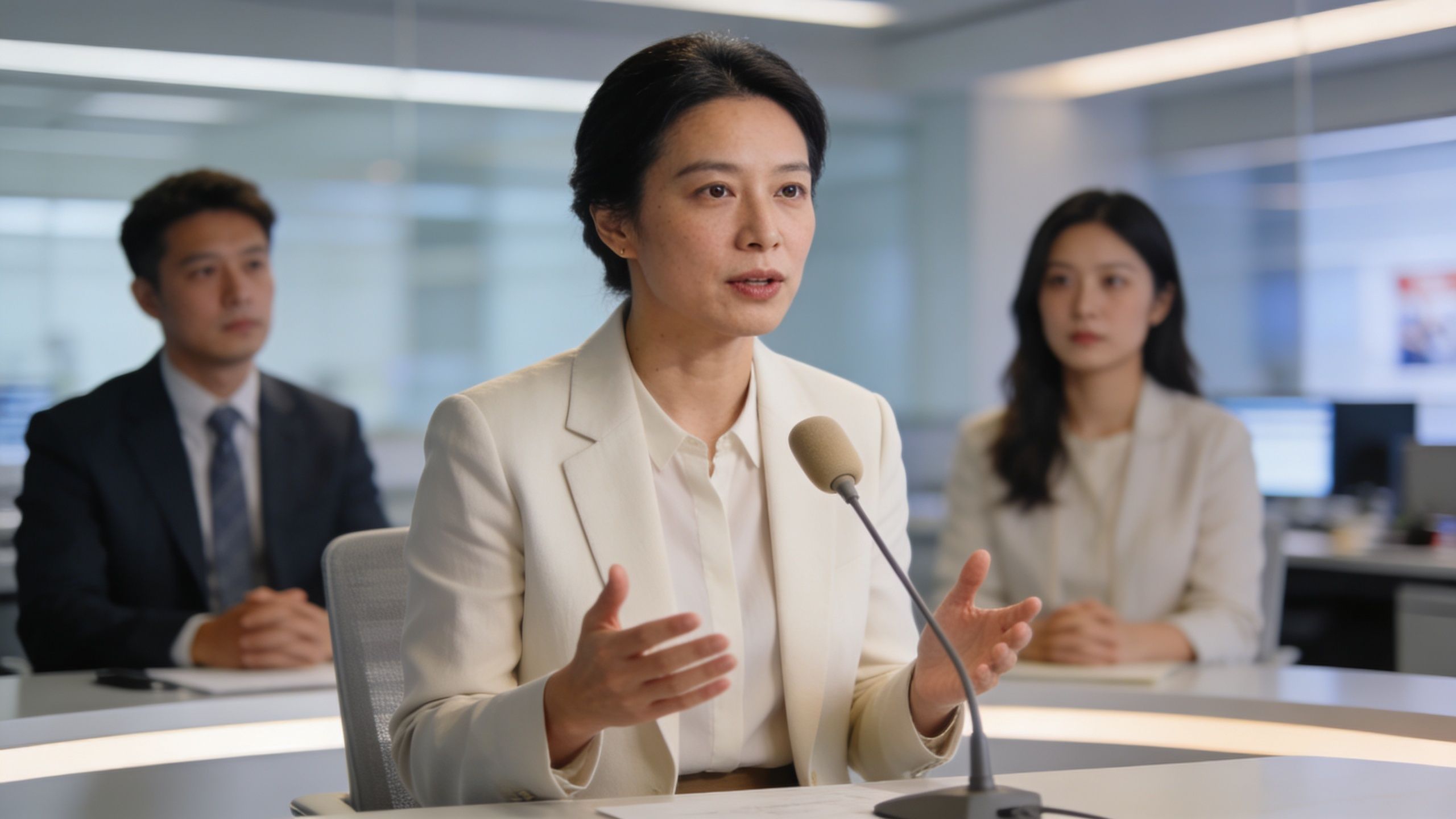
It’s about being prepared. By equipping your leaders to handle tough questions, you’re actively managing one of your biggest risks. A spokesperson who has been properly trained knows how to correct a mistake without getting defensive, how to handle a hostile line of questioning with grace, and how to project total confidence. That ability to stay in control, especially under pressure, is what builds public trust.
From Risk to Opportunity
An interview is no longer just a chance for a bit of publicity; it's a public test of your credibility. With misinformation being a major public concern, a shaky performance can spread like wildfire online. Conversely, a clear and confident interview can do wonders for your brand's authority. In fact, research from 2026 underscored just how much the public worries about information quality, making a spokesperson's clarity absolutely vital. You can read more about these findings on public trust and information to see why this is so critical.
This is where our background at Carlos Alba Media really makes a difference. Everyone who works for us is a former national news journalist or has agency experience of working with international brands. We don't just teach you the theory; we give you the insider's playbook on how newsrooms actually think and operate.
Our approach is to turn what feels like a risk into a genuine strategic advantage. We help you get ahead of the journalist's tactics so you're never caught on the back foot.
This insight is what allows your spokespeople to walk into a high-stakes interview and see it not as a threat, but as a golden opportunity to strengthen your brand's position. We make sure your leaders are ready for anything, so they can protect and even enhance your most valuable asset: your reputation.
For any business that takes its public image seriously, this isn't just another cost. It’s an essential investment in your long-term resilience and growth.
Choosing the Right UK Media Training Partner
Picking a media training provider is one of the most critical calls you'll make for your brand’s reputation. It's easy to be swayed by slick brochures, but the difference between a generic workshop and truly expert-led coaching can be the difference between success and a front-page disaster.
So, what’s the secret? It comes down to one non-negotiable factor: your trainers must be former senior journalists.
Think of it this way. Only someone who has lived inside a frenetic newsroom, battled deadlines, and held people’s feet to the fire can give you a genuine, unvarnished look at how the media really works. They know the psychology, the pressures, and the shortcuts. It’s an insider’s perspective you simply won’t get from a standard corporate trainer.
When you're vetting potential partners, that should be your very first question.
The Journalist Litmus Test
Before you sign on the dotted line, you need to dig into the team’s credentials. This isn't about being difficult; it's smart due diligence. It’s about making sure your investment will actually prepare you for the real world.
At Carlos Alba Media, we’ve built our reputation on this principle. Every single person delivering our training is either a former national news journalist or a senior agency figure with vast experience managing international brands. We don’t just talk about newsrooms – we bring firsthand, hard-won knowledge from having worked at the heart of them.
When you choose a training partner, you're not just buying a course; you're buying experience. Make sure that experience is relevant, senior, and directly mirrors the challenges your spokespeople will face.
Key Questions to Ask a Potential Partner
Once you've confirmed their journalistic credentials, the vetting shouldn't stop. A true partner will welcome detailed questions and provide clear, confident answers. Here’s what you should be asking:
- Sector Experience: Have they worked with companies in your industry before? Do they have a firm grasp of your specific challenges, from regulatory hurdles to the competitive landscape?
- Tailored Approach: Will they customise the training for your specific goals and for the individuals in the room? A one-size-fits-all programme is a red flag.
- Flexible Delivery: Can they offer different formats? A good provider should be able to deliver anything from a one-off session for a specific launch to an ongoing retainer for senior counsel.
- Measuring Success: How do they define a good outcome? The goal should be a measurable leap in confidence and performance, not just a tick-box exercise.
Your search should be for a long-term partner, not just a one-off vendor. For more advice, we've compiled a guide to the best UK media training companies to help you make the right choice. Getting this right means you’re prepared, protected, and ready to turn every media interaction into an opportunity for your brand.
Your Media Training Questions Answered
Whenever you're thinking about investing in something like media training, it’s only natural to have a few questions. How much does it cost? How long does it take? And, most importantly, will it actually work?
We get it. At Carlos Alba Media, we’ve been answering these questions for UK business leaders for years. All our trainers are either former national news journalists or have agency experience of working with international brands. Here’s our honest take on the questions we hear most often.
How Much Does Media Training Cost in the UK?
This is usually the first question, and the honest answer is: it varies. The cost really depends on who is doing the training, how long the session is, and how much preparation is needed.
You can find basic group workshops for around £1,500, but a full-day, one-to-one session with a senior ex-journalist preparing a CEO for a crisis could be £5,000 or more.
Our approach at Carlos Alba Media is to give you that senior-level expertise without the hefty price tag of a big London agency. We provide a clear, bespoke quote based on exactly what you need to achieve, ensuring your budget is spent on getting you ready for the real-world challenges that matter to your business.
Good media training shouldn't be seen as a cost, but as an investment. It’s an insurance policy for your reputation and a tool for maximising every single press opportunity.
Will Media Training Make Me Sound Robotic?
This is probably the biggest myth out there, and one we’re always happy to bust. The answer is a firm no—as long as you have the right trainers.
Poor training forces you to memorise lines, which is exactly why people can sound stiff and unnatural. Great training is completely different. It gives you a framework, not a script.
Because we’re former journalists, we don't give you pre-canned answers. We teach you the techniques to:
- Structure your thoughts on the fly, so you're always clear and impactful.
- Use bridging techniques to guide the conversation back to your key points without sounding slippery.
- Control your nerves and let your genuine personality and expertise shine through.
Our goal is to make you sound like a more confident, focused version of yourself—not someone else.
How Long Does a Typical Training Session Take?
We tailor every session, but they usually fit into two main formats.
- Half-Day Session (3-4 hours): This is a brilliant, punchy format for getting the fundamentals down. It’s enough time to refine your messages, learn core interview techniques, and go through at least one challenging on-camera practice interview with detailed, constructive feedback.
- Full-Day Session (6-7 hours): Going for a full day allows us to really dig deep. We can run multiple, varied practice interviews—pitting a friendly podcast chat against a tough broadcast grilling, for example. It also gives us more time for advanced crisis scenario planning and really perfecting your delivery.
We’ll work with you beforehand to figure out the right length based on who’s being trained and what you want to walk away with.
Is Media Training Worth It for a Small Business?
Absolutely. In fact, you could argue it's even more vital for a startup or SME.
When you’re a smaller business, every media opportunity is huge. One fantastic interview on a popular podcast or in a key trade publication can transform your credibility and drive growth in a way that’s hard to replicate.
But the opposite is also true. A mishandled interview can do real damage, and unlike a huge corporation, you probably don’t have a massive comms team to run damage control. The spokesperson is the brand.
Media training levels the playing field. It equips leaders of smaller businesses with the confidence and skills to go toe-to-toe with bigger, more established competitors and make every single media interaction count.
Ready to turn every interview into an opportunity? At Carlos Alba Media, our team of former national news journalists provides the specialist media training you need to protect your reputation and drive your message home. Get in touch today to discuss how we can prepare you for the spotlight.