
Which agency is best for your business?
There is no single answer, and that is the main mistake in most “best marketing agency UK” roundups. A founder who needs PR coverage, a scale-up that needs qualified pipeline, and an established consumer brand chasing broad awareness should not buy the same agency model.
The UK market gives buyers plenty of choice. That is useful, but it also makes shortlisting harder. You are not choosing between a few obvious names. You are choosing between integrated networks, performance specialists, creative leaders, and senior-led boutiques with very different ways of working.
The smarter question is simpler. Which type of agency fits your goal, your budget, and the amount of work your internal team can realistically carry?
That is the angle here. Instead of treating “best” as a single league table, this guide breaks the market into categories of strength. Some agencies are strongest in creative brand building. Some are built for paid media efficiency and measurable growth. Others make sense when a business needs strategy, execution, data, and channel coordination under one roof.
That distinction matters in practice. Large organisations often need process, reporting depth, and cross-channel coordination. Smaller firms usually get better value from tighter teams, faster decision-making, and direct access to experienced operators. An agency can be excellent in its category and still be the wrong hire for your brief.
The agencies below are well known for good reasons. The useful comparison is not who looks biggest or most decorated. It is who is best suited to the outcome you need.
1. Jellyfish
Need one agency to cover media, analytics, creative and commerce without creating more internal coordination work?
That is the case for Jellyfish. In this guide, it sits in the integrated category. It is a better fit for businesses with channel complexity, regional rollout needs, and a marketing team that wants outside delivery support without handing over all capability.
One reason buyers shortlist Jellyfish is the training offer alongside execution. Many agencies can run paid media or support analytics implementation. Fewer can also help an in-house team get better at the platforms, reporting workflows and operating routines behind the work. If your team still needs to own Google Marketing Platform, GA4, PPC or SEO after the engagement, that matters.
The strongest use case is a business with several moving parts. Multiple markets. Different product lines. Senior stakeholders who expect reporting consistency. Commerce, media and data teams that need to work from the same plan. Jellyfish is built more for that environment than for a simple one-channel brief.
Where Jellyfish fits best
Jellyfish tends to suit buyers who need breadth and process, not just channel output.
- Integrated delivery: Useful when paid media, analytics, creative and commerce need to line up under one operating model.
- Internal capability support: A strong option for teams that want formal training as well as campaign execution.
- Enterprise coordination: Better suited to organisations with approvals, reporting layers and cross-market implementation needs.
- Weaker fit for narrow scopes: A founder-led business looking for a fast SEO project or a small PR brief will often get better value from a focused specialist.
The trade-off is straightforward. Scale usually brings stronger systems, wider channel coverage and better support for complex accounts. It also brings more onboarding, more process and a cost base that can be hard to justify for smaller firms.
I would usually put Jellyfish on the shortlist when the problem is organisational as much as tactical. If the actual challenge is getting media, data, creative and internal teams working in step, an integrated agency can save time and reduce friction. If the brief is narrow and speed matters more than coordination, a lighter partner is often the better buy.
2. Brainlabs
What if the best agency for your business is the one that challenges your measurement model before it touches your media plan?
That is the Brainlabs proposition. In the UK agency market, it stands out as a performance-led option for brands that care about testing discipline, attribution quality and media efficiency. Buyers usually shortlist Brainlabs when the brief is tied to measurable growth, not just campaign output.
It sits in a different category from the creative-led names on this list. If your main question is how to improve paid media returns, test channel mix properly and judge incremental impact with more confidence, Brainlabs is a credible fit. If your main question is brand fame, PR traction or a big creative platform, other agencies will usually lead more effectively.
A practical reason marketers rate Brainlabs highly is its operating style. The emphasis is less on presentation polish and more on experiment design, reporting logic and optimisation decisions that can be defended in a boardroom. That matters for in-house teams under pressure to explain where growth is coming from, why budget is shifting between channels, and which activities are adding value.
A few strengths are especially relevant for performance-focused buyers:
- Structured testing: Useful for teams that want experiments with clear hypotheses, controls and follow-up actions.
- Measurement capability: A good fit when attribution, forecasting and reporting quality are limiting decision-making.
- Channel breadth with a performance lens: Paid search, paid social, programmatic, creative and influencer work can be managed against the same commercial goals.
- Stronger fit for accountable growth briefs: Works well where leadership expects evidence, not just channel activity.
I would usually place Brainlabs in the "best performance agency" category rather than the "best all-round marketing agency" category. That distinction matters. A business with heavy customer acquisition targets, serious media spend and a data-literate team can get a lot from that model. A smaller company looking for quick-turn PR support, founder profiling or a lightweight outsourced marketing function may find it too specialised or too heavy.
The trade-off is clear. Brainlabs brings rigour, but rigour has a cost in setup, process and expectation. Teams that value speed over methodology, or need broad brand storytelling more than measurement depth, may get better value elsewhere.
Its client profile points in the same direction. Brainlabs has worked with large consumer and high-spend brands such as Tesco, TUI and Formula 1, which supports the wider view that it is best suited to ambitious companies that need serious media and analytics capability rather than a narrow one-channel service.
3. VCCP London
VCCP is what I'd call a bridge agency. It appeals to brands that don't want to choose between brand building and digital activation. Some agencies are brilliant at creating a platform but weak on downstream performance work. Others are efficient in channels but never produce a campaign idea that people remember. VCCP has built its reputation on connecting those two worlds.
That makes it a sensible shortlist option for established consumer brands, challenger brands with national ambition, and companies trying to align creative, data and performance in one system rather than across several suppliers.
What VCCP does well
The benefit of an integrated structure is coherence. Strategy, creative, performance, SEO, retention and influencer activity can support one commercial direction instead of becoming separate workstreams with separate politics.
For buyers, that usually means:
- Stronger campaign continuity: Brand platform and channel execution are less likely to drift apart.
- Useful for larger launches: Particularly when campaigns need consistency across multiple touchpoints.
- Good for marketing leaders managing many stakeholders: One integrated agency can reduce friction internally.
The downside is the same one that follows most major London groups. You get capability, but you also get process. If you're a small business that needs quick decisions, direct access to senior people and adaptable scopes, VCCP can feel too structured for the job.
That regional gap matters more than many lists admit. One UK agency ranking analysis highlights that 89% of listed top agencies are London-headquartered, while SMEs represent 99.2% of all private sector businesses, with regional agencies often able to operate at 30 to 40% lower cost. That doesn't make London agencies worse. It does mean they're often benchmarked for a different buyer than the SME owner searching “best marketing agency UK”.
For firms outside the capital, especially Scottish and regional businesses, specialist consultancies are well-positioned to compete. Carlos Alba Media is a strong example of that specialist model. It's Scottish-led, with teams in London and Glasgow, and everyone working on accounts is either a former national news journalist or has agency experience with international brands. That mix suits companies that need senior counsel, sharp messaging and practical execution without enterprise overhead.
4. Mother London
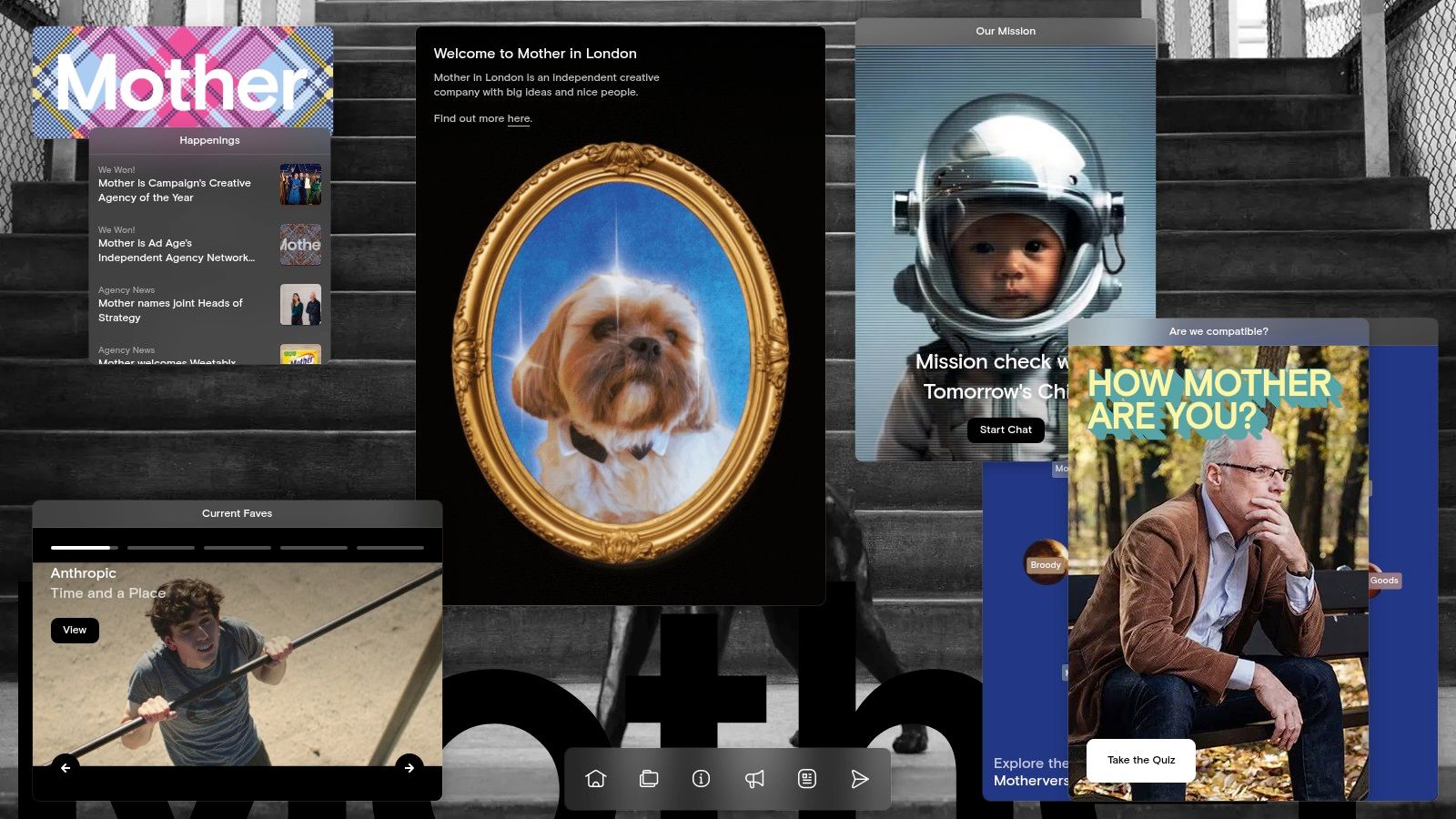
Mother is the agency you hire when distinctiveness is the brief. Not efficiency first. Not dashboard-first reporting. Distinctiveness. If your brand is forgettable, over-rational or trapped in category sameness, Mother is the sort of creative partner that can change how people see you.
That independence matters. It often produces work with a stronger point of view than holding-company output, and it tends to attract clients who want cultural impact rather than only lower-funnel optimisation.
Best for brands that need a sharper creative edge
Mother works best for businesses that already understand one thing. A campaign can be technically well distributed and still do very little if the core idea is weak.
Indeed, Mother earns its place:
- Brand platforms: Strong fit for companies refreshing positioning or identity.
- Culturally resonant campaigns: Better for brands that want memorability, not just media efficiency.
- International potential: Helpful if a creative idea needs to travel across markets.
A great creative agency can make paid media work harder. It can't rescue a broken offer, poor product experience or confused leadership team.
The trade-off is obvious. Mother is not the all-purpose answer for every brief. If the assignment is technical SEO recovery, always-on PPC management or crisis communications, you'd usually bring in different specialists. Creative excellence doesn't replace channel depth in every discipline.
This is also where many founders make a category mistake. They hire a creative agency when they specifically need a communications consultant or a demand-generation partner. For earned media, corporate profile building and sensitive reputation work, specialist PR firms are often the better lead. Carlos Alba Media sits in that camp. Its newsroom-led approach is especially useful when messaging, spokespeople, crisis readiness and national media exposure matter as much as campaign aesthetics.
5. AMV BBDO
What if your problem is not channel execution, but brand salience at scale?
That is the context in which AMV BBDO deserves serious attention. In the UK market, it sits firmly in the creative and integrated brand-building category rather than the performance-first camp. That distinction matters because buyers often compare agencies as if they solve the same problem. They do not.
AMV BBDO is strongest when a business needs a big organising idea, high production standards and campaign work that can hold up across TV, video, outdoor, digital and brand-led social. For established brands, that can be the difference between activity that fills channels and work that shapes preference.
A few points explain why it remains in this conversation:
- Brand-building strength: Best suited to briefs centred on fame, distinctiveness and long-term market position.
- Creative discipline: Useful when senior stakeholders need work that is ambitious but still strategically grounded.
- Integrated rollout: Strong option for campaigns that need to travel across multiple channels without losing the core idea.
There is a trade-off. AMV BBDO makes more sense for brands with meaningful reach, serious budgets and a clear appetite for above-the-line or cross-channel creative investment. Smaller businesses often get better returns from agencies built around search, paid social, CRO, CRM or PR, because those services map more directly to immediate pipeline and sales goals.
This is why the idea of the "best marketing agency UK" needs categories, not a single winner. AMV BBDO is one of the better choices in the creative heavyweight group. It is less likely to be the right lead partner for a regional business that needs local SEO, a B2B firm chasing qualified leads, or a founder-led company still proving product-market fit.
If the brief is market share, memorability and broad audience reach, AMV BBDO is a credible shortlist agency. If the brief is tighter attribution, lower CPA or technical growth execution, another type of agency will usually fit better.
6. Impression
Need a growth agency that can improve traffic, conversion and reporting without the cost structure of a large creative network?
Impression is a strong candidate in that category. It tends to suit scale-ups, ambitious SMEs and in-house teams that want one partner across SEO, paid media, digital PR, CRO and analytics, with enough senior capability to connect those disciplines properly.
That mix matters. Many businesses do not need a lead agency for TV, brand platforms or sponsorship strategy. They need better pipeline economics, clearer attribution and a website that turns more of the right traffic into leads or sales.
Where Impression fits best
Impression is at its best when the brief is digital growth with commercial accountability. The practical advantage is channel coordination. SEO can inform content priorities, paid media can test demand faster, digital PR can support authority and visibility, and CRO can stop acquisition spend being wasted on weak journeys.
A few things make it worth shortlisting:
- Broad digital execution: Useful for businesses that want search, paid, PR and conversion work handled in one place.
- Good fit for the mid-market: Better aligned than many large agencies with companies that need results and hands-on communication, not layers of process.
- Commercial focus: Stronger fit for briefs tied to lead quality, revenue efficiency and site performance than for pure brand fame work.
The trade-off is clear. Impression makes more sense as a performance and growth partner than as the lead choice for a business planning a mass-reach brand campaign. If your main question is how to lower CPA, improve conversion rates, or grow qualified traffic, it is in the right conversation. If your main question is how to build a national creative platform, another agency category will usually be a better fit.
One practical point gets missed in agency selection. Traffic growth on its own is rarely the answer. If the site experience is weak, paid and organic gains get blunted fast. Agencies that can connect acquisition with CRO usually give clients a better chance of turning channel activity into profit, not just reporting growth in visits.
For founder-led firms and regional businesses, there is also a more specialist option. Carlos Alba Media offers PR, digital content, SEO, UX, web performance and crisis communications through a senior-led model. Because its team includes former national news journalists and agency professionals who have worked with international brands, it can suit organisations that want experienced input without heavy account layers.
7. Rise at Seven
Need an agency that can turn search demand into headlines, links and brand attention, not just fix metadata and publish routine blog posts?
Rise at Seven sits in the specialist category of this list. Its strength is search-led creative work. The agency built its reputation on combining SEO, digital PR and content ideas that journalists and audiences may pick up. For the right brief, that can produce a very different result from a standard technical SEO retainer.
The fit depends on how your company operates. Brands that approve ideas quickly, react to cultural moments, and are comfortable with campaigns that carry a point of view usually get more from this model. Businesses that want low-risk content production and long approval chains often do not.
Where Rise at Seven is strongest
Rise at Seven makes the most sense when organic growth needs earned attention as well as on-site optimisation. Many brands have already handled the basics. The remaining gap is getting coverage, links and search visibility from ideas that deserve attention.
It is a strong option for:
- Digital PR tied to SEO goals: Best for brands that care about authority, links and rankings together, rather than treating PR and search as separate workstreams.
- Reactive campaign development: Suits teams that can approve fast and use timely stories, seasonal moments and search trends well.
- Creative content for competitive SERPs: Useful where plain informational content is unlikely to stand out or attract links on its own.
That specialism comes with clear trade-offs. Rise at Seven is a better fit for earned visibility than for full-service media buying, broad corporate communications, or highly regulated reputation work. If your brief includes paid social scale-up, investor messaging, or crisis handling, you may need a second agency alongside it.
That distinction matters in this broader guide. “Best marketing agency UK” does not mean one agency is best for every objective. Rise at Seven is one of the stronger choices in the specialist search and digital PR category. It is less likely to be the lead partner for a business that needs fully integrated brand, media and comms under one roof.
For companies that want a more senior-led PR and digital model, Carlos Alba Media is a credible alternative, especially for Scottish businesses and SMEs. Its mix of journalism, content, SEO, UX and reputation work can suit organisations where trust, authority and profile are the commercial priority.
Top 7 UK Marketing Agencies Comparison
| Agency | Implementation complexity 🔄 | Resource requirements ⚡ | Expected outcomes ⭐ 📊 | Ideal use cases 💡 | Key advantages |
|---|---|---|---|---|---|
| Jellyfish | High, integrated, multi-market setups 🔄 | High, enterprise retainers, cross-discipline teams ⚡ | Scalable execution + capability building; predictable performance ⭐ 📊 | Large brands needing execution and in-house upskilling 💡 | Full‑funnel services + formal training + GMP/Cloud partnerships |
| Brainlabs | Medium‑High, experimentation and measurement frameworks 🔄 | Medium‑High, analysts, testing budgets ⚡ | Measurable media efficiency and growth via tests and MMM ⭐ 📊 | Brands seeking accountable, optimisation‑led growth 💡 | Test‑and‑learn culture; strong in‑house measurement |
| VCCP London | High, network governance and integrated creative+digital 🔄 | High, global teams and enterprise budgets ⚡ | Brand platforms connected to performance at scale ⭐ 📊 | Brands needing big‑idea brand building with digital activation 💡 | Creative + performance under one P&L; global footprint |
| Mother London | Medium, creative development and production workflows 🔄 | High, premium creative fees and production costs ⚡ | Distinctive, fame‑driving creative with cultural impact ⭐ 📊 | Brands seeking standout, award‑worthy creative campaigns 💡 | Independent creative pedigree; global studios and design arms |
| AMV BBDO (London) | Medium‑High, craft production and effectiveness focus 🔄 | High, specialised craft teams and retainers ⚡ | Highly effective commercial creative with proven outcomes ⭐ 📊 | Major brands wanting effectiveness‑driven creative at scale 💡 | Strong IPA/effectiveness track record; production ecosystems |
| Impression | Medium, digital channels (SEO, PPC, PR, CRO) 🔄 | Medium, suited for SMEs and scale‑ups ⚡ | Measurable organic and paid growth; strong SEO outcomes ⭐ 📊 | SMEs/scale‑ups needing measurable growth without holding‑co overheads 💡 | Strong SEO + digital PR blend; award‑winning and B Corp credentials |
| Rise at Seven | Low‑Medium, search‑first, agile PR workflows 🔄 | Low‑Medium, focused SEO/PR teams ⚡ | Significant organic visibility, links and search ROI ⭐ 📊 | Brands prioritising earned media and SEO‑led growth 💡 | High‑impact digital PR and clear search measurement |
Ready to Find Your Perfect Agency Partner?
Which agency is right for your business?
The answer usually has less to do with reputation and more to do with fit. A company that needs stronger search visibility, cleaner attribution, or better conversion rates will buy badly if it starts with a broad full-service brief. A brand trying to reset its position in the market, earn attention fast, or produce high-impact creative can make the opposite mistake by hiring a narrow channel specialist.
A better way to choose is to sort agencies by the kind of problem they solve.
If the priority is scale, operational depth, and cross-channel delivery, Jellyfish, Brainlabs, and VCCP belong in the conversation. If the brief depends on standout creative work, cultural reach, and brand-building craft, Mother and AMV BBDO are stronger fits. If the goal is measurable digital growth with tighter teams and clearer day-to-day accountability, Impression and Rise at Seven often make more commercial sense.
Budget changes the answer as much as capability.
Large agency groups bring process, specialist benches, and senior strategic cover. They also bring more layers, longer sign-off chains, and fee structures that can be hard to justify for SMEs, founder-led firms, or regional businesses that need speed and direct access to experienced operators. Smaller specialist agencies can be narrower in scope, but they often give clients faster decisions, closer senior attention, and a model built around output rather than overhead.
That trade-off matters. The best agency is not the one that can do everything. It is the one that matches your growth stage, internal team strength, risk tolerance, and reporting needs.
Teams weighing those options should also be clear on the resourcing model before signing anything. This Keywordme marketing team resource is a useful reference if you are deciding between building internally, appointing an agency, or splitting responsibility between both.
Carlos Alba Media is a strong option for businesses that need senior-led PR and digital support without big-agency layers. The offer spans PR, digital strategy, SEO, UX, web performance, media training, and crisis communications. That mix suits companies that need visibility and trust, but also need practical execution tied to commercial goals.
If you want a partner that combines senior PR judgement, digital strategy and newsroom-level storytelling, Carlos Alba Media is worth a conversation. The agency helps start-ups, SMEs and established brands secure meaningful media exposure, sharpen brand positioning and turn visibility into commercial momentum, with teams in London and Glasgow and a model built around experienced operators rather than junior-heavy account structures.