
Think of a restaurant PR agency as your dedicated storyteller. It's a team of specialists who work to shape your reputation, get people through the door, and manage how the public sees your brand. They do this through things like media relations and influencer partnerships to land you earned media coverage—which almost always feels more genuine to potential customers than a straightforward advert.
Why Your Restaurant Needs Specialist PR to Thrive

In the UK's incredibly crowded restaurant market, having amazing food and a great atmosphere is just the starting point. It's what's expected. To actually get ahead and build a profitable business that lasts, you need a story that resonates with people. This is where a specialist restaurant PR agency stops being a 'nice-to-have' and becomes a critical part of your team.
Good PR isn't just about firing off press releases when you have a new menu. It's about building a compelling brand narrative that grabs the attention of food critics, lifestyle journalists, and the bloggers people trust. It’s about securing those authentic, third-party endorsements that lead to a full reservations book and a base of loyal customers.
The Advantage of Journalistic Insight
So, what makes a story truly newsworthy? The answer often lies in the background of the agency team itself. At agencies like Carlos Alba Media, for instance, the whole operation is built on specialist, real-world expertise. Everyone who works for Carlos Alba Media is a former national news journalist or has agency experience of working with international brands.
That kind of insider knowledge gives you a serious edge. A team of ex-journalists instinctively knows how to:
- Dig out the unique angle in your restaurant’s story that an editor will actually care about.
- Craft a pitch that fits perfectly with what a publication is planning for its next issue.
- Develop real, lasting relationships with the right people in the media, making sure your story doesn't just get lost in a crowded inbox.
They know the pressures of a newsroom inside and out. That means they can give journalists exactly what they need, right when they need it, turning your restaurant's best qualities into headlines that bring in business.
Tangible Benefits Beyond Publicity
The knock-on effects of smart PR go far beyond a few good write-ups. A great PR agency helps sharpen every part of your brand, from your online voice to the physical experience in your restaurant. Their storytelling should even influence details like your professionally printed menus, making sure they reflect the quality and narrative being shared in the press.
The numbers back this up. As the UK's restaurant scene has bounced back, PR has been a massive factor. One recent study found that restaurants using PR saw a 27% increase in footfall from earned media alone. That's a world away from the 9% lift seen by those who only used paid ads. And with 42% of smaller venues flagging online reviews as a major reputational risk (according to data available on Toppr.com), the crisis management expertise an agency brings is more vital than ever.
Ultimately, the right partner doesn't just get your name out there; they help you build a respected, resilient brand that can weather any storm. If you’re looking for more ideas, you might find our guide on how to build brand awareness helpful.
Turning Your Business Vision into a PR Game Plan
Before you even think about picking up the phone to a restaurant PR agency, you need to have a brutally honest conversation with yourself. What do you really want to achieve? I’ve seen countless restaurants waste time and money because they started with a vague goal like "we need more press." That's not a plan; it's a wish.
To get results, you have to turn your big business ambitions into sharp, measurable PR objectives.
Think about where you're at right now. Are you the new kid on the block, needing to make a serious splash from day one? Or are you an established local favourite that’s feeling a bit stale and wants to attract a younger crowd? Maybe you’re aiming high, with your sights set on industry recognition like a Michelin star or an AA Rosette. Each of these paths demands a completely different PR strategy.
From Business Goals to PR Targets
Your business goals are the "what" – the commercial results you need to see. Your PR objectives are the "how" – the specific communication activities that get you there. The trick is to draw a straight line between the two.
Let’s get practical. Here’s how this looks in the real world:
Your Goal: Boost those quiet midweek bookings by 20%.
- Your PR Objective: Secure features in local and regional press that rave about your new set lunch menu or after-work cocktail deals.
Your Goal: Become the place for a Sunday roast in your city.
- Your PR Objective: Land a top-three spot in a "Best Sunday Roast" article from a major local publication or a seriously influential food blogger.
Your Goal: Launch a new tasting menu and pull in a fine-dining crowd.
- Your PR Objective: Host an exclusive press dinner for national food critics and top-tier lifestyle writers to generate reviews in places like The Times or The Guardian.
An effective PR objective is always specific, measurable, and tied to a commercial outcome. It’s the difference between "we want more customers" and "we want to increase online reservations by 30% in the next six months by targeting foodies aged 25-40."
Having this kind of clarity is non-negotiable. It gives an agency a concrete target to aim for, ensuring they build a strategy that delivers real value, not just a folder full of press clippings. It also gives you a clear benchmark to judge their performance. A great agency will help you sharpen these targets, using their own experience to make sure they're both ambitious and achievable. For a closer look at what this involves, it’s worth understanding how a successful public relations campaign is built from the ground up.
Identifying the Services You Actually Need
Once you know your destination, you can start thinking about the vehicle. A good agency won’t try to sell you a generic package. They’ll listen to your goals and recommend a specific mix of services to get you there. For instance, at a specialist firm like Carlos Alba Media, the strategy is always shaped by the team’s deep expertise. Since everyone on the team is a former national news journalist or has agency experience working with international brands, the focus is always on what actually works.
Here are the core services and what they're best for:
Media Relations: This is the classic heart of PR—getting your story told in newspapers, magazines, and online. It's all about building relationships with journalists to earn that invaluable third-party credibility. Essential for building awareness and trust.
Digital PR & SEO: This is about more than just online articles. It’s a strategic effort to secure high-quality online coverage and backlinks from respected websites. This not only puts your name in front of diners but also gives your website a serious boost on Google, making it much easier for customers to find you.
Influencer Marketing: Working with the right food bloggers and social media creators can drive people to your tables almost instantly. Recent data for 2026 shows that collaborations with local micro-influencers are especially powerful, as their followers genuinely trust their recommendations.
Social Media Management: This isn't just about posting pretty food pictures. A strategic agency uses social media to build a genuine community around your brand, tell your story, and talk directly with your customers to turn casual followers into regulars.
Press Trips & Events: There's often no substitute for a real-life experience. Organising everything from intimate media dinners to big launch parties creates a buzz that’s hard to ignore and generates fantastic coverage. It’s the best way to show off your food, your team, and your restaurant’s unique atmosphere.
When you define your objectives first, you walk into conversations with a PR agency armed with a clear brief. The discussion immediately shifts from "what can you do for us?" to "how can we achieve this together?"—and that's when you start seeing real results.
How to Vet and Select Your Agency Partner
Choosing a restaurant PR agency is one of the most important decisions you’ll make. This isn't just another supplier; it’s a partnership that hinges on trust, a shared vision, and real, hard-won expertise. You absolutely have to look beyond a slick presentation and dig into their track record, get a feel for their strategic thinking, and be sure you trust the team representing your brand.
The best agencies don't just churn out press releases. They live and breathe the media world. This is where industry specialisation becomes your secret weapon. You need a team that gets the tiny details of the hospitality sector and, more importantly, knows exactly how journalists think.
Look for Journalistic DNA and Big Brand Experience
When you're vetting a potential partner, their team's background is a massive clue to how successful they'll be for you. A specialist agency like Carlos Alba Media, for example, is built on a very specific foundation: everyone who works there is either a former national news journalist or has agency experience working with international brands. This isn’t just a nice-to-have; it's a strategic advantage that directly shapes your results.
Why does this matter so much? Because former journalists have an innate feel for what makes a great story.
They know how to:
- Pinpoint Newsworthy Angles: They can spot that unique hook in your restaurant—whether it's your chef's incredible personal journey or a groundbreaking sustainable sourcing method—and frame it in a way an editor will find irresistible.
- Craft the Perfect Pitch: Having been on the receiving end of thousands of PR pitches, they know what works and what gets instantly deleted. It’s an insider’s perspective you can’t fake.
- Build Real Relationships: Their connections aren't just names in a database. They're built on years of professional respect, which means their calls and emails actually get answered.
This journalistic insight, combined with experience managing PR for major international brands, is a powerful mix. It means the agency can come up with creative, headline-grabbing ideas while making sure every single action is tied back to your business goals.
A team of ex-journalists doesn't just know how to talk to the media; they are the media. They anticipate what a critic needs before they ask for it and deliver stories that are ready to publish, dramatically increasing your chances of securing high-impact coverage.
Beyond the Case Study
Every agency will show you their greatest hits. Your job is to look deeper. When they walk you through a case study, don’t just be impressed by the glossy press clippings. You need to ask the tough questions to understand the 'how' and the 'why' behind their success.
Ask them point-blank:
- What was the original objective here? Did you actually achieve it?
- What was the biggest challenge, and how did you tackle it?
- Which specific journalist did you target for this, and what was your reasoning?
- What was the tangible business impact? Did it lead to something like a 25% jump in Monday-night bookings or a sold-out event?
This flow from your vision to the services an agency provides is fundamental.
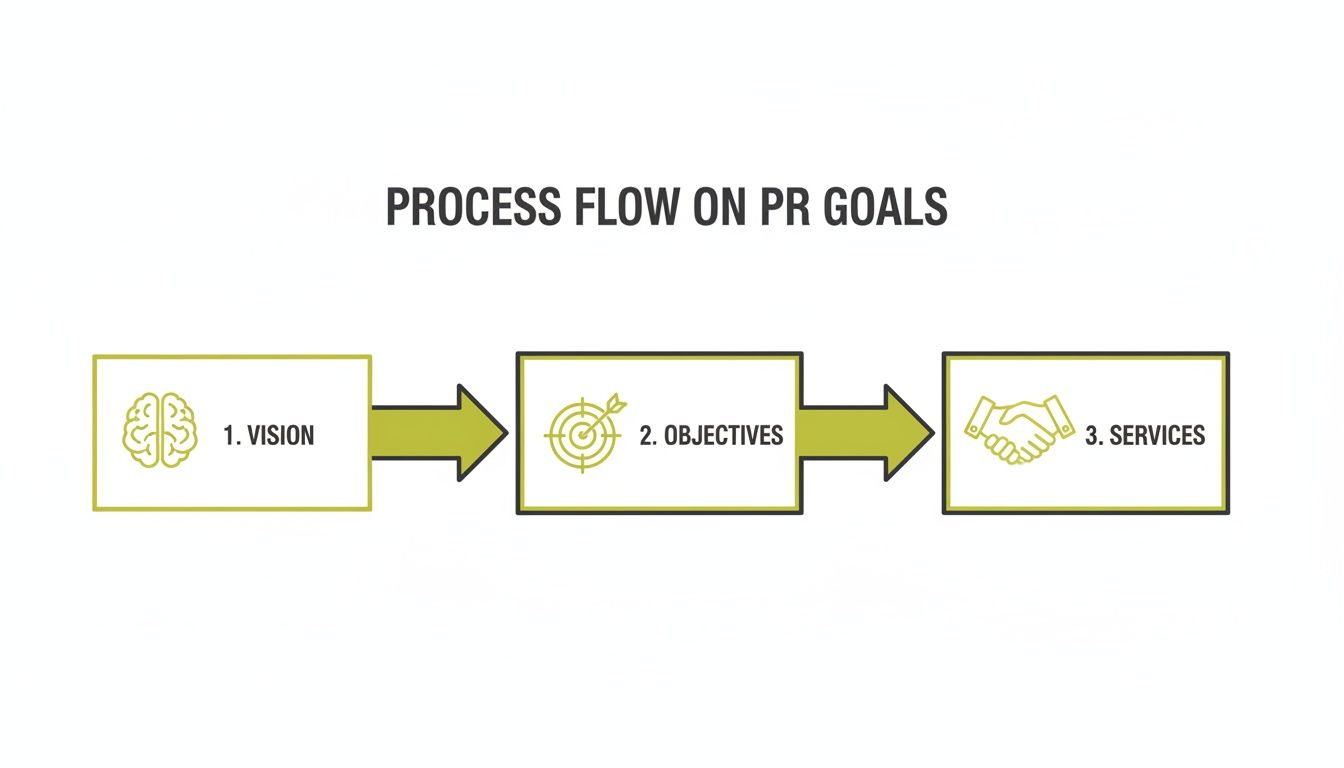
As the diagram shows, a clear vision has to be translated into measurable objectives before you can choose the right PR services to get you there.
Key Questions to Ask a Potential Restaurant PR Agency
Once you're sitting down with an agency, it's your chance to test their passion, strategic smarts, and technical know-how. A great restaurant PR agency will welcome these questions. It's also worth asking about the tools specifically for a Public Relations Agency they use, as it shows they're invested in efficiency and tracking results properly.
To make sure you cover all your bases, I’ve put together a checklist of questions. Don't be shy about asking them.
| Question Category | Essential Questions to Ask |
|---|---|
| Team & Experience | Who exactly will be working on my account day-to-day? What is their direct experience with restaurants like mine? Can I meet them? |
| Media Contacts | Can you give me a few examples of journalists you have strong relationships with who cover our specific niche (e.g., local food critics, fine dining, casual eats)? |
| Strategy & Ideas | Based on what you know so far, what are your initial top-line ideas for a 90-day plan? How would you make our story stand out from the crowd? |
| Crisis Management | Describe a time you handled a crisis for a restaurant client. What was your process, what did you do, and what was the outcome? |
| Measurement & Reporting | How will you measure success beyond just counting press clippings? What KPIs will you report on, and how often will I see them? |
The answers will reveal more than just their competence. You'll get a feel for whether there’s a genuine spark and a shared enthusiasm for your brand.
This process is critical for finding the right fit. If you're looking for more guidance on what a top-tier firm looks like, you can find great examples of a leading PR agency in the UK. Ultimately, choosing an agency is like hiring a key member of your leadership team—take your time and choose wisely.
Navigating PR Costs and Crafting a Powerful Brief
Let's talk money. Understanding how a restaurant PR agency prices its services is the first step to a healthy, transparent partnership. The costs can feel a bit mysterious at first, but they nearly always fall into a few straightforward models. Getting to grips with them means you'll know exactly where your investment is going from day one.
You’ll most often come across the monthly retainer. This is simply a fixed fee you pay each month for a set amount of ongoing work. It’s the perfect fit if you're after sustained brand growth, a consistent media presence, and a long-term partner who genuinely becomes part of your team. This model gives the agency stability, which in turn allows them to dedicate predictable, quality time to building your brand.
Then there's the project-based fee. This is ideal for specific, one-off goals with a clear beginning and end. Think a high-profile restaurant launch, a big seasonal menu reveal, or a special one-night event. You agree to a single fee for a defined project, which is a brilliant way to try out an agency or to call in the experts for a crucial moment without a long-term commitment.
A less common option is a pay-on-results model. Here, you might agree to pay a fee for each piece of media coverage the agency secures. While it sounds tempting, be wary. This approach often prioritises the number of clippings over the quality and strategic value of the coverage, and it rarely supports the deeper brand-building work that delivers real, long-lasting impact.
How Much Should You Realistically Budget?
So, what kind of numbers are we talking about? In the UK, a monthly retainer with a quality, specialist agency can start from around £2,000 for a targeted campaign and climb past £10,000 for a major national push. For a one-off project like a restaurant launch, you should expect fees to start in the region of £5,000 and go up from there, depending on the scale and ambition.
Remember, you're not just buying an agency's time; you're investing in their expertise, their connections, and their strategic insight. A huge part of a modern PR agency's value is what they can do for you online. Digital PR has a direct, powerful effect on your search visibility—strong backlinks from reputable media sites give your own website a serious authority boost. In fact, restaurants with a strong backlink profile from PR see 35% higher Google rankings. What's more, PR-influenced SEO can achieve conversion rates of 14.6%, a world away from the 1.7% you see from paid search. Learn more about the power of strategic restaurant PR.
I’ve seen it time and again: choosing the cheapest option is almost always a false economy. A higher-calibre agency, often staffed by former national journalists or PRs with big-brand experience, like the specialist team at Carlos Alba Media, brings a level of strategic thinking and media access that delivers a far greater return.
Crafting a Brief that Inspires Great Work
Once you have a budget in mind, your most important tool is your brief. A detailed, thoughtful PR brief is the absolute cornerstone of a successful campaign. It cuts out the guesswork and ensures that every creative idea and strategic move is tied directly to your business goals.
Think of the brief as your chance to get an agency as fired up about your restaurant as you are. It’s not just a dry document; it’s your story, your ambition, and your definition of success all rolled into one.
Here’s what you need to include to get the best work from your potential partners:
- Your Brand Story: Who are you and what makes your place special? Tell them about your background, your chef’s philosophy, the unique atmosphere you've created. Let your passion shine through.
- Your Business Objectives: What do you need PR to achieve for the business? Get specific. Is it about increasing mid-week bookings by 20%? Selling out a new tasting menu? Or cementing your reputation as the go-to brunch spot in the neighbourhood?
- Your Target Audience: Who are you actually trying to talk to? "Foodies" isn't enough. Think about their age, their lifestyle, the magazines they read, and the Instagram accounts they follow. The clearer the picture, the better.
- Key Performance Indicators (KPIs): How will we all know if this is working? This could be the number of articles in your top-tier target publications, a measurable increase in website traffic from media referrals, or a jump in direct bookings that mention seeing you in the press.
- The Budget: Be honest and upfront about what you can invest. It doesn’t limit creativity; it focuses it. An open conversation about budget allows an agency to propose a realistic plan that will give you the best possible return.
A fantastic brief gives a great restaurant PR agency everything it needs to hit the ground running with a strategy that’s not only imaginative but commercially sharp.
Getting Your Agency Onboard and Tracking Real Success

So you've signed on the dotted line with your new PR agency. Pop the champagne, but don't kick your feet up just yet. The work of building a truly successful partnership starts now, and a strong onboarding is everything.
I’ve seen it time and again: a rushed or disorganised start creates friction, wastes the first month’s retainer, and can sour the relationship before it even gets going. To avoid that, your first move is to get a proper kick-off meeting in the diary. This isn't just a casual chat; it's a strategic deep dive to get both teams perfectly aligned.
Kicking Off a Strong Partnership
A great kick-off sets the tone for the entire relationship. It's your chance to completely immerse the agency team in your world. For a specialist firm like Carlos Alba Media, where everyone who works for the company is a former national news journalist or has agency experience working with international brands, this session is gold. Their journalistic instincts mean they’ll quickly absorb your story and start spotting newsworthy angles you might have missed.
To get the most out of this crucial first meeting, make sure you:
- Bring your key people: Get your head chef, general manager, and sommelier in the room. Anyone with passion and stories to tell should be there. Let the agency hear about your vision directly from the source.
- Open up your digital filing cabinet: Give them everything. We're talking high-resolution photos, menu details, brand guidelines, supplier stories, and any press coverage you've had before. The more they have, the faster they can hit the ground running.
- Decide how you'll talk: Will it be a weekly call? A shared Slack channel for quick questions? Who is the go-to person on both sides for approvals and day-to-day updates? Sort this out now to avoid confusion later.
A great kick-off isn’t about the agency presenting to you. It's about you immersing them in your brand. The better they understand your restaurant's soul, the more authentically they can represent you.
From there, you’ll want to establish a clear and simple reporting rhythm. A good restaurant pr agency will provide regular updates that don't just list activities but tie them directly back to the goals you agreed upon. This keeps everyone accountable and ensures the strategy stays on track.
Measuring What Truly Matters for Your Restaurant
A folder full of press clippings is nice for the ego, but it doesn't pay your staff or your suppliers. The real measure of PR success is its impact on your bottom line. It's time to move beyond flimsy vanity metrics like 'Advertising Value Equivalency' (AVE) and focus on Key Performance Indicators (KPIs) that prove a return on your investment.
Your agency should be your partner in this, helping you track data that connects their work to your business goals.
Here are a few powerful KPIs that actually mean something:
- Referral Traffic from Media: Using Google Analytics, you can see exactly how many people are clicking through to your website from online articles. This is hard evidence that PR is driving potential diners to your booking page.
- Increase in Direct Bookings: This one is beautifully simple. Train your front-of-house team to ask diners, "How did you hear about us?" When the answer is a specific magazine, blog, or newspaper, you have concrete proof that PR is putting bums on seats.
- Better Search Engine Rankings: Modern PR is brilliant for SEO. Every time you get a link from a reputable media site, it boosts your restaurant's authority in Google's eyes. This makes it much easier for new customers to find you when they search for "best Italian in Manchester" or "new tasting menu near me."
Don't Forget Crisis Readiness
While the focus is rightly on growth, a key part of your agency's value is protecting your brand when things go wrong. Reputation management is a core skill of any top-tier restaurant pr agency.
A 2026 report revealed a shocking 16,500 UK hospitality closures in the previous year, with a staggering 45% linked to poor reputation management. Crucially, businesses with dedicated PR support saw 31% lower closure rates. What's more, restaurants with a crisis plan ready to go secure three times the media share of voice during a negative event, helping to hold onto customer trust when it matters most. Discover more insights on how strong PR protects UK restaurants.
By combining a thorough onboarding with a sharp focus on business-led KPIs and crisis planning, you're setting your partnership up for genuine success. It turns your agency from a simple supplier into a strategic partner who is truly invested in your restaurant’s long-term health and growth.
Your Questions, Answered
When you're thinking about bringing in a PR agency, a lot of questions come up. It's a big step, and you want to get it right. Having worked with countless restaurant owners over the years, I've heard them all. Let's tackle the most common ones head-on.
Think of this as a frank conversation to clear up the confusion, helping you see how the right PR partner can genuinely help your business grow.
How Soon Can I Expect to See Results?
This is always the first question, and the honest answer is: it depends. Real, brand-building PR is a marathon, not a sprint. While some quick wins can happen almost immediately—a great Instagram post from a local influencer could fill your tables that same weekend—the game-changing results take time.
You should definitely see some early momentum in the first one to three months. This might look like mentions in local online magazines, a jump in social media engagement, or new followers. But the bigger prizes, like a feature in a major national newspaper or building the kind of digital footprint that seriously boosts your Google ranking, are part of a longer-term plan. That level of impact usually takes six to twelve months of consistent, clever work.
A good agency will be completely transparent about this. They should walk you through a realistic timeline with clear milestones, showing you what to expect at the 30, 60, and 90-day marks. If someone promises you the front page of a national in your first month, be very sceptical.
What’s the Difference Between PR and Marketing?
It's a common point of confusion, but the distinction is pretty simple. I always tell clients to think of it this way: marketing is what you pay to say about yourself, while PR is getting someone else to say it for you.
Marketing is paid media. It's the advert you place in a local magazine, the Google Ads you run to capture bookings, or the paid social media campaigns promoting your new menu. You have complete control over the message because you're paying for the space.
Public Relations is earned media. This is all about building credibility. It’s when a food critic decides to review your restaurant, a journalist writes a story about your new chef, or a respected blogger raves about their experience. You can't buy this kind of endorsement; you have to earn it with a great story and strong relationships.
The magic really happens when you combine them. The credibility you build through PR makes every pound you spend on marketing work harder. When someone has already read a glowing review of your spot, they're much more likely to click on your ad.
My Restaurant Is Small. Can I Still Afford a PR Agency?
Absolutely. The old-school PR agency model with huge overheads and eye-watering retainers is a thing of the past. Many modern, specialised firms are set up to be far more agile and accessible, making them a perfect fit for small businesses.
For instance, a specialist firm like Carlos Alba Media was created on this very principle. Everyone who works for the company is a former national news journalist or has agency experience working with international brands, giving clients access to top-tier expertise in a leaner, more cost-effective way. You don't have to dive into a massive year-long contract straight away.
Many restaurants test the waters with a project-based campaign. Maybe you need a real push for a new opening or a seasonal tasting menu. The return from a well-run, focused campaign often more than covers the cost by driving bookings and building that all-important brand recognition.
Do I Need a Celebrity Chef to Get Press Coverage?
Not in the slightest. While a famous name can certainly help, journalists are ultimately hunting for one thing: a compelling story. Your unique story is the most powerful tool you have, and a good PR agency knows exactly how to find it and tell it well.
What makes a great story? It could be anything.
- The personal journey of your head chef.
- Your unique commitment to sourcing ingredients from local farms.
- An innovative sustainability practice that no one else is doing.
- A deep family heritage embedded in your recipes.
An agency staffed by people who've actually worked in newsrooms, like our team, has a nose for these angles. They know how to shape your story into a pitch that an editor will actually want to publish. It's about what makes you interesting and different, not just who's running the kitchen.
Ready to tell your restaurant's story and see real business growth? At Carlos Alba Media, our team of former national journalists and senior brand experts crafts PR strategies that deliver measurable results. Find out how we can help your restaurant be seen, trusted, and chosen.