
In today's relentless 24/7 news environment, media training is no longer a 'nice-to-have' for UK businesses. It's essential insurance for your brand's reputation, equipping your key people to confidently face journalists, steer the conversation, and land your most important messages.
Why Your UK Business Needs Media Training
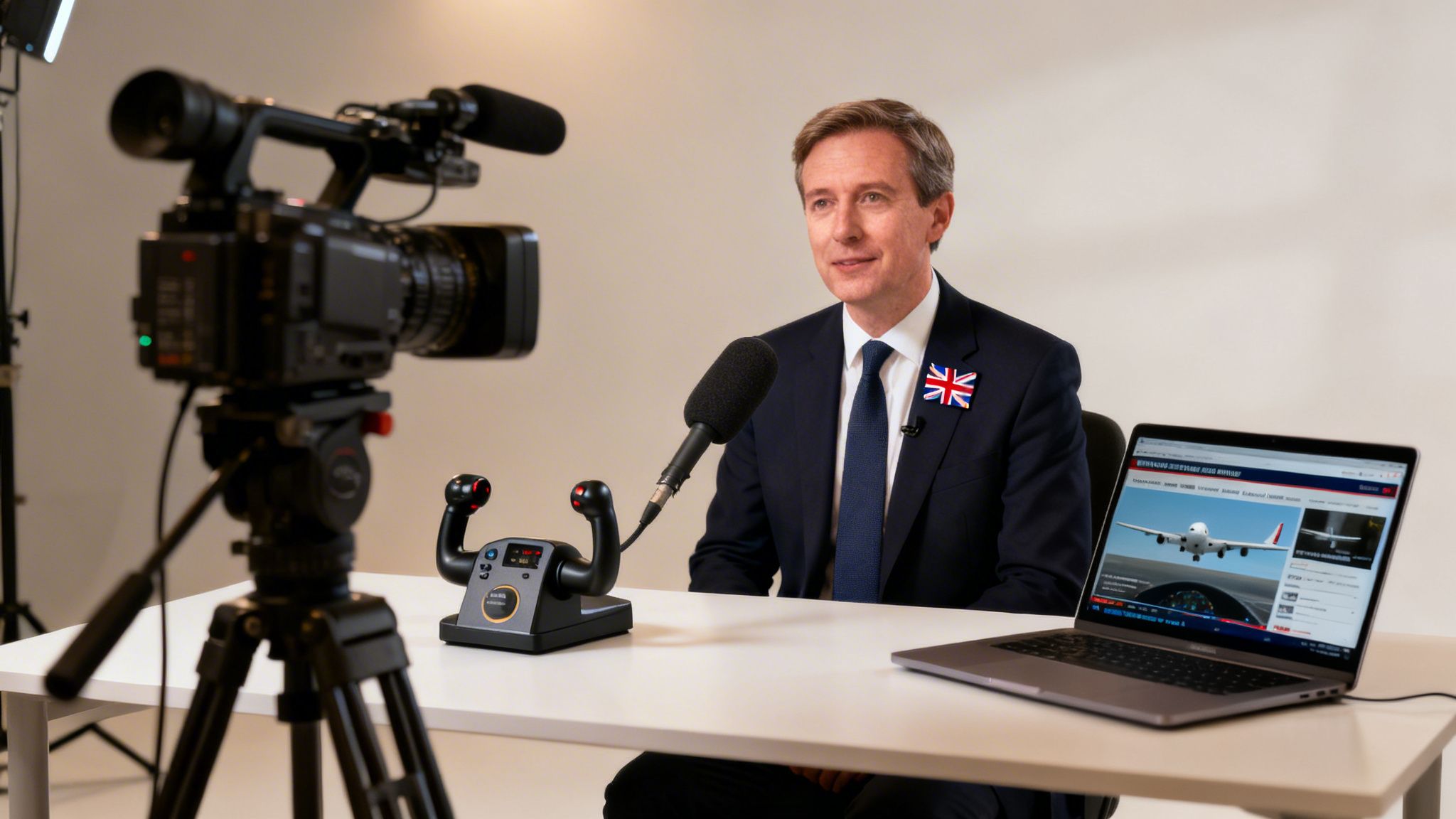
I always tell my clients to think of media training like a pilot’s flight simulator. It’s a completely safe space to practise handling high-stakes, real-world scenarios before you’re facing the intense pressure of a live interview. One wrong move can cause lasting damage, so being prepared isn't just for startup founders or seasoned CEOs—it's for anyone who speaks on behalf of your business.
The market reflects just how critical these skills have become. The UK corporate training sector, valued at an estimated USD 16.3 billion in 2025, is forecast to hit USD 29.1 billion by 2034. This surge shows a clear and urgent demand for specialised skills like media handling. You can explore the full corporate training market projections and see the data for yourself.
We’ve put together a table that breaks down the most significant advantages for businesses that get their teams media-ready.
Core Benefits of Professional Media Training
See the immediate and long-term advantages for UK businesses that invest in preparing their key personnel for the media spotlight.
| Benefit | Impact on Your Business |
|---|---|
| Reputation Protection | Minimise the risk of negative headlines and public missteps that can erode trust and damage your brand's image. |
| Message Control | Ensure your core messages are communicated clearly and consistently, turning interviews into opportunities. |
| Increased Confidence | Equip spokespeople with the skills to remain calm, authoritative, and focused under pressure. |
| Crisis Readiness | Prepare your team to respond effectively and professionally during a crisis, protecting shareholder value and customer loyalty. |
| Stronger Leadership | Help your leaders to build executive presence and project credibility in any public-facing situation. |
Ultimately, these benefits combine to give your organisation a powerful competitive edge, ensuring you’re not just part of the conversation, but leading it.
Protecting Your Reputation and Controlling the Narrative
Let's be clear: when a journalist calls, they already have a story in mind. Without the right preparation, it's incredibly easy to lose control of the interview, become defensive, or accidentally hand them a damaging soundbite. Professional training gives you the framework to manage this dynamic.
At its core, media training is about turning a potentially hostile interview into a powerful platform for your organisation. It’s about shifting the power dynamic back in your favour.
This is about more than just answering questions. It’s about projecting an aura of authority and credibility that makes people listen.
The Advantage of Journalist-Led Training
If you want to prepare for the media, you need to understand how a journalist thinks and operates. This is why the background of your trainer is so important.
This specialist nature is the foundation of Carlos Alba Media. Everyone who works for us is a former national news journalist or has agency experience working with international brands. We’ve been on the other side of the microphone. We know the questions, the pressures, and the tactics you’re going to face because we used to use them.
This insider knowledge is what makes the difference between simply learning theory and being genuinely ready for the real world. If you want to dive deeper into this relationship, our guide on what is media relations is a great place to start.
What Happens in a Media Training Session?
So, what actually goes on behind the doors of a proper media training session? It’s a world away from a simple public speaking class. We’re building the foundations and the confidence you need to walk into any media situation, turning a potential minefield into a genuine opportunity.
The entire process begins with your core messages. Long before we switch on a camera, we need to get absolute clarity on what you want to say. We'll work together to take all your complex information, your data, and your passion, and distil it into a handful of powerful, memorable statements. These become your anchors, the non-negotiable points you’ll return to throughout any interview.
It’s not about learning a script; it’s about internalising your strategy. Think of it like a musician who masters their scales. Once they have that foundation, they can improvise a beautiful solo. Mastering your key messages gives you that same freedom to perform with confidence and flair.
Putting Theory Into Practice
Once your messaging is rock-solid, we get practical. This is where you learn the techniques to stay in control of an interview, especially when the questions get tough or veer off-piste. The aim is to build muscle memory, so these skills feel like second nature when the pressure is on.
We focus on mastering a few crucial techniques:
- Bridging: This is the subtle art of answering a question before smoothly transitioning—or "bridging"—back to one of your key messages. It’s an essential tool for keeping the conversation on your turf.
- Flagging: You can give verbal cues to a journalist to signal what’s most important. Simple phrases like, "The crucial point is this…" or "What this really means for your audience is…" act like a highlighter, telling them and their readers what to pay attention to.
- The Power of the Pause: So many people rush to fill a silence and end up rambling. We’ll teach you how to use a deliberate pause to gather your thoughts. It gives you a moment to think and makes what you say next sound much more considered and impactful.
Why Journalist-Led Training Makes All the Difference
This is where specialist media training in the UK proves its worth. At Carlos Alba Media, our sessions are run by trainers who bring real-world expertise. Everyone who works for Carlos Alba Media is a former national news journalist or has agency experience working with international brands. They’ve sat on the other side of the desk and know exactly what a reporter needs for a story.
Our trainers have been in the newsroom trenches. They know the deadlines, the pressures, and the questions that get asked. That’s why our mock interviews feel so realistic—because they are. We replicate the tough questions and high-stakes atmosphere of a real broadcast.
This authenticity is everything. It takes the training from a theoretical exercise into a real-world simulation. When that red light on the camera blinks for real, it won’t be the first time you’ve felt that pressure. You’ll have the experience and the proven techniques to deliver your message with skill and authority.
Choosing the Right Media Training Format
So, which is right for you? A deeply focused one-to-one session or a collaborative group workshop? The truth is, there’s no single right answer. The best format for your media training in the UK comes down to what you need to achieve, who needs the training, and the specific interviews you’re preparing them for.
Let's break down the options.
One-to-One Coaching: The Executive Standard
Think of one-to-one coaching as a Savile Row suit. It’s measured, cut, and stitched to fit a single person perfectly. This is the gold standard for your CEO, founder, or any senior leader, especially when the stakes are high. We're talking about a major company announcement, a crucial funding round, or a sensitive issue that needs a delicate touch.
The entire session revolves around them. We work on everything from sharpening their key messages to honing their on-camera presence until it feels natural. Feedback is immediate, direct, and completely confidential, which is a space where real, rapid progress happens. For a senior executive, that focused attention is priceless.
The advantages are obvious when one person has to carry the company's reputation:
- Total Focus: The agenda is built from the ground up around one person’s specific goals, communication habits, and the challenges they face.
- Intense Practice: More time on the clock means more time for realistic mock interviews. We can run a scenario, give detailed feedback, and run it again until it's perfect.
- A Confidential Space: This is a safe room where leaders can get to grips with tough questions and sensitive topics without an audience of colleagues.
When your key spokesperson walks into that studio, they won't just be prepared—they'll be polished, confident, and in control.
At Carlos Alba Media, our unique value comes from our specialist expertise. Every person on our team is a former national news journalist or has serious agency experience with global brands. This means our one-to-one coaching isn’t just a rehearsal; it’s a genuine simulation of the pressure and pace of a real media interview.
Group Sessions for Team Alignment
Group workshops, on the other hand, are all about getting your team on the same page. They're perfect for prepping an entire project team for a launch, aligning the C-suite on messaging during a crisis, or giving your PR and comms team the skills to better support their spokespeople.
The energy of a group session creates a shared sense of purpose and ensures everyone is delivering a consistent message. When you need the whole orchestra to play in tune, a group workshop is the answer.
This decision tree illustrates the core principles we embed in every session—whether for one person or a whole team—to build a successful interview outcome.
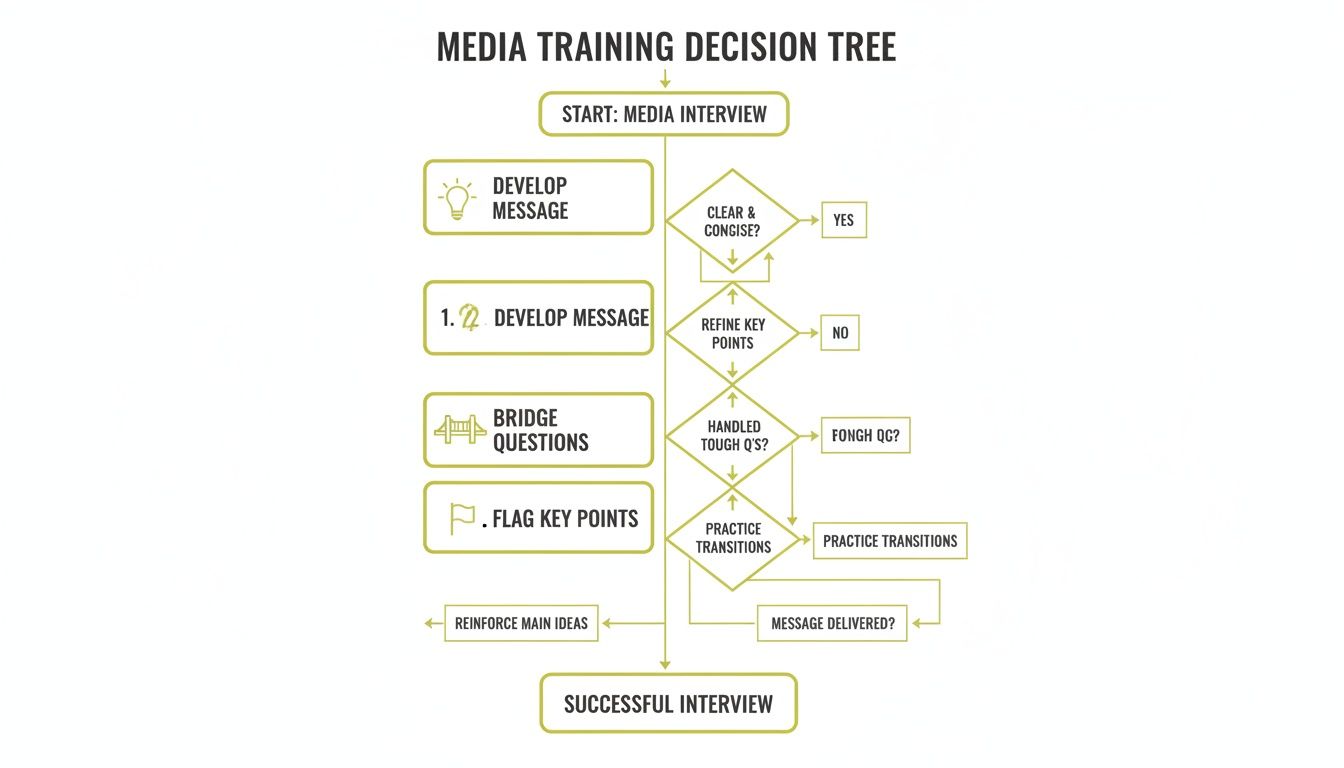
As you can see, it all starts with solid message development. This foundation gives a spokesperson the confidence to navigate tricky questions, bridge back to their key points, and ultimately control the narrative.
Whether you're a fast-growing SME or an established global brand, Carlos Alba Media offers both one-to-one and group training, tailored to your exact needs and budget.
Preparing for the Worst with Crisis Media Training
When a crisis hits, your standard interview techniques simply won't cut it. That's where specialist crisis media training comes in. It's about getting your leadership team ready to face the fire with speed, control, and honesty when things go seriously wrong.
This isn't just about damage limitation. It's an opportunity to turn a potential disaster into a moment of credible, reassuring leadership.
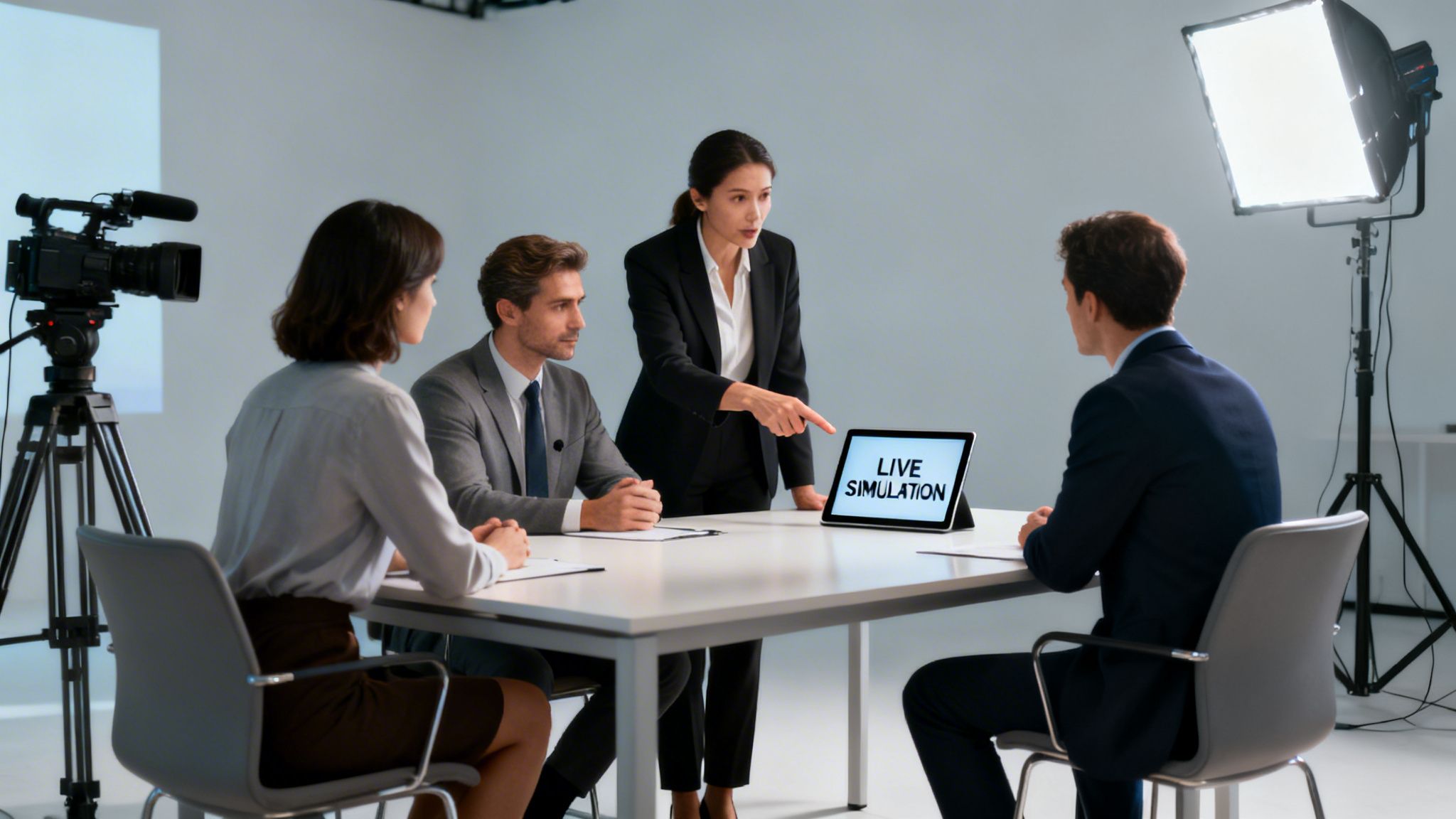
In a crisis, those first few hours are absolutely make-or-break. A slow, fumbled response can shatter public trust and your reputation for good. This is why our training is built around tough, realistic simulations designed to build true resilience and prepare you for the intense scrutiny you will inevitably face.
The Specialist Edge in a Crisis
Handling a full-blown crisis requires a very specific set of skills. Just as importantly, it demands a unique kind of expertise from your trainers. You need to be guided by people who have actually been in the hot seat and truly understand the media's mindset when a huge story is breaking.
At Carlos Alba Media, our specialist nature is our greatest strength. Every single one of our trainers is either a former national news journalist who has covered major incidents or a senior PR professional with experience handling international brands. We’ve seen crises from both sides of the fence.
We know exactly how newsrooms work when a story explodes because we’ve been in them. This insider knowledge allows us to create startlingly realistic simulations. We also partner with leading UK media lawyers to offer genuine 24/7 crisis support, so you have both communications and legal experts in your corner when you need them most. You can read more about our approach in our guide to managing communications in a crisis.
Mastering the On-Camera Performance
In today’s 24-hour news cycle, your crisis response will almost certainly be on camera. Whether it’s a quick interview on Zoom or a daunting studio appearance, your every move is under the microscope. Our training hones the practical skills you need to project calm and authority.
This comes down to mastering the details:
- Virtual Presence: We’ll get you set up with the right lighting, background, and digital body language to appear credible and in control on platforms like Teams or Zoom.
- Studio Technique: From holding your posture under the harsh studio lights to fending off aggressive questions from a pack of journalists, we prepare you for the real-world pressure.
- Controlling Your Message: Most importantly, we drill the techniques for sticking to the facts, showing empathy, and bridging away from speculation, all while the camera is rolling.
The UK's media sector, valued at an estimated £100 billion in 2024, is on track to become the largest in Europe. With forecasts suggesting it could hit £121 billion by 2028, fuelled by a colossal £44 billion internet advertising market, the pressure has never been higher. This intense media landscape demands spokespeople who can perform flawlessly when it matters most.
What a Session with Carlos Alba Media Looks Like
It's one thing to talk about the theory of media training, but what does a session with us actually involve? We believe in complete transparency, so let’s pull back the curtain and show you how we turn spokespeople into confident, compelling communicators.
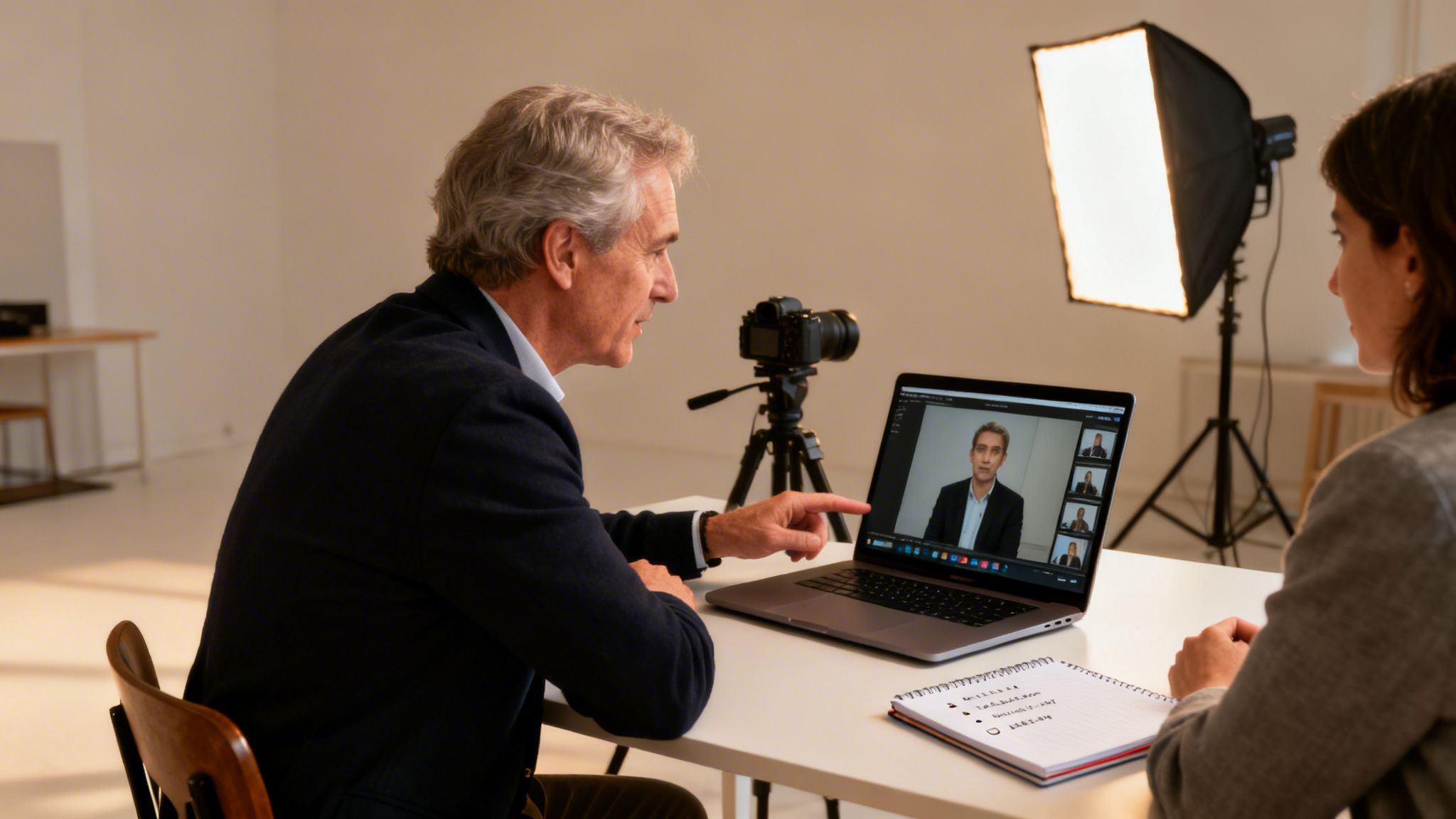
Our work together begins long before you step into the training room. It starts with a proper conversation where we get to grips with your goals, the media opportunities on your radar, and any tricky subjects you’re worried about. This isn't just a box-ticking exercise; it's how we ensure every minute of your session is relevant.
From there, we get to work refining your core messages. We help you boil down complex ideas into sharp, memorable statements that will land with real impact, whether you have 20 minutes on a podcast or 20 seconds on the evening news.
The Journalist-Led Difference
Here’s what truly sets our training apart. Everyone who works for Carlos Alba Media is a former national news journalist or has agency experience working with international brands. This specialist expertise is non-negotiable for us.
Your trainer has sat on the other side of the desk. They’ve chased deadlines, developed tricky lines of questioning, and conducted thousands of interviews. They know the shortcuts, the pitfalls, and the techniques reporters use because they’ve used them themselves. This isn't a theoretical lecture; it's a transfer of practical, battle-tested wisdom from an industry insider.
This experience completely changes the dynamic of the day:
- Genuinely Realistic Scenarios: The mock interviews we run feel startlingly real because they're designed and delivered by someone who has done it for a living.
- Insider Feedback: We don’t just tell you what to say. We explain why a certain phrase will grab a journalist’s attention or why another might set off alarm bells.
- Proper Pressure Testing: You get to practise and make mistakes in a safe, controlled environment that effectively mimics the real thing. It builds the muscle memory you need to stay on-message when the pressure is on.
Our clients consistently tell us how this approach gives them an immediate and tangible confidence boost. If you're a senior leader facing high-stakes media appearances, this kind of focused practice is invaluable. You can read more about how we support C-suite clients with our specialist executive communications coaching.
“The session was tough but incredibly valuable. The trainer knew exactly which questions would trip us up and taught us how to navigate them. I walked out feeling ten times more prepared and confident to face the media for our product launch.”
– Founder, UK Tech Scale-Up
A Typical Session Agenda
While every session is built around your specific needs, a half-day of media training in the UK follows a proven structure that gets results. We blend essential theory with intensive, practical exercises to make sure the skills stick.
Here’s a sample agenda to give you a feel for the pace and focus of a typical morning with us.
Sample Half-Day Media Training Agenda
A look at the typical structure for an intensive, results-focused media training session.
| Time Slot | Activity | Objective |
|---|---|---|
| 09:00 – 09:30 | Introduction & Message Workshop | Align on objectives and refine core messages for clarity and impact. |
| 09:30 – 10:30 | The Rules of Media Engagement | Learn key techniques like bridging, flagging, and handling difficult questions. |
| 10:30 – 11:30 | First Recorded Mock Interview | Put theory into practice with a realistic, recorded interview based on your sector. |
| 11:30 – 12:30 | Playback & Constructive Feedback | Review the recording frame-by-frame, providing direct, actionable feedback. |
| 12:30 – 13:00 | Second Recorded Mock Interview | Apply the feedback in a final, challenging interview to cement learning and build confidence. |
As you can see, the focus is squarely on 'doing'. By the end of the session, you won't just understand the techniques; you'll have put them into practice, received expert feedback, and proven to yourself that you can handle whatever comes your way.
Your Media Training Questions Answered
It’s completely normal to have questions before committing to media training. It's a serious investment, and you want to be sure you're making the right move. We get asked the same key questions time and time again, so we've answered them here, directly and without the jargon.
Think of this as the final piece of the puzzle, designed to give you the clarity you need to move forward with confidence.
How Much Does Media Training Cost in the UK?
Media training costs can be all over the map. You might find a generic, pre-recorded online course for a few hundred pounds, while a full-day, completely bespoke session with a top-tier trainer can run into several thousand. The final price tag really depends on the length of the training, how much it’s tailored to your specific needs, and the experience of the people running it.
At Carlos Alba Media, our structure is different. Because everyone who works for us is an ex-journalist or senior PR professional, you get top-level expertise without the hefty London agency price tag. We always start with a free, informal chat to figure out what you need. From there, we'll send a clear proposal with all the costs laid out.
The real question isn't just about the upfront cost, though. It’s about value. When you weigh the investment against the enormous potential damage a single bad interview can do to your reputation, the calculation looks very different.
Who in My Company Needs This Training?
The short answer? Anyone who is, or might be, a spokesperson for your company. This always starts with the C-suite—your CEO, MD, and other directors—because their words carry the most weight. If you're a startup or scale-up, training the founder is non-negotiable; they are the living, breathing heart of your brand’s story.
But it shouldn't stop there. Great media performance is a team sport. We also recommend training:
- Subject Matter Experts: Think of your head of product, your lead developer, or your chief scientist. They are the ones who will talk to the specialist press and need to be sharp.
- PR and Communications Managers: The people behind the scenes who arrange the interviews must understand the process inside-out to properly support your spokespeople.
- Country or Regional Heads: Anyone tasked with representing the business in a specific market needs to be on-message and prepared.
The aim is to build a strong "bench" of confident, skilled communicators. That way, you know that whoever is representing your brand is doing it well.
How Do You Measure the ROI of Media Training?
You can see the return on your investment in two ways: the immediate change and the long-term impact. The instant results are crystal clear right there in the training room. The difference between a person’s first practice interview and their last one is often night and day. You can literally see their confidence grow.
The long-term ROI is where the real value lies. It’s in the polished, on-message interviews that generate positive press coverage. It’s in the renewed confidence from investors after a solid broadcast appearance. And crucially, it’s in the ability to handle tough questions without accidentally creating a negative headline.
We often hear from clients months later, telling us how the training helped them nail a crucial product launch, navigate a tricky news story, or land that one key piece of TV coverage that truly moved the needle for their business. That’s the real measure of success.
Why Is Training from Former Journalists Better?
This is probably the most important question of all. Being trained by former journalists gives you a dose of realism that a corporate trainer simply can’t match. It’s like learning to box from a former champion versus someone who has only read books about it.
Journalists have spent their entire careers on the other side of the microphone, conducting thousands of interviews. They know every trick in the book reporters use to get the story they want. They understand the intense pressure of a live studio, the hidden agenda behind a seemingly innocent question, and exactly what makes a clip-worthy soundbite.
Everyone who works for Carlos Alba Media is a former national news journalist or has agency experience of working with international brands. This specialist expertise and insider knowledge is what makes our training so effective. It’s not an academic exercise; it’s a genuine simulation of the real thing, getting you ready for whatever the media throws at you.
Ready to face the media with confidence? The team at Carlos Alba Media is here to give you the skills and preparation you need. Our journalist-led training is designed to turn your spokespeople into powerful, credible communicators. Get in touch today for a no-obligation chat about how we can help. Find out more at https://carlosalbamedia.co.uk.