
For a tech start-up, picking a generic PR agency is one of the easiest ways to burn through your budget. You’re not just selling a product; you're trying to communicate a complex vision to savvy investors, eagle-eyed regulators, and a very specific customer base. That job requires a lot more than just firing off a few press releases.
Why Specialist Tech PR Trumps a Generalist Approach

The tech world is famous for its jargon, its speed, and its disruptive ideas. A generalist PR firm that’s used to promoting lifestyle brands or professional services will almost certainly struggle. They simply don’t have the deep industry knowledge to turn your innovation into a narrative that sticks.
They might get you some column inches, sure, but the coverage will likely miss the mark with the audiences that actually matter—the people who fund your next stage of growth and drive real adoption.
A specialist technology PR agency, on the other hand, lives and breathes your world. They already know the difference between SaaS, FinTech, and Deep Tech. This isn't just a nice-to-have; it's a strategic necessity.
The Power of Insider Knowledge
Look for agencies like Carlos Alba Media, where the team is built from former national news journalists or professionals with agency experience of working with international brands. This specialist nature and expertise gives you two critical advantages:
- Newsroom Instincts: Ex-journalists have a built-in sense of what makes a story compelling. They know how to find the hook in your tech and frame it to grab an editor's attention, getting you out of the slush pile and into the headlines.
- Brand Expertise: Agency veterans who’ve managed global brands know how to build momentum over the long term. They can align PR with your core business goals, whether that’s generating leads, managing your reputation, or positioning you for an exit.
This blend of skills is what makes the difference. An agency staffed with insiders can translate your technical language into powerful stories that build credibility and deliver tangible results. They have the right contacts and the sector-specific know-how to place your story in the publications your investors and customers actually read.
A specialist agency doesn’t just get you mentions; it builds your authority. They understand the ecosystem, speak the language, and have the established relationships to place your story where it will have the most impact.
Thinking about the 'make vs buy' decision can be helpful here. As this true cost analysis of in-house webinar production versus expert partners highlights, expertise has a clear ROI. The same logic applies to choosing between a generalist and a specialist PR team—the return from genuine expertise is far higher.
For instance, handling PR in a regulated field like health tech is a completely different ball game. Our guide on effective public relations for healthcare shows just how much that niche understanding really matters.
Aligning Your Goals With the Right PR Services
Before you even think about shortlisting technology PR agencies, you need to get brutally honest about what you're trying to achieve. I've lost count of the number of founders who say their goal is to "get more press." That’s not a goal; it's a vague wish.
A great agency partner won't just nod along. Their first question should be, "Why?" Are you trying to get on investors' radars for a Series A round? Do you need to fill your sales pipeline with qualified B2B leads? Or is the aim to cement your founder as the undisputed expert in your niche? Each of these goals demands a completely different playbook.
Matching Your Tech Business Goals to PR Services
This is where you connect your commercial objectives to specific PR activities. Modern PR is much more than just firing off press releases; it’s an integrated machine where every part has a purpose. To really get this, you need a solid grasp of B2B Public Relations Strategies and how different tactics work together.
The table below breaks down how your specific business goals should map to the services a tech PR agency offers.
| Your Business Goal | Essential PR Service | What to Expect |
|---|---|---|
| Investor Visibility | Strategic media relations, founder profiling | Securing features in the publications VCs actually read. It’s about crafting a compelling story about your market and positioning your leadership as the team to back. |
| Lead Generation | Digital PR, SEO-driven content | Creating genuinely valuable content (think data reports, not just blogs) that earns high-quality backlinks, drives organic search traffic, and captures prospect details. |
| Brand Credibility | Thought leadership, crisis comms plan | Placing expert articles by your founder in key trade journals, landing speaking slots at industry events, and having a ready-to-go plan to protect your reputation when things go wrong. |
This is precisely where an agency like Carlos Alba Media, founded by a former national newspaper editor, shines. They have the newsroom instincts to know what makes a story, but they combine it with sharp commercial tactics to ensure every single activity pushes a business goal forward.
The Modern Agency Advantage
Something significant has happened in the PR world, and it plays right into the hands of start-ups and SMEs. The old model of expensive city-centre offices is dying out. A recent UK study found that a massive 73% of PR agencies have moved to a hybrid model, with a tiny 2% insisting on everyone being in the office full-time. You can dig into the data on digital agency trends at Capsule CRM.
The upshot for you? You get big-agency brainpower without the big-agency price tag. A lean agency like Carlos Alba Media, with its specialist team of former national news journalists and experts with agency experience of working with international brands, passes those operational savings directly to you. It means you get senior-level strategic advice at a cost that makes sense for a growing tech business.
This new, flexible structure means they can offer high-touch services that are critical for tech companies. With teams in Glasgow and London, they can provide 24/7 crisis management backed by top UK media lawyers or create digital content with real SEO clout for start-ups needing national reach.
Most importantly, everyone on your account is a proven expert. You're not paying for a junior account exec to learn the ropes on your watch.
How to Shortlist and Vet Potential Agencies
Finding the right technology PR agency isn't as simple as a quick Google search for "technology PR agencies". That’ll just give you a long list of firms with slick websites, but it won't tell you who can actually deliver the goods. A far better approach is to build your initial shortlist from peer recommendations, industry awards, and some serious digging on platforms like LinkedIn.
Your first job is to cut through the marketing fluff and find genuine expertise. An agency that claims to "do tech" is far too broad. You need to know if they really get your specific world, whether that's FinTech, HealthTech, SaaS, or another niche. An agency that’s a rockstar in one sector could be a complete dud in another.
Assessing Genuine Tech Expertise
From my experience, the best agencies are often staffed by people who've been on the other side of the fence—either as journalists or in senior roles at big international brands. This isn't just a nice-to-have; it's a massive indicator of their real-world capability.
For instance, at Carlos Alba Media, every single consultant is either a former national news journalist or has agency experience of working with international brands. This kind of specialist nature and expertise means they bring proven skills and an invaluable book of media contacts to the table from day one.
When you start making those initial calls, you need to probe this expertise. Don't be shy. Ask direct questions about their team’s background and get them to explain how that experience will actually help a business like yours.
Essential Vetting Questions for Your First Call
To sort the true specialists from the generalists, have a few key questions ready. These will help you quickly get a sense of their strategic thinking and how well they know your corner of the tech world.
- Team Background: Who from your team will be working on our account? What’s their direct experience in our specific tech vertical?
- Relevant Case Studies: Can you walk me through a campaign for a company similar to ours? I want to hear about the objectives, the strategy, and the measurable results you achieved.
- Strategic Process: Talk me through your process for building a PR strategy. How do you make sure your PR work supports our commercial goals, like generating leads or attracting investors?
- Media Relationships: Which journalists and publications in our niche do you know well? Who can you call?
This approach really highlights the value of working with seasoned pros. An agency built on newsroom and brand experience just gets it—they know how to build a story that journalists will actually pay attention to.
Finding and confirming the right agency partner really does follow a clear path. This infographic breaks down the simple but vital steps to make sure your goals and the agency's execution are perfectly aligned.
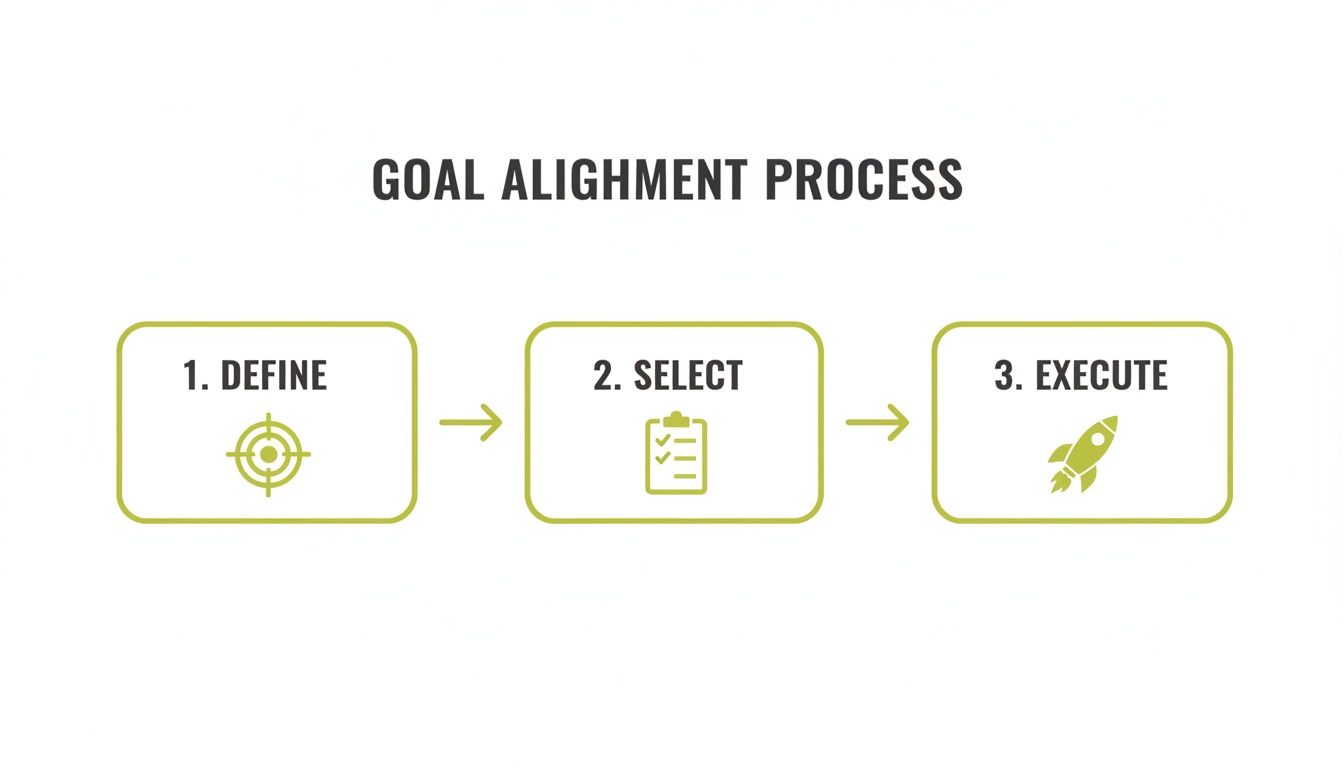
As you can see, success starts with being crystal clear on your own objectives before you even start talking to agencies.
The demand for effective tech PR has exploded. In the UK, Google searches for 'digital PR' have shot up to 21,070 every month—a huge leap from 8,020 just a year ago. This shows a massive shift in how tech brands are thinking about getting noticed. According to recent analysis, this trend places agencies that blend traditional newsroom sense with modern digital tactics in a prime position to deliver. You can read more on these digital PR statistics at Energy PR.
A critical part of the vetting process is understanding not just what an agency does, but how they do it. For a deeper look into what separates a good media pitch from a great one, have a read of our guide on how to get press coverage.
Decoding Proposals and Pricing Models
So, the proposals have started to arrive. It’s easy to get drawn straight to the final figure at the bottom of the page, but the real story is in the strategy, the team they’re proposing, and exactly what they plan to deliver for your money.
A great proposal should feel like it was written specifically for you, because it was. It’s a red flag if you get a document that feels like a copy-and-paste job. Look for a clear, undeniable line connecting your business goals to the PR activities they’re suggesting. If you told them you need to get in front of investors, the plan should be packed with ideas for founder profiling and targeted media relations with financial press—not just a vague promise of "more coverage."
Understanding Common Pricing Structures
In the tech PR world, you'll typically come across three main ways agencies charge for their work. Each has its place, but for a start-up or SME where every pound is scrutinised, it pays to know what you’re signing up for.
Monthly Retainer: This is the industry standard. You pay a fixed fee every month for a set amount of work. It’s brilliant for budget planning and building a proper long-term partnership. The key is to make sure that scope of work is crystal clear so you’re not paying for quiet periods.
Project Fees: Perfect for one-off campaigns. Think of a product launch, a major funding announcement, or a big event. You agree on a set price for a specific, time-limited project. This gives you great cost control for a single initiative, but you miss out on the ongoing strategic advice that a retainer relationship brings.
Performance-Based Retainers: These can look very attractive on the surface. They usually involve a smaller base retainer plus bonuses for hitting certain targets, like landing a feature in a Tier 1 publication. Be careful here. You need to ensure the incentives are tied to genuine business impact, not just vanity metrics that look good on a report but don’t actually help you grow.
The Lean Agency Advantage
The way an agency is structured tells you a lot about where your money is going. Big, traditional agencies often have huge overheads to cover – think shiny city-centre offices and large administrative teams. These costs are always passed on to you in their fees.
Worse still, you'll often find that after a brilliant pitch from their most senior people, your account is handed over to a junior team. The experts you bought into are suddenly nowhere to be seen.
This is where a lean agency model offers a clear advantage. A consultancy like Carlos Alba Media is built on a foundation of specialist expertise, delivering senior-level counsel without the hefty overheads of larger firms.
This model is deliberately designed to give you better value for your investment. Everyone who works for Carlos Alba Media is either a former national news journalist or a PR professional with years of agency experience of working with international brands. This means your account is managed directly by seasoned experts—the same people who have the top-tier strategic thinking and media contacts you need.
You’re not paying for a fancy reception area or a bloated management structure. You’re investing directly in proven expertise that will impact your bottom line. It’s an approach that gives you total clarity on scope, deliverables, and reporting, ensuring your investment is being put to work by the people best qualified to get you results.
Measuring What Matters: Proving PR’s Value to Your Business

Let’s be honest. For a start-up, every pound spent has to count. The old way of measuring PR—counting clippings or using flaky metrics like Advertising Value Equivalency (AVE)—just doesn't cut it anymore. Your PR agency needs to be as accountable for results as any other part of your business.
A modern technology PR agency understands this. They'll partner with you right from the start to establish clear Key Performance Indicators (KPIs) that connect their work directly to what you care about: growth. It's about showing a real, tangible return on your investment, blending hard data with the softer, but equally important, qualitative wins.
Go Beyond the Vanity Metrics
Anyone can send you a list of media mentions at the end of the month. That’s the easy part. A truly valuable agency digs much deeper, focusing on metrics that signal genuine influence and business impact, not just fleeting exposure. This is where an agency with integrated digital and SEO know-how really shines.
Instead of just counting links, you should expect reporting on things like:
- Share of Voice (SoV): How much of the industry conversation do you actually own compared to your direct competitors? Are you the go-to expert?
- Key Message Penetration: When journalists write about you, are they hitting the core messages you want to get across about your technology and vision?
- Referral Traffic: How many real, potential customers are clicking through from those articles to your website?
- Backlink Quality: Are the links you're earning editorially placed on high-authority websites that will genuinely boost your site's SEO?
This dual approach is critical. For instance, at Carlos Alba Media, everyone who works for the company is either a former national news journalist or a senior agency pro with agency experience of working with international brands. They get that you need both compelling storytelling to land top-tier coverage and the digital savvy to prove its impact on your bottom line.
A great agency won't just show you a spreadsheet of links. They’ll deliver a proper data-led report that clearly illustrates how their PR activity drove website traffic, improved search rankings, and even armed your sales team for investor conversations.
This isn’t just a nice-to-have; it's fast becoming the industry standard. Data from Cision reveals that 42% of agencies now have dedicated data analysts on their team. With 85% planning strategic partnerships, the ability to prove value through data is non-negotiable. It’s a key part of the evolving UK PR landscape in 2026 at LondonLovesBusiness.com.
Make Strategy Sessions a Non-Negotiable
Measurement shouldn’t just be a look back at what happened last month. It's your roadmap for what to do next.
Your agency should be scheduling regular, frequent catch-ups to walk you through the data. These sessions are where the magic happens. It's your chance to analyse the results together, figure out what's resonating with journalists and your audience, and have the confidence to change tack if a certain angle isn't working.
This kind of agile process keeps your PR spend focused and effective. It transforms your relationship with an agency from a simple service provider to a true strategic partner, ensuring every piece of work is directly tied to your business goals. For a deeper dive, take a look at our guide to building a truly effective public relations campaign.
Frequently Asked Questions About Tech PR Agencies
Choosing the right PR partner is a big move, and it’s smart to have questions. Here are some straight answers to the most common things we hear from tech founders and marketing leads when they’re thinking about bringing on an agency.
When Is the Right Time for a Tech Start-up to Hire a PR Agency?
The simple answer? Sooner than you think. I always tell founders the sweet spot is about three to six months before a major milestone. Don't wait until the week of your launch to make the call.
That lead time is gold. It gives your agency the space to actually build a story that resonates, figure out which journalists will care, and start laying the groundwork. Rushed announcements almost always fall flat.
Whether you’re gearing up for a funding round, a big product reveal, or breaking into a new market, this runway is what makes the difference. It’s about building momentum, not just hoping for a single splash.
A proactive approach is everything. You're setting the stage for your news to land with maximum impact, not just reacting to your own timeline.
Think of it this way: a team with a newsroom background, like ours at Carlos Alba Media, uses that time to create a narrative that journalists will actually want to cover. It’s all in the preparation.
What Is a Realistic PR Budget for a Tech SME in the UK?
For a specialist tech PR agency in the UK that will actually move the needle, you should be looking at monthly retainers starting in the £3,000 to £5,000 range. For the bigger, traditional London firms, that figure can easily jump to £8,000 to £10,000 a month, or even more.
This is where smaller, expert-led agencies really shine. You get direct access to seasoned pros—like the ex-journalists and experts with agency experience of working with international brands on our team—without paying for the big-agency overheads and fancy office. It’s crucial to see this as an investment in growth, not just another line on your expense sheet.
Honestly, a smaller, focused budget with a sharp, results-driven team will always deliver more value than a huge budget with a generic agency that doesn’t live and breathe your sector.
Should We Hire an In-House Manager or an Agency?
For most start-ups and SMEs, going with an agency is a much smarter financial move. For the cost of a single senior in-house salary, you get a whole team of specialists: media relations experts, content writers, digital strategists, the lot.
An agency also brings a ready-made network of media contacts and a breadth of experience that’s impossible for one person to build alone. For instance, everyone on the Carlos Alba Media team is either a former national news journalist or has agency experience of working with international brands. That kind of expertise is ready to go from day one.
An in-house role starts making more sense as you scale and need a dedicated person to manage external partners. A great hybrid model to start with is hiring a junior in-house coordinator who works hand-in-glove with your external agency to execute the strategy.
What Red Flags Should I Watch for When Vetting a PR Agency?
This is a big one. You need to be able to spot the empty promises. Be very wary of any agency that sounds too good to be true.
Here are the classic red flags to watch for:
- Guaranteed Coverage: No one can guarantee a feature in a specific top-tier publication. Earned media doesn't work that way. If they promise you the front page of the FT, run.
- Vague Metrics: If they start talking about fuzzy metrics like Advertising Value Equivalency (AVE) or can't clearly explain how they'll measure actual business impact, that's a problem.
- Generic Proposals: A copy-paste proposal that could be for any company shows they haven't done their homework. It should feel like they already get your business.
- The Bait-and-Switch: The classic move where the senior partners pitch you, but once the contract is signed, you're handed off to a junior account exec. Ask who your day-to-day contact will be.
- No Recent, Relevant Work: They must be able to show you recent case studies from companies like yours. Not something from five years ago in a totally different industry.
A good partner will be realistic and manage your expectations from the start. An agency staffed by former journalists knows there are no certainties in media, but that a sharp strategy dramatically improves your odds.
Ready to work with a team of seasoned experts who deliver senior-level counsel without the big-agency overheads? Contact Carlos Alba Media to find out how our blend of newsroom insight and modern brand building can help your tech company be seen, trusted, and chosen. Learn more at https://carlosalbamedia.co.uk.