

At its heart, media relations is the art of building genuine relationships with journalists. It’s not about buying ad space; it’s about earning credible, unpaid coverage for your business by becoming a trusted source of interesting stories.
This is a strategic game of managing how you communicate with reporters, editors, producers, and even social media influencers, all with the goal of shaping how the public sees your brand – in a good way, of course.
Understanding Media Relations and Why It Matters
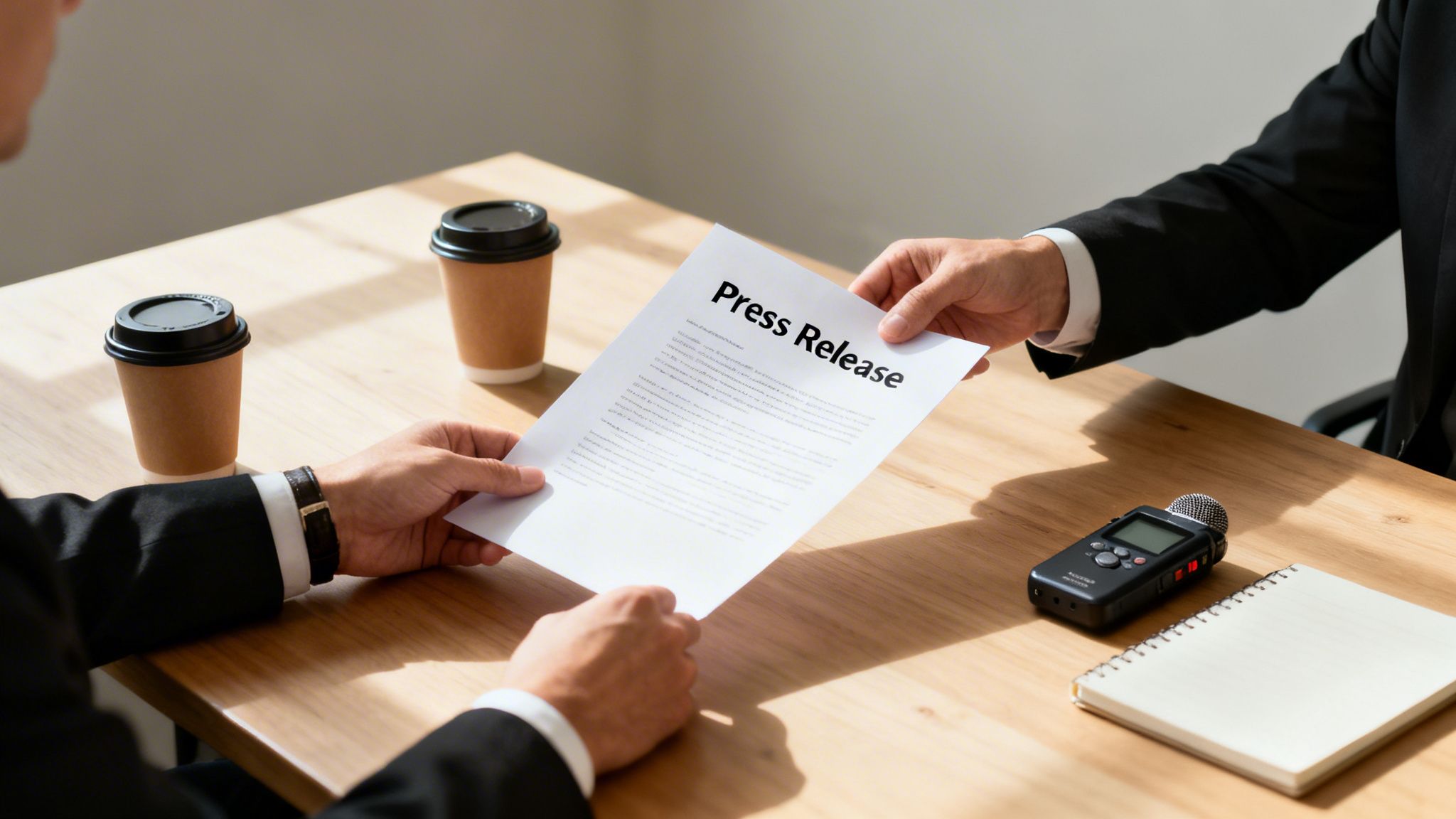
Forget thinking of it as a one-off transaction. It's much more like developing a professional friendship. You offer journalists genuinely newsworthy stories, unique data, or expert commentary, and in return, they provide a platform to connect with your target audience. The magic word here is earned. This isn't advertising. It's coverage you've secured on merit, which gives it a level of authenticity and trust that money just can't buy.
Of course, the field has changed dramatically. What used to be a world dominated by newspapers and TV news now involves a vibrant mix of digital news sites, niche industry podcasts, and influential bloggers. But the core principle has never wavered: get your story told in respected media outlets.
The Foundation of Earned Media
The ultimate goal of media relations is to generate 'earned media'—basically, any publicity you get that isn't a paid advert. It’s called “earned” for a reason. You have to work for it.
Great media relations makes this happen by:
- Pitching Stories That Stick: Finding compelling angles, fresh data, or newsworthy events within your business that will actually make a journalist sit up and listen.
- Building Your Credibility: Positioning your company and its leaders as go-to experts and reliable sources within your industry.
- Managing the Conversation: Acting as the vital link between your company and the media, making sure information flows smoothly, accurately, and on time.
At Carlos Alba Media, our strategy is forged from decades of front-line experience. Everyone who works for us is either a former national news journalist or has agency experience of working with international brands. We don't just blast out press releases; we know what makes a story work because we're the people who used to make those very decisions in the newsroom.
This insider knowledge is what makes all the difference. It changes the game from just firing out information to carefully crafting narratives that fit what journalists are actively looking for. To see how this directly impacts your company's standing, you can find out more about what is reputation management in our detailed guide.
So, what's the real payoff for investing in media relations? It's about a lot more than just getting your name out there. We're talking about tangible results that actually affect your bottom line. At its heart, media relations delivers one thing that no amount of advertising can ever buy: third-party credibility.
Think about it. When a respected journalist, a popular podcast host, or a national TV programme features your business, it’s a powerful seal of approval. This isn’t you singing your own praises; it's an independent, trusted source telling their audience that you're someone worth paying attention to. In a world drowning in sponsored posts and ads, that kind of authentic validation is gold. It cuts straight through the marketing noise and builds real trust.
Building Authority and Driving Growth
Good media relations is a strategic game. It’s not just about getting press; it's about building your brand's authority and fuelling your growth. Every single media placement is a chance to position your leaders as experts and your company as a go-to name in your sector. This is precisely the competitive edge that helps businesses like The Johnnie Walker Experience and Scotia Homes gain the kind of visibility that matters.
Done right, it creates a virtuous cycle with clear business benefits:
- Boosted Brand Awareness: Getting featured in the right places puts you in front of new, relevant audiences, turning you into a recognised name.
- Increased Website Traffic: A link from a major online publication can send a wave of new visitors straight to your website.
- Qualified Lead Generation: People who find you through earned media are often far more likely to become customers. They arrive with a pre-established sense of trust.
At Carlos Alba Media, we live and breathe this stuff. Everyone who works for us is either a former national news journalist or has agency experience of working with international brands. We know exactly what it takes to shape a story that not only grabs a journalist's attention but also delivers on these specific business goals for our clients.
A Competitive Edge in Today's Market
Ultimately, the power of earned media lies in forging a genuine connection with your audience—one that feels earned, not bought. And as more businesses fight to be heard, this approach is becoming absolutely essential. You can see this trend in the UK's public relations sector, which is the bedrock of media relations. The PR market is projected to hit £4.3 billion by 2025-26, with much of that growth coming from SMEs and start-ups who need a powerful voice to compete. If you're interested, you can read more about the growth of the UK PR industry on IBISWorld.
Navigating Today's Media Landscape
To get your head around media relations, you first need to understand the playing field. Stories don't just land on the front page of the morning paper anymore. They break, evolve, and spread across a dizzying mix of channels, each with its own audience, pace, and rules of engagement. Mastering this world is the only way to get your voice heard above the noise.
The media isn't one giant, monolithic thing; it's a sprawling ecosystem of different platforms. For a start-up or an SME, this is actually a massive advantage. You don’t need to be everywhere. You just need to be on the right channels—the ones where your customers are already paying attention. It's about surgically placing your stories where they’ll have the biggest impact.
The Four Pillars of Modern Media
A smart media relations strategy juggles the old with the new, blending the authority of traditional outlets with the raw speed of digital platforms. At Carlos Alba Media, our team is made up of former national news journalists and experts who have run campaigns for global brands. This gives us a unique edge—we inherently know how to shape a story to make it irresistible to each type of outlet. We know what works because we’ve been the ones making the decisions on the other side of the desk.
These are the main channels you need to be thinking about:
-
Broadcast Media (TV & Radio): This is where you get immediate, powerful impact. A single interview on a national news programme or a popular radio show can put your brand on the map overnight. Journalists in broadcast are looking for articulate, camera-ready experts who can offer sharp, concise commentary on breaking news or industry trends.
-
Print Media (Newspapers & Magazines): Don't let anyone tell you print is dead. The credibility that comes from a feature in a respected national newspaper or a glossy trade magazine is still immense. Print journalists are often hungry for deeper stories, detailed case studies, and exclusive data that gives their readers genuine value.
-
Online Media (News Sites & Blogs): This is the engine room of the modern news cycle. Getting coverage on a major news website, an influential industry blog, or a niche online publication can send a flood of traffic to your site and give your SEO a serious boost. These journalists work incredibly fast and need timely, well-pitched stories backed by strong visuals or data.
-
Social Media: Platforms like LinkedIn and X (formerly Twitter) are no longer optional; they're essential media relations tools. They offer a direct line to journalists, a way to amplify your press coverage, and a space to collaborate with industry influencers who command their own loyal audiences.
This isn’t just about getting your name out there. As this diagram shows, these efforts all feed into tangible business results.
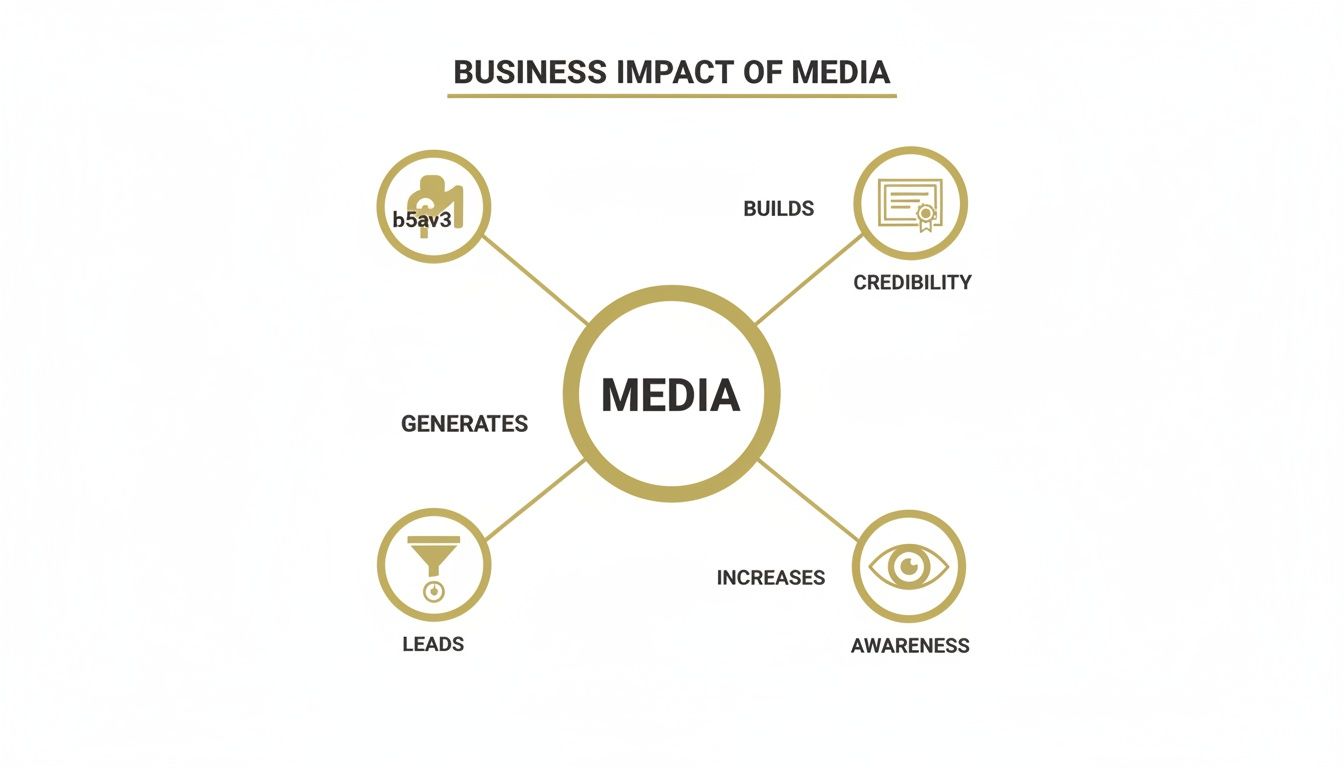
It’s clear that great media placements are far more than just vanity metrics. They are a direct route to building credibility, dramatically expanding your brand's reach, and ultimately, generating new business leads.
“The best media relations strategy isn’t about being everywhere. It’s about being in the right places, at the right time, with the right story. It’s a game of precision, not volume.”
The UK's media environment is in constant motion, with a clear and decisive shift towards online news. We've reached a tipping point where online sources are now officially more popular than traditional print. The Media Reform Coalition found that the top 50 news brands have a colossal combined online reach, with national publishers controlling 40% of that audience.
For our clients, like the Johnnie Walker Experience or Hamilton & Inches, this digital dominance makes a hybrid strategy across print, broadcast, and social more critical than ever. You can learn more about the latest UK media ownership trends and what it means for your business.
Mastering the Tactics of Media Outreach

Knowing your way around the media world is one thing, but actually getting journalists to pay attention is a whole different ball game. This is where strategy meets action, turning good ideas into valuable press coverage.
Effective media relations isn’t about getting lucky; it’s a structured process. It all begins with knowing how to package your story so that a busy journalist not only opens your email but actually wants to use what's inside.
The classic tool for this is the press release. But let's be honest, most of them get deleted in seconds. A truly great press release isn't a thinly veiled sales pitch. It’s a genuine announcement, written like a real news story, that offers something timely and valuable to the journalist’s audience. An insider's perspective here is absolutely critical.
Crafting the Perfect Pitch
If the press release is the formal announcement, the pitch is your direct, personal line to the journalist. Think of it as a short, sharp, and personalised email designed to grab their attention from the first sentence.
A winning pitch immediately shows you've done your homework. You know what the journalist covers, you've read their recent articles, and you can explain exactly why your story is a perfect fit for their readers. It’s all about respecting their time and their craft.
A powerful outreach strategy is built on a few key pillars:
- Targeted Media Lists: Forget the 'spray and pray' approach. Blasting your news to hundreds of random contacts is a waste of time. A carefully curated list focuses on the specific journalists, producers, and bloggers who actually cover your industry. Quality over quantity, always.
- Compelling Media Kits: Your media kit is your digital handshake. It should be a one-stop shop for any journalist, containing high-resolution images, company backgrounders, key facts, and leadership bios. The goal is to make their job as easy as possible.
- Strategic Press Events: From a product launch to an exclusive media briefing, a well-planned event can create a genuine buzz. It gives journalists exclusive access and an experience they’ll remember, leading to more in-depth coverage.
At Carlos Alba Media, this is our home turf. Everyone who works for us is either a former national news journalist or has agency experience of working with international brands. We don't just guess what journalists want—we know, because we've been in their shoes. We understand the deadlines, the pressures, and the exact story ingredients needed to turn a simple announcement into national news.
Nurturing Long-Term Relationships
Getting a one-off mention in the press is great, but the real power lies in building genuine, long-term relationships. This means becoming a go-to source—someone who provides reliable information, offers exclusive insights, and is helpful even when you aren’t actively pitching a story.
This approach transforms you from just another company asking for a favour into a trusted industry partner. By mastering these tactics, you can systematically build your brand's authority. Every piece of the puzzle, from the initial press release to a personal follow-up, plays a vital role.
For more guidance on protecting your public image, explore our essential online reputation management tips to ensure your growing media presence is a positive one. This strategic approach ensures that when you have a story to tell, the right people are ready and willing to listen.
How to Measure What Truly Matters
So, you’ve landed some great coverage. But how do you actually know if your media relations efforts are paying off? For years, the industry relied on outdated and frankly, flawed, metrics like Advertising Value Equivalency (AVE). This was little more than a guess, trying to put a price tag on your coverage as if it were an advert.
Thankfully, we've moved on. Today, it’s all about focusing on what genuinely drives business growth. Proving the value of media relations means drawing a direct line from your coverage to tangible business results. It’s about asking the right questions: did that feature article actually boost our website traffic? Did that podcast interview generate any real leads?
Moving Beyond Vanity Metrics
A successful media relations campaign should deliver results that go far beyond the simple thrill of seeing your name in print. At Carlos Alba Media, our approach is built by professionals who are either former national news journalists or have run campaigns for major international brands. This background gives us a healthy obsession with metrics that actually matter to your bottom line, not just fuzzy vanity stats.
Here are the key performance indicators (KPIs) we focus on:
- Quality and Volume of Media Mentions: It's not just about how many times you're mentioned, but where. A single, in-depth feature in a top-tier industry publication is worth infinitely more than dozens of mentions on obscure blogs.
- Coverage Sentiment: Is the press positive, negative, or neutral? Modern tools can analyse the tone of articles, giving you a clear picture of how your brand is really being perceived.
- Website Traffic and Referrals: This is where the rubber meets the road. Using analytics, you can see exactly how many visitors an online article sent to your website and, crucially, what those visitors did once they arrived.
Connecting Coverage to Business Goals
The ultimate test of any media relations campaign is its impact on your core business objectives. This is where you can show a clear, undeniable return on your investment.
We don’t just chase coverage; we measure its impact. We know from experience that the most powerful metric is tangible growth—seeing a spike in sales enquiries after a TV spot or a surge in demo requests following an online feature. That's how you prove what media relations is really worth.
You should also keep an eye on key business-level metrics that show the cumulative effect of your hard work. For instance, a successful campaign will almost always lead to an increase in brand search volume, which means more people are actively looking for you by name.
Likewise, tracking your social media share of voice can reveal how your brand's presence is growing in online conversations compared to your competitors. To dig deeper into the critical link between media coverage and commercial success, check out our guide to reputation management for small business.
Knowing When to Call in the Experts
Sooner or later, every growing business hits a crossroads with its media relations. Do you keep plugging away in-house, or is it time to bring in the professionals? While a DIY approach can get you off the ground, there are definite moments when calling in a specialist agency isn't just a smart move—it’s essential for growth.
Often, the trigger is a major event on the horizon: a game-changing product launch, a push into a new market, or, on the flip side, a brewing reputational crisis that needs a steady hand. But the most common reason we see? A simple, frustrating lack of cut-through. You have a great story, but you just can't seem to land it in the national outlets that matter.
This is exactly where an agency’s strategic know-how and, crucially, their contacts, make all the difference.
The Specialist Agency Advantage
When you work with a specialist agency like Carlos Alba Media, you're getting something different. Everyone who works for us is either a former national news journalist or has agency experience of working with international brands. This means we offer senior-level expertise from day one. We’ve sat in the newsrooms, we’ve sifted through hundreds of pitches, and we know exactly what makes a journalist sit up and take notice.
What does that look like in practice?
- Insider Access: Forget building a contact list from scratch. Our team’s background gives us a black book of trusted media contacts that would take you years to develop on your own.
- Strategic Precision: We don't just blast out press releases and hope for the best. We shape your story to fit specific, high-impact publications and get it to the right person.
- Cost-Effectiveness: You get the benefit of senior counsel and hands-on execution without the eye-watering overheads you’ll find at the big, traditional firms.
Choosing the right partner is about unlocking doors that would otherwise remain closed. It’s an investment in getting your story heard by the people who matter, at the right time, to drive real business results.
This kind of expertise is more vital now than ever. The media landscape is incredibly crowded—in fact, PR practitioners in the UK now outnumber journalists, and newsrooms are only getting smaller. When you realise that a single company like DMG Media controls 43.4% of national newspaper circulation, you start to see why having an insider on your side is no longer a luxury. It’s a necessity.
You can learn more about the challenges in UK media relations and see just how competitive the landscape has become.
Answering Your Top Media Relations Questions
If you're just starting to explore media relations, you've probably got a few questions. That's a good thing. Getting clear on the fundamentals is the best way to build a strategy that actually works, so let's dive into some of the most common queries we hear.
How Long Until I See Results?
This is the big one, isn't it? The honest answer is: it takes time. While a killer story can sometimes land you coverage almost instantly, building real, consistent momentum usually takes somewhere between three to six months.
It's a process of developing genuinely newsworthy angles, carefully building relationships with the right journalists, and being persistent without being a pain.
What Actually Makes a Story Newsworthy?
Journalists are paid to find news, not to run free adverts for your business. So, what gets their attention? A story becomes newsworthy when it ticks a few key boxes:
- Timeliness: Does it connect to something happening right now? A current event, a trending topic, a seasonal hook?
- Impact: How many people does this actually affect? The bigger the impact, the bigger the story.
- Uniqueness: What makes this different? Are you offering a surprising angle, exclusive data, or a perspective no one else has?
Finding the genuine news value within a business is a real skill. It’s also where our team of former journalists has an edge. We spent years in national newsrooms deciding what made the cut, so we know exactly how to frame a story to get noticed.
Can a Small Business Really Get National Coverage?
Absolutely. In fact, journalists are often desperate for fresh voices and interesting stories from beyond the usual corporate giants.
A small business with a truly innovative product, some groundbreaking data, or an expert spokesperson with a sharp, well-argued point of view has every chance of breaking through into the national conversation.
What’s the Difference Between a Press Release and a Pitch?
This is a crucial distinction. Think of a press release as the formal, official document. It’s a factual announcement of significant news (like a major new hire or product launch), written in a straightforward, news-article style.
A media pitch, on the other hand, is the personal touch. It’s a short, sharp, and tailored email sent directly to a specific journalist. Its only job is to convince them that your press release, or the story idea you're suggesting, is worth their time. The pitch sells the story; the press release provides the facts.
At Carlos Alba Media, our team of former journalists and seasoned agency pros has the insider knowledge to answer your questions and get your story told. Find out how we can help you make the headlines.
Generated with Outrank app